Music Theory Activities for the Week Before Winter Break
Eight low-prep music theory activities for the week before winter break, a sample week, and game show, review, and sub day tools for choir, band, and orchestra.
The week before winter break is its own season. The concert is over (or it is happening in the middle of the week), half the class is out for a family trip, the other half has been to three assemblies, and nobody wants to start a new piece. You still have five days of class to fill, and you would like them to be more than a movie.
This is a great week for music theory, as long as it is the right kind. Not new material. Review that feels like a game, short lessons that stand on their own, and activities you can run with almost no prep. Here are the music theory activities I lean on the week before winter break, a simple day-by-day plan, and how I use Three Minute Theory to keep prep close to zero.
What Works the Week Before Break
A few rules I follow for this week:
- Review, do not introduce. Attendance is unpredictable. Anything new will need to be retaught in January for the students who missed it.
- Keep it standalone. Each day should make sense on its own, so a student who missed Tuesday is not lost on Wednesday.
- Make it a little competitive. Teams, scores, and a leaderboard buy you a lot of focus in December.
- Keep prep tiny. You are tired too. Pick activities you can set up in five minutes.
- Have a no-tech backup. Something always goes wrong with the projector the week before break.
8 Low-Prep Music Theory Activities
1. The Theory Game Show
Turn the last half of class into a game show. Split the room into teams, project a review game, and have teams agree on an answer before anyone calls it out. Use content from the whole fall: note names, rhythms, symbols, key signatures. Keep score on the board, and give the winning team the honor of picking the warm-up on the first day back.
2. Concert Reflection, Theory Edition
If your concert just happened, use the music one more time. Have students open the concert pieces and answer five questions: What key was it in? What was the time signature? Find the loudest and softest dynamic markings. Find a repeat or a D.S. al Coda. Which measure was the hardest to read, and why? It is a great review, and it gives you useful notes for next semester. If "What key was it in?" gets blank stares, our posts on how to teach key signatures to band and music theory for choir students have quick fixes you can start in January.
3. Mixed Review Relay
Write ten review questions on cards and tape them around the room. Teams rotate through the cards and write their answers on one sheet. The first team with all ten right wins. It gets students out of their seats, which helps a lot in December.
4. Genre Day
The week before break is a perfect time for a music genre or music history lesson. Students get something new and interesting without starting a new skill, and nothing is lost if someone misses it. Pair a short genre lesson with a "what did you hear?" discussion, or let students vote on which genre to explore next.
5. Rhythm Read-Off
Put four one-measure rhythms on the board. Clap one, and have students hold up fingers for which one you clapped. Then let students take turns being the clapper. It works in choir, band, and orchestra, and it takes zero prep. If you want more ideas like this, our band rhythm games post has several that work in any ensemble.
For a holiday version, project Matthew's Carol of the Bells clap-along and let the whole room clap the rhythms with the video.
Watch on YouTube: Carol Of The Bells Holiday Rhythm Clap Along
6. Write a Question for the Class
Have each student write one multiple-choice theory question with three wrong answers and one right one. Collect them and use the best ones as tomorrow's bell ringer or as a quiz bowl. Writing good wrong answers is a sneaky way to find out what students really understand.
7. Composer of the Day
Spend three minutes on one composer or performer per day, then play one short piece. Ask one theory question about it: Is it fast or slow? Major or minor? What instruments do you hear? This works well as a warm-up, and it is easy to drop if your schedule changes.
8. The Paper Backup
Keep one review worksheet per class printed and in a folder. If the projector dies, the Wi-Fi is out, or half the class is at an assembly, you hand it out and nobody loses the period.
A Sample Week
Here is how I would put those together for a full week. Swap days around your concert and your assemblies.
- Monday: Concert reflection, theory edition (15 minutes), then a review game on one fall concept.
- Tuesday: Genre day. A short genre lesson, a listening discussion, and a quick game on the same lesson.
- Wednesday: Mixed review relay, or the write-a-question activity.
- Thursday: Rhythm read-off as a warm-up, then a game on the chapters your class missed most this fall.
- Friday: The big game show. Teams, a leaderboard, and a winner who picks the January warm-up.
Choir directors, you can start any day this week with Matthew's Holiday Vocal Warmup. It is self-guided, so you can put it on the screen and warm up right along with your singers.
Watch on YouTube: Holiday Vocal Warmup
If You Will Be Out That Week
A lot of us end up with a sub at least one day before break. If that is you, our post on music sub plans that still teach walks through a sub plan someone with no music background can run, including a sample 45-minute plan, what to leave for the sub, and a paper backup. Every activity in this post that uses a projected game or lesson works for a sub too, because the game does the teaching and keeps the score.
How Three Minute Theory Helps
Three Minute Theory is a sequential curriculum for choir, band, orchestra, and general music, with about three-minute video lessons and review games for every chapter. The week before break is when I use the games and the standalone lessons the most. Here is how.
TMT Trivia: The Game Show Is Already Built
TMT Trivia is a game show in rounds: Quick-Fire, Picture Reveal, Vanishing Answers, a true-or-false Lightning Round, Sort It!, Listen Up! for the ear training chapters, and a Final Wager. It has three lifelines (50/50, Ask the Audience, and Ask Beethoven), and a game can run from 10 to 30 questions. Project it, split the room into teams, and you have activity 1 with no prep at all. The Listen Up! round pairs well with the ideas in our post on ear training for band and orchestra.
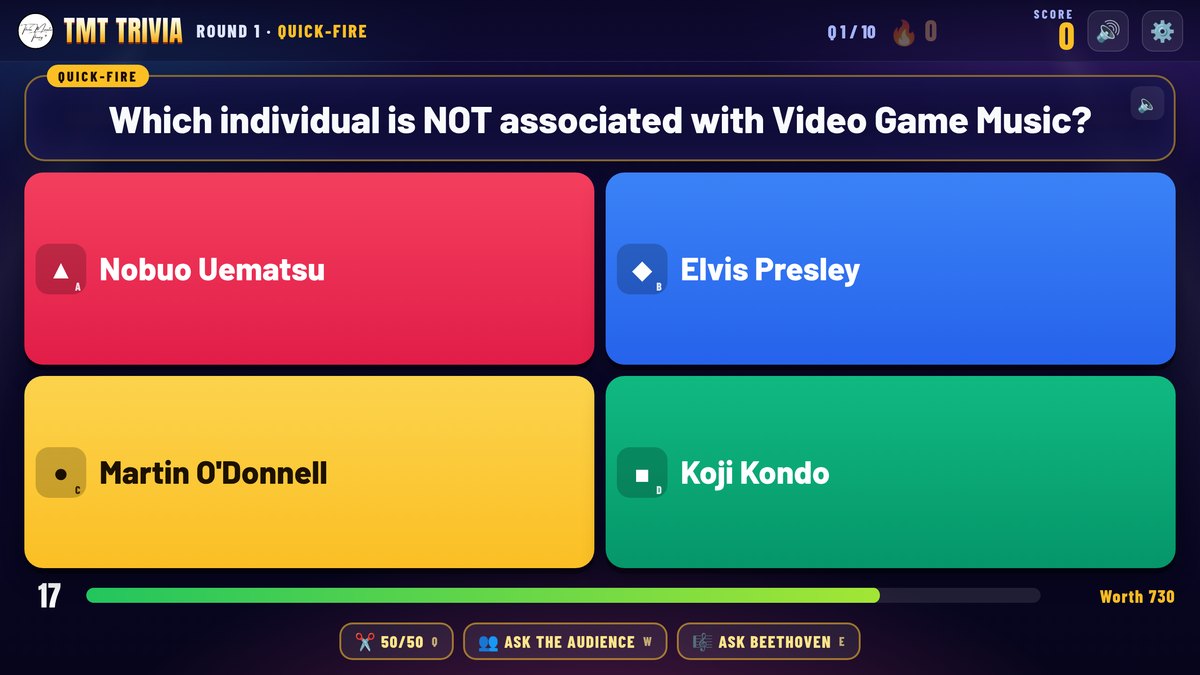
If your students have devices, Play as a class runs the game on the room screen while students answer on their own devices. Between questions the room sees the leaderboard, and at the end there is a podium. You can save the scores to your gradebook. Students need to be signed in to join.
Sports Games for Review
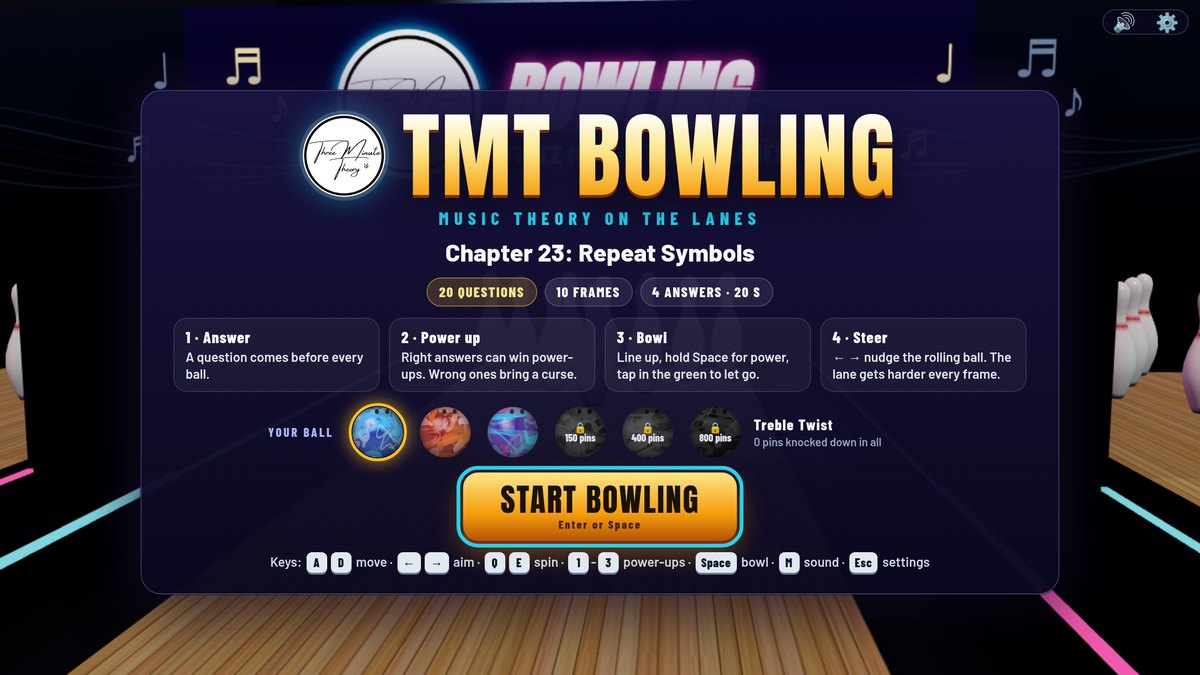
Every Three Minute Theory game can play any chapter. That makes the arcade and sports games perfect for review week. TMT Bowling, for example, asks a question before every ball. Right answers can win power-ups, and wrong ones bring a curse. Pick a chapter your class covered this fall, like Repeat Symbols, and let students play.
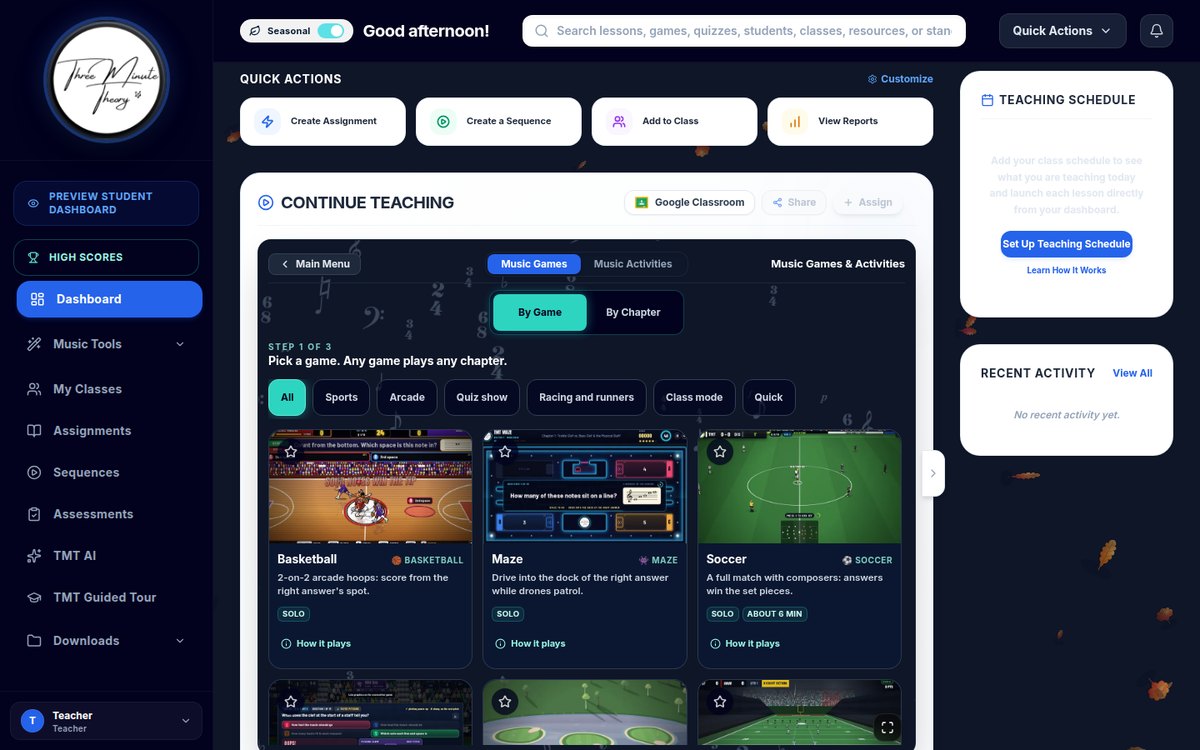
On the teacher dashboard, the By Game view lets you browse every game first and then pick the chapter. You can filter by Sports, Arcade, Quiz show, Racing and runners, Class mode, or Quick.
When you assign a game, students can replay as often as they like, and their grade is their best accuracy. That is a nice fit for this week. Students who finish early keep playing to beat their own score.
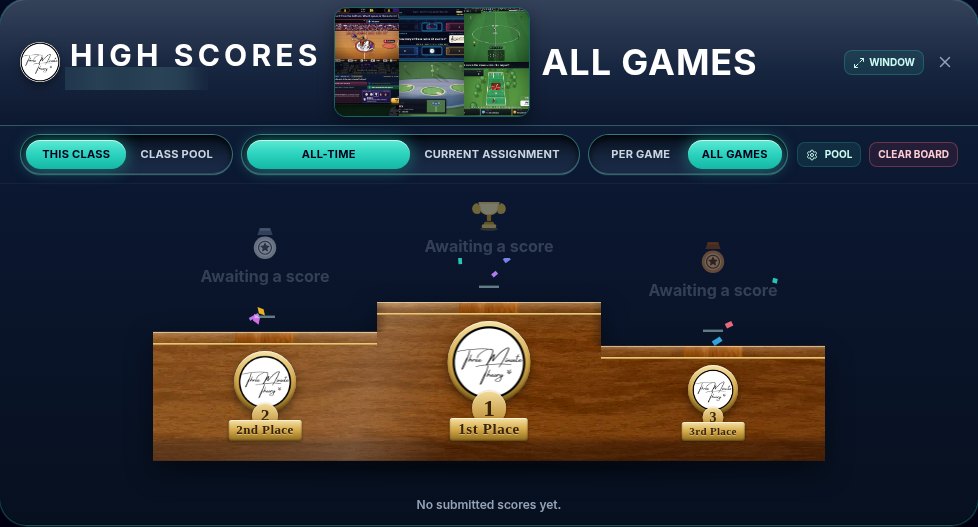
The High Scores button on your dashboard opens a class board you can put up on the projector. You can show all-time scores or just the current assignment, and one game or all games. In December, that board does a lot of motivating for you.
Review What Your Class Missed Most
This is my favorite December feature. After your class has played assigned games, Three Minute Theory looks at each chapter's results. Once a chapter has enough answers, a chapter where the class scored below 80% is marked as needing review, and it suggests a review mix of up to three of those chapters, lowest first, from the last 90 days of games. Click Use this mix and you have Thursday's game, built from what your students actually struggled with this fall.
You can also mix up to three chapters in one game on your own. A mix of three fall units is an easy Friday game show.
Live Game Challenge for the Last Day
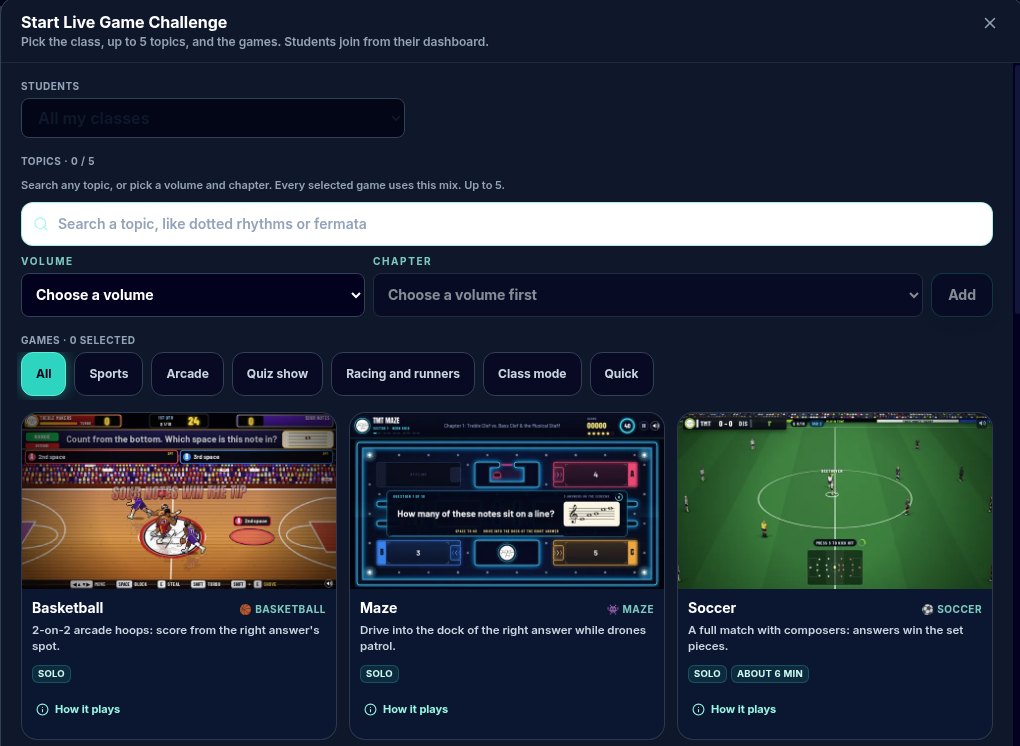
If you want a real event, choose Start Live Game Challenge on the dashboard. You pick the class, up to five topics (search for one, or pick a volume and chapter), and the games. Every game you pick uses the same mix of topics. Signed-in students join from their own dashboard, choose a game, and play. The projector shows a High Scores board for the challenge, either overall or per game. It is a great way to end the semester with energy, without anyone needing to learn a new game from you.
Live Review for a Calm Day
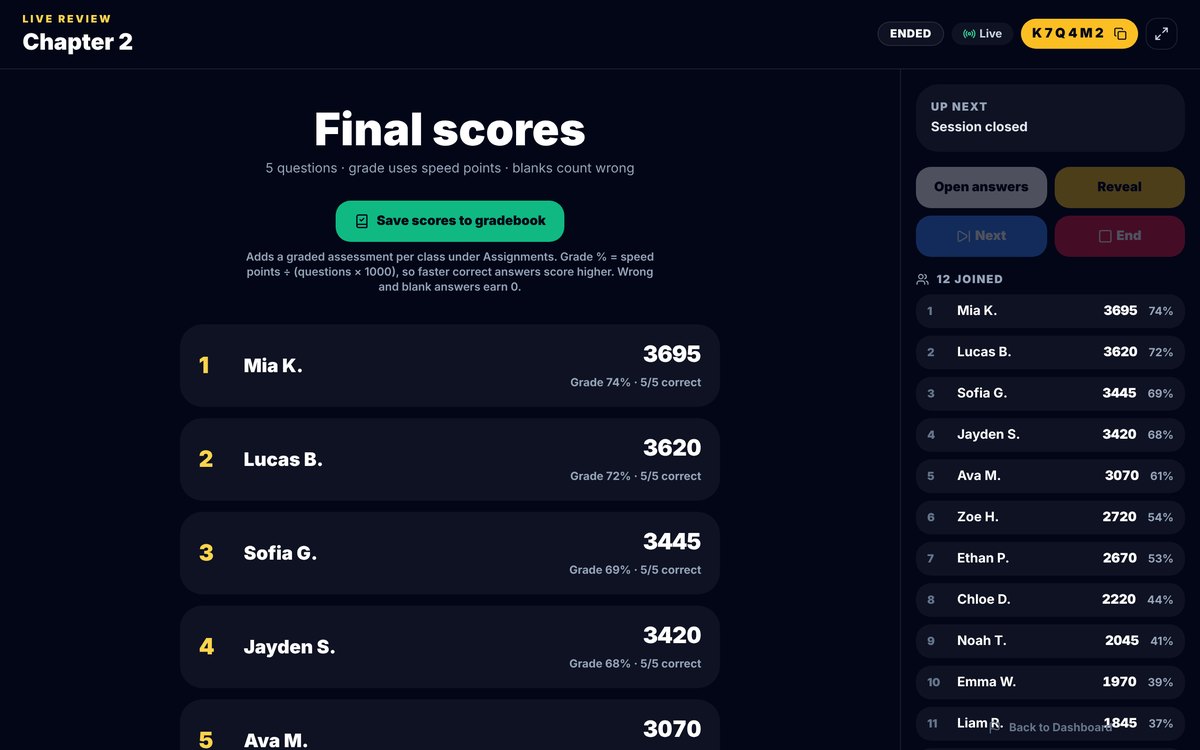
Not every day before break needs to be loud. Live Review plays a chapter lesson on the room screen, and student phones become answer pads. You choose 3 to 10 questions, decide whether the video pauses for each question, and save the scores to the gradebook at the end. It is a calm, focused way to review one chapter.
Genre and World Music Lessons for Genre Day
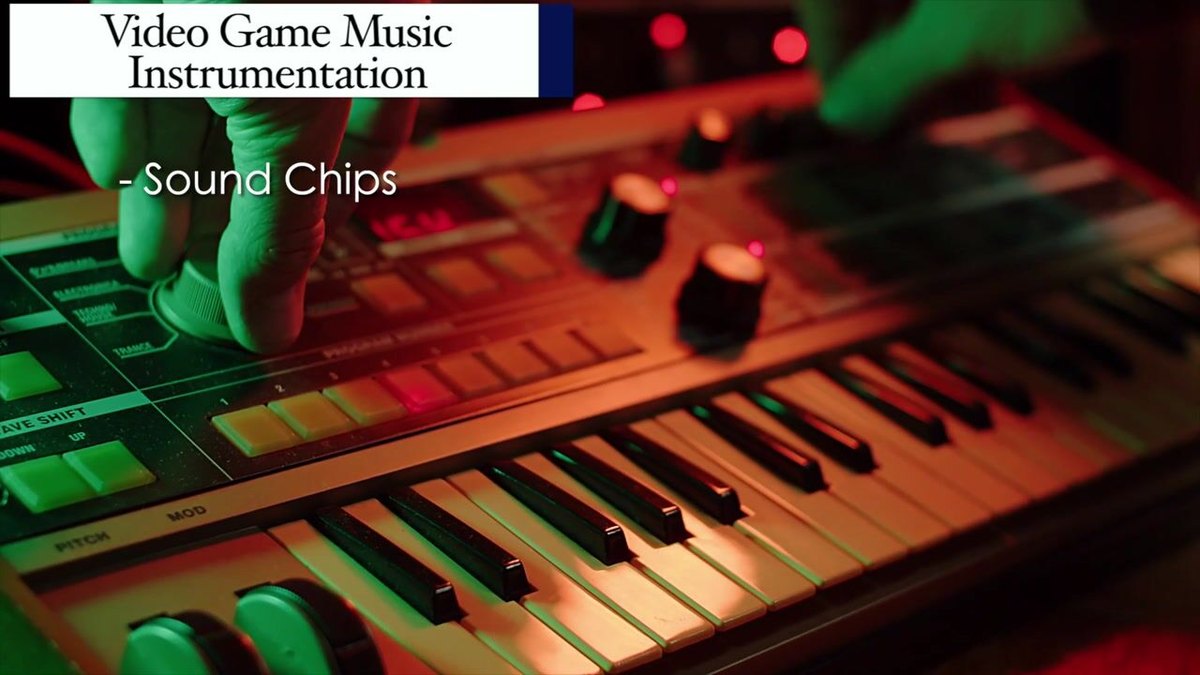
For activity 4, Three Minute Theory has a Music Genres volume (Classical, Blues, Jazz, Folk, Country, R&B/Soul, Rock, Pop, Hip-Hop/Rap, and Video Game Music) and a World Music volume (including Gospel, West African Drumming, Caribbean, Latin American, Indian Classical, Japanese Traditional, and Celtic music). There is also a Music History volume. Each lesson stands on its own, which is exactly what you want when attendance is unpredictable.
Worksheets for the Paper Backup
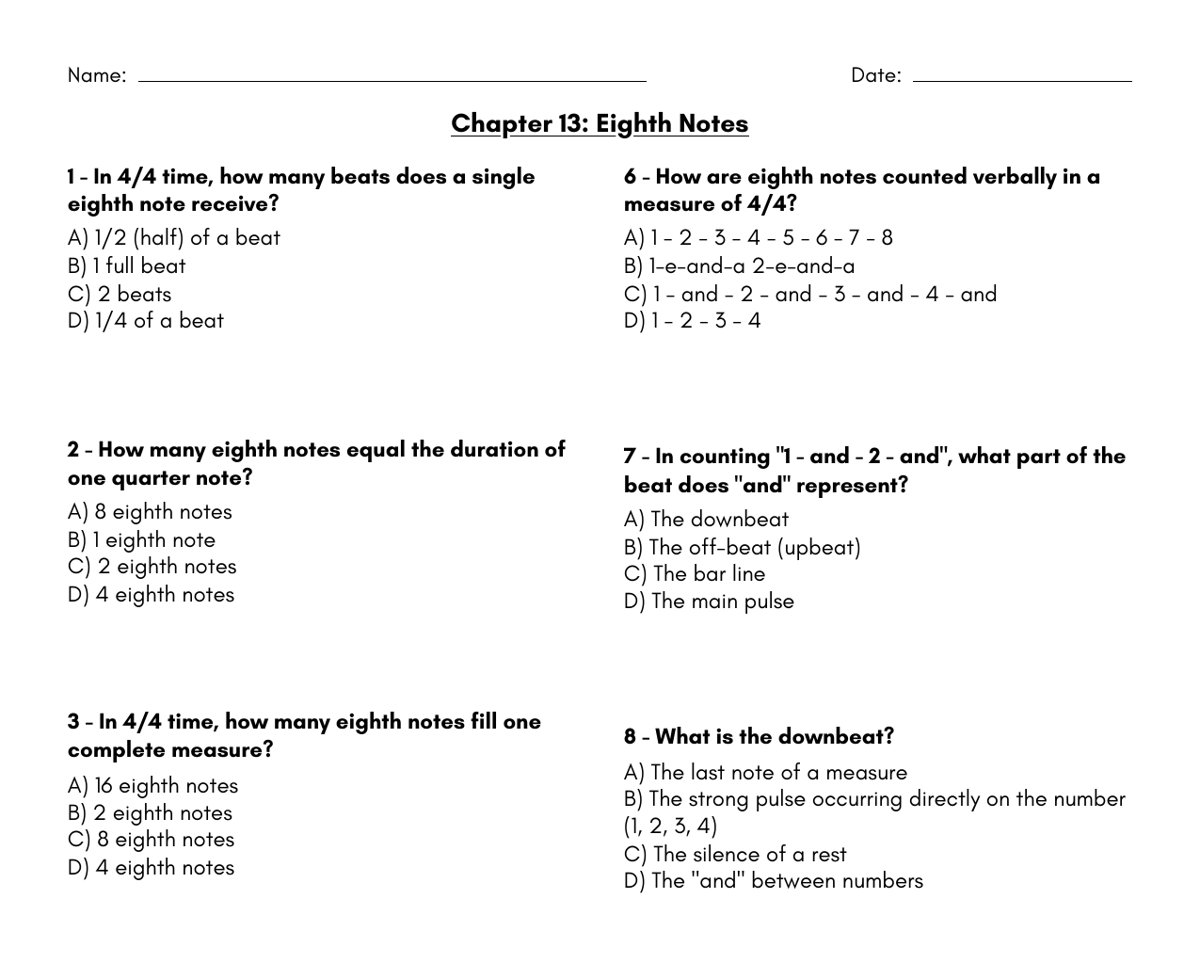
Each chapter has a printable worksheet with the answer key on page 2, which covers activity 8. Print one for the chapter you are reviewing and keep it in your folder. (Printable PDFs are locked during the free week, so print them once you have a license.)
Plan a Sub Day
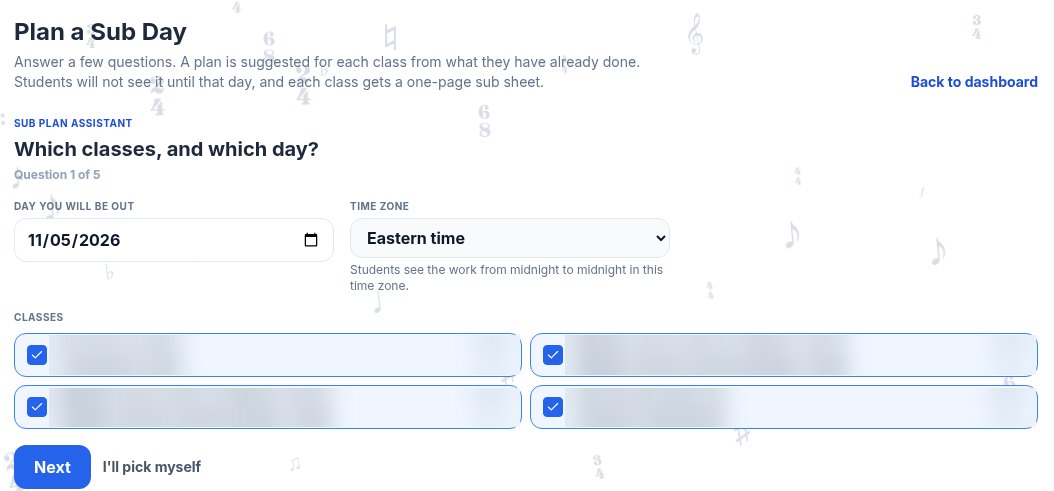
If you will be out one of these days, open Plan a Sub Day on the teacher dashboard. It asks a few questions, starting with which classes and which day, and suggests a plan for each class based on what they have already done. You can also pick things yourself. Students will not see the work until that day, and each class gets a one-page sub sheet. Pair it with the ideas in our music sub plans post and the day takes care of itself.
Frequently Asked Questions
What should I teach in music class the week before winter break?
Review material, not new skills. Attendance is unpredictable that week, so pick standalone activities: review games, a class game show, a genre or music history lesson, and a concert reflection using your concert music.
Are music theory games worth it the week before break?
Yes, if they are tied to real content. A game on a chapter you covered this fall is real review, and students will work harder for a leaderboard in December than for a worksheet.
What if half my class is gone?
Use standalone lessons and games. A genre lesson or a single-chapter game makes sense to whoever is in the room, and students who missed it are not behind in January.
Do these activities work for choir, band, and orchestra?
Yes. Everything here works with instruments in cases, so it fits any ensemble. If you want to keep playing, add the rhythm read-off as a warm-up and then rehearse.
Start This Week
Pick one activity for each day you have left, and print one paper backup tonight. That is your whole plan. If you want to look further ahead, our music theory curriculum map shows what January can look like, and our music theory bell ringers give you a warm-up for the first day back.
If you want the games, lessons, and Live Review ready to go, you can try Three Minute Theory free for 7 days at ThreeMinuteTheory.com. There are pages for choir, band, and orchestra directors. For students who want sight-reading practice over break, our sister app SightReadQuest lets them sing or play into a mic and see right and wrong notes on the staff as they go. And for more classroom ideas from founder and choir director Matthew Gawronski, visit MatthewGawronski.com.