Music Theory Bell Ringers
A free guide to 3-minute music theory bell ringers for middle school choir, band, and orchestra, with a full week of ready-to-use prompts.
The bell rings, students drift in, and for the next few minutes you are taking attendance, finding a reed, and answering "Do we have a concert this week?" A good bell ringer turns those minutes into learning. A bad one turns into a worksheet that nobody finishes.
If you search for music theory bell ringers, most of what comes up is a paid pack. Some of those packs are great. But you do not need to buy anything to run a strong bell ringer routine. This guide covers what makes a 3-minute bell ringer work in an ensemble class, then gives you a full week of free prompts for choir, band, and orchestra. At the end, I will show you how the 3-minute lessons and games in Three Minute Theory fit into the same routine.
What Makes a Good 3-Minute Bell Ringer
A bell ringer in a rehearsal room has a different job than one in a math class. Students are walking in with instruments, folders, and a lot of energy. Here is what I look for:
- It starts without you. Students can begin the moment they sit down, even while you are at the door. The directions are on the screen or the board, not in your head.
- It takes three minutes or less. Rehearsal time is precious. If the bell ringer creeps to ten minutes, it is a lesson, and it is eating your concert prep.
- It has one clear answer. "Name the notes in measure 4" is better than "What do you notice about this piece?" You want a fast check, not a discussion.
- It connects to the music in their folders. The best prompts send students into their own music. "Find the key signature of your concert piece" beats a random example every time.
- It repeats on purpose. Keep the same type of prompt on the same day each week. Students learn the routine, and you stop explaining directions.
- You check it in under a minute. A show of fingers, a choral answer, or a quick game round tells you who has it and who does not.
That last point matters most. A bell ringer you never check is just busywork. A bell ringer you check in thirty seconds gives you real information about your class every single day.
A Simple Weekly Rhythm
You do not need a new idea every day. Give each day of the week a theme, and swap in new content each week:
- Monday: Note names. Read pitches in your clef.
- Tuesday: Rhythm. Count and clap a short pattern.
- Wednesday: Symbols. Find and define markings in the music.
- Thursday: Ears. Listen and decide.
- Friday: Quick quiz. A short review of the week.
This rhythm also follows the order of a good yearly plan. If you want to see how these strands spread across a full school year, take a look at our music theory curriculum map for middle school ensembles.
A Full Week of Music Theory Bell Ringers
Here is one complete week you can use tomorrow. Each day has a shared prompt for everyone, plus a version for choir, band, and orchestra. Put the prompt on the board before students walk in.
Monday: Name That Note
Everyone: Write four notes on the staff in your clef: one on a line, one in a space, one on a ledger line, and one with an accidental. Students write the letter names on a sticky note or whiteboard.
- Choir: Use treble clef for sopranos and altos, and bass clef for tenors and basses. Add a bonus question: "Which of these notes is Do in the key of G?"
- Band: Put the notes in concert pitch and in treble clef. Ask students to write the name of the note they would finger for each one. Low brass and bassoons work in bass clef.
- Orchestra: Give violins treble clef, violas alto clef, and cellos and basses bass clef. Ask, "Which open string is closest to each note?"
Check it: Point to each note and have the class say the name together on your cue.
Tuesday: Count It, Then Clap It
Everyone: Write two measures of 4/4 with quarter notes, eighth notes, and one quarter rest. Students write the counts under every note ("1 and 2 and"), then clap it once together.
- Choir: Speak the rhythm on "tah" and "ti-ti," or on the words of a line from your concert piece.
- Band: Play it on concert B-flat after clapping. Percussion can lead the count-off.
- Orchestra: Play it on an open D string, with down bows on the strong beats.
Check it: Clap it as a group. If the rest gets swallowed, clap it again with students saying "rest" out loud.
If your students love rhythm work, our post on band rhythm games for reading has six more games that work for any ensemble.
Wednesday: Symbol Hunt
Everyone: "Open your concert music to page one. In 90 seconds, circle every dynamic marking you can find. Then write what the loudest one means."
- Choir: Add breath marks and fermatas to the hunt.
- Band: Add articulation markings, like staccato dots and accents.
- Orchestra: Add bowing marks. Students circle every up-bow and down-bow symbol.
Check it: Ask, "Who found more than five?" Then have one student read their list while others check their own pages.
Thursday: Sharp, Flat, or In Tune?
Everyone: Play a pitch, then play it again slightly sharp, slightly flat, or in tune. Students show a thumb up for sharp, a thumb down for flat, and a flat hand for in tune. Do five rounds.
- Choir: After each round, students sing the in-tune pitch back on "loo."
- Band: Use concert F or B-flat, the pitches they tune to anyway.
- Orchestra: Use the open A. Students then match it on their own instruments.
Check it: Look around the room. Five rounds is enough to see who is guessing.
Friday: The Three-Minute Quiz
Everyone: Five quick questions, one from each day this week, plus one from last week. Keep them multiple choice so you can grade them fast.
- Choir: Include one question about the choral score, like "Which staff is the alto part on?"
- Band: Include one transposition question, like "Concert B-flat is what note on your instrument?"
- Orchestra: Include one alto clef question for everyone, not just violas.
Check it: Run it as a whole-class game on the projector, or collect it as an exit ticket. More on both options below.
How Three Minute Theory Helps
I built Three Minute Theory around this exact time slot. Every lesson is a short video of about three minutes, so a bell ringer and a lesson can be the same thing. Here is how the pieces fit into a bell ringer routine.
A 3-Minute Lesson as the Bell Ringer
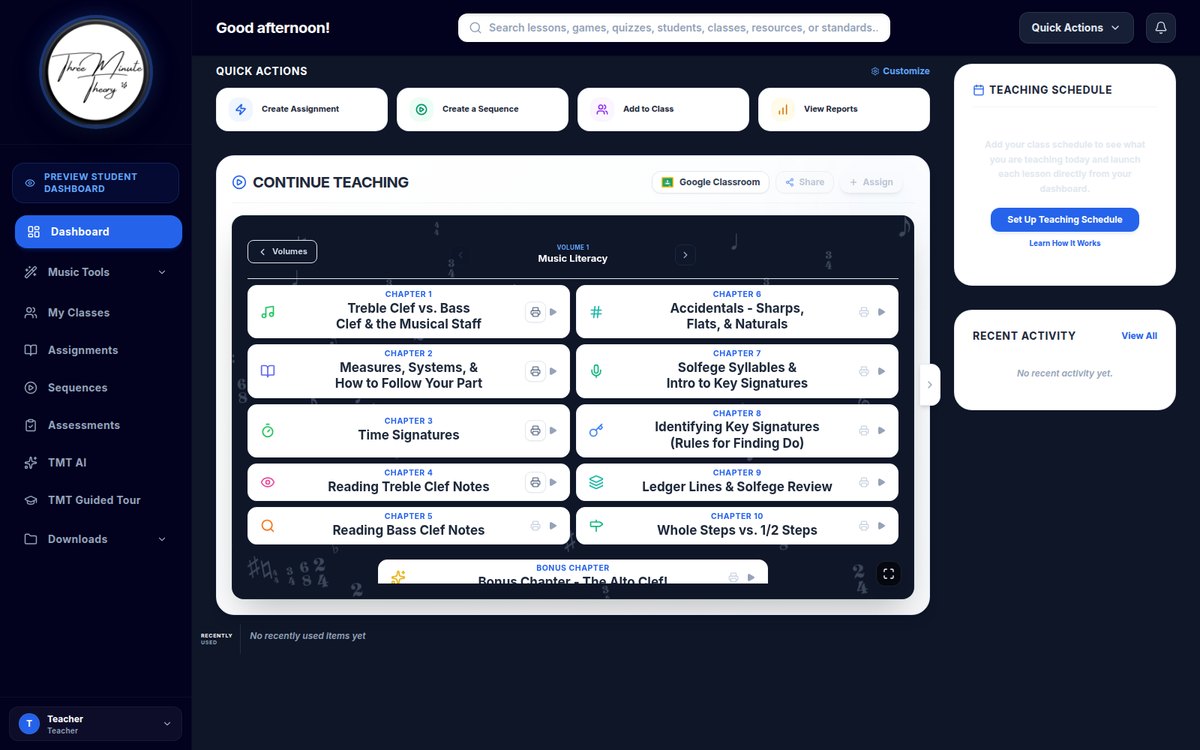
Pick a chapter from the Continue Teaching panel on your dashboard and press play as students sit down. Chapters are grouped into volumes. Volume 1 is Music Literacy, with chapters like Treble Clef vs. Bass Clef, Time Signatures, and Reading Bass Clef Notes. Volume 2 covers rhythm, Volume 3 covers dynamics and symbols, and Volume 4 is ear training. That lines up nicely with the Monday to Thursday themes above.
When a student picks a wrong answer, a short video of 30 to 60 seconds explains that idea again. If you want to string a lesson and a game together, put them in a Sequence. You can run a Sequence in Live mode, where you control it on the projector for the whole class, or in Independent mode, where students work at their own pace on their own devices. Both modes track completion.
If you set up the Teaching Schedule, each class period's lesson is already waiting on your dashboard when you log in. That makes "start without you" a lot easier.
Live Review for the Friday Quiz
Live Review turns a chapter into a quick whole-class quiz. The room screen plays the lesson, and student phones become answer pads. Students who are signed in to Three Minute Theory tap Join Live Review on their own dashboard, so you do not need to read out a code. You choose 3 to 10 questions and decide whether the video pauses while the class answers.
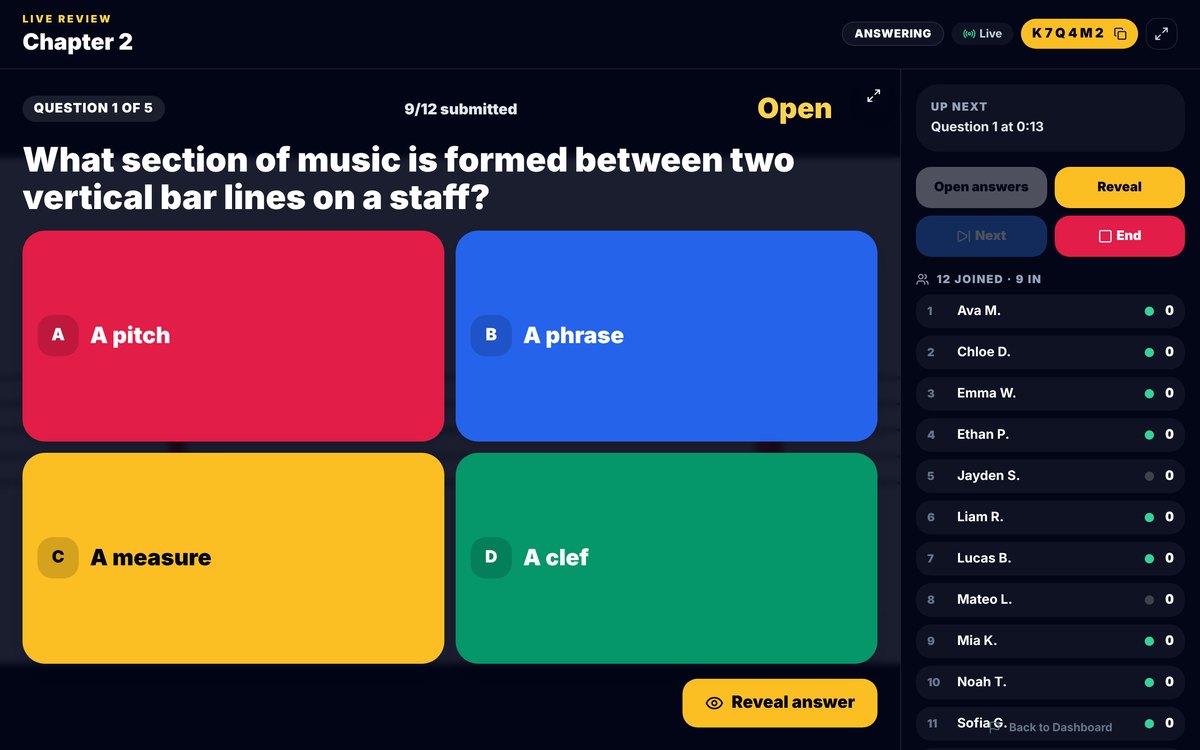
When you reveal the answer, everyone sees it at once, which makes it a natural moment to say, "Find a measure in your music right now." At the end, you can save the scores to your gradebook with one button.
Review Games for a Quick Check
On the teacher dashboard, you can pick games By Game or By Chapter, and any game can play any chapter. That means the same game can review note names on Monday and rhythm on Tuesday. TMT Trivia is a fun one for a bell ringer, with rounds of quick-fire questions on the screen.
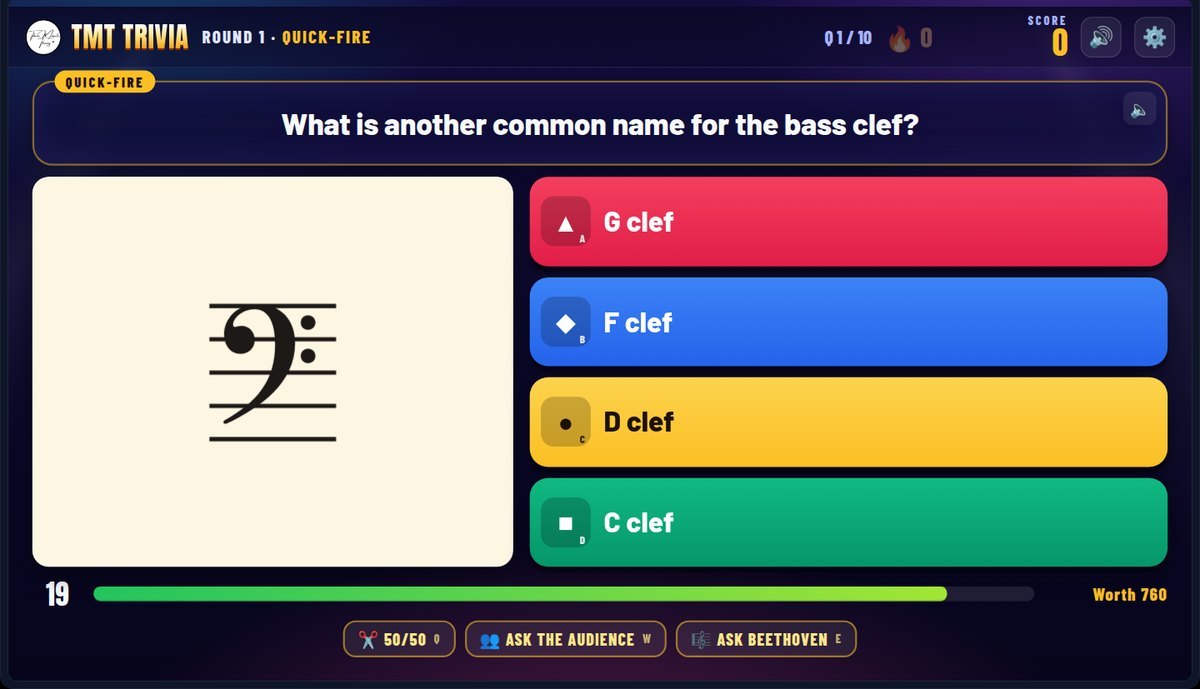
When you assign a game, you choose Easy, Medium, or Hard, so seventh and eighth graders can play a harder version of the same chapter.
Rhythm and Ear Training Tools
For Tuesday, project Rhythm Rumbler. It has 30 rhythm reading levels. In the first round of each level, the counts are written above the notes. In the next round, the counts go away, so students read on their own. One level fills a bit more than a three-minute slot, so you can stop after a round or two.
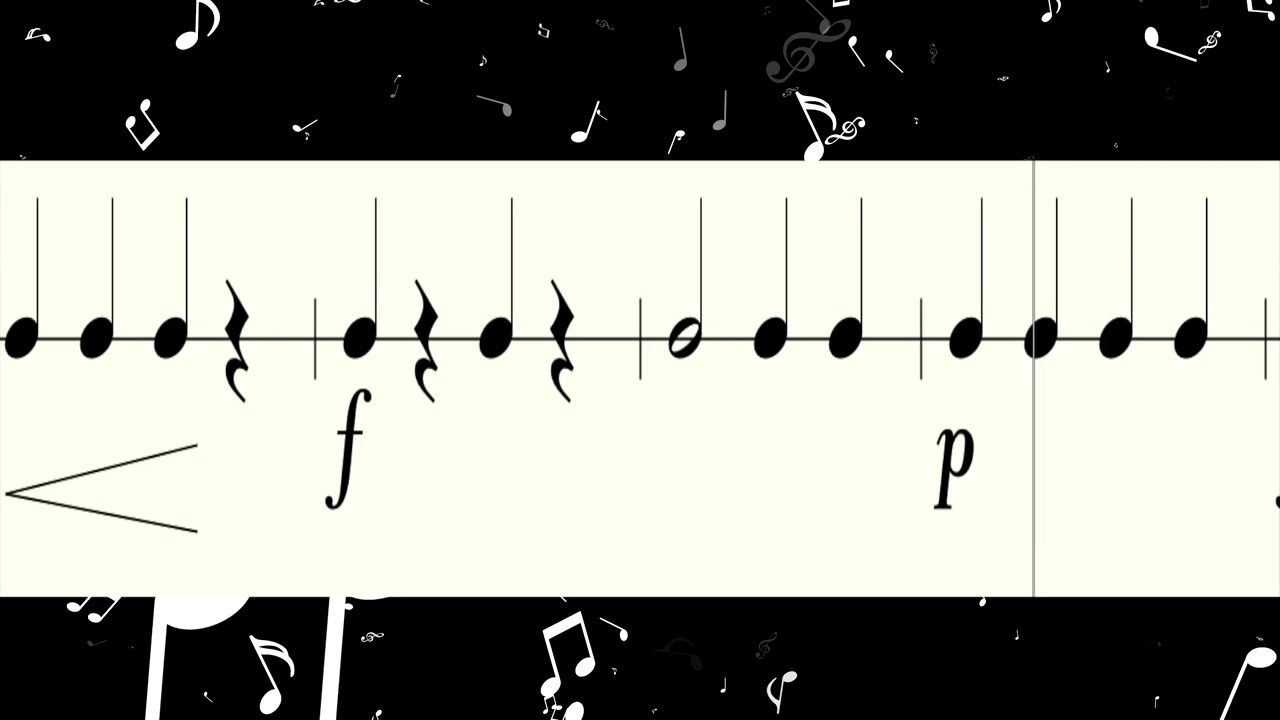
For Monday, Note Namer gives students clef reading and note identification practice. For Thursday, Pitchy Bird has students sing to move a bird to each note, which makes a quick pitch-matching check.
A Paper Backup
Every chapter comes with a two-page printable worksheet, with the answer key on page two. That is handy on days when the projector will not cooperate. (During the free trial, printable PDFs stay locked.)
Tips for Making Bell Ringers Stick
- Same spot, same time. Put the prompt in the same corner of the board every day.
- Use a timer. A visible three-minute countdown keeps everyone honest, including you.
- Celebrate streaks. "Third period got every Friday question right this week" goes a long way with middle schoolers.
- Let students write the prompts. By spring, a student leader can write Wednesday's symbol hunt from your concert music.
- Do not grade every day. Use daily bell ringers for feedback, and save grades for the Friday quiz.
Frequently Asked Questions
What is a bell ringer in music class?
A bell ringer is a short activity students start as soon as they walk in. In music class, it is usually a quick theory question, a rhythm to count, or a listening task that takes three minutes or less.
How long should a music theory bell ringer take?
Three minutes is the sweet spot. It is long enough to practice one skill and short enough to protect rehearsal time.
Do bell ringers work in choir, band, and orchestra?
Yes. The core skills are the same for every ensemble. Just adjust the clef, the pitches, and the way students respond, like singing, playing, or bowing.
Can I use the same bell ringers every year?
You can reuse the weekly structure every year. Swap in examples from your current concert music so the prompts always connect to what students are rehearsing.
Start Tomorrow
Pick Monday's prompt, write it on the board, and set a three-minute timer. That is all it takes to start.
If you want the lessons, Live Review, and games ready to go, you can try Three Minute Theory free for 7 days at ThreeMinuteTheory.com. For students who want daily sight-reading practice at home, our sister app SightReadQuest lets them sing or play into a mic and see right and wrong notes on the staff as they go. And for more classroom ideas from founder and choir director Matthew Gawronski, visit MatthewGawronski.com.