Ear Training for Band and Orchestra in 3 Minutes a Day
Most ear training advice is written for choir. Here are six quick ear training activities for band and orchestra, an 8-week plan, and tips for every level.
Search for ear training ideas and most of what comes up is for choir. That makes sense. Singers have nothing but their ears to find a pitch. But band and orchestra students need strong ears too. A clarinet player who can hear that she is sharp will fix it herself. A cellist who can hear a minor chord will play the third with more care.
The good news is that you do not need a full class period. You need about three minutes, every day, at the same point in rehearsal. This guide gives you six quick ear training activities for band and orchestra, an eight-week plan, tips by level, and the Three Minute Theory games and lessons that line up with each one.
Why Ear Training Belongs in Every Instrumental Rehearsal
Instruments can trick students into thinking the instrument does the work. Press the right valve and the note comes out. But tuning, balance, and blend all depend on listening. If students only watch the page and the tuner, they never learn to trust what they hear.
How to Build a 3-Minute Ear Routine
- Pick one slot and keep it. Right after your warm-up or tuning works well, because instruments are out and ready.
- Use one or two activities per day. Rotate through the six across the week.
- Sing first, then play. When students sing or hum a pitch before they play it, they have to hear it in their heads first. Music teachers call this audiation.
- Talk in concert pitch. Band students read in different keys. Say "concert F" and let each student find their own note. For dictation, use scale numbers (1, 2, 3) so everyone gets the same answer.
- Set a timer. When it goes off, you stop.
- End on a win. Finish with something the group can do well.
6 Ear Training Activities for Band and Orchestra
1. Pitch Matching on Instruments
Play or sing one pitch. Have students hum it back. Then have them keep humming while they find it on their instrument. Start with notes they know well, like concert B-flat for band or open D for strings. To make it harder, play the pitch, wait four beats in silence, and then have them play.
In Three Minute Theory: Pitchy Bird is a pitch-matching game built for audiation warm-ups. The screen is a stack of colored bars, one for each note of the scale, labeled with solfege or pitch names. Students sing into the microphone to steer the bird to the right bar. You pick the key, and the game shows what is coming next, like "E4, up a 3rd." If you have no mic, you can click the bars instead. Project it for a minute, then have students play each target note on their instruments.

2. Call-and-Response Patterns
You play a short pattern. The group plays it back. Begin with two or three notes, all steps, starting on the tonic. Keep a steady beat so the response comes in on time. Once the group is solid, pass the response to one section, then to a single stand.
Use the key of the piece you are working on, so the ear work feeds straight into the music.
3. Rhythm Echoes
Clap, count, or play a four-beat rhythm on one note. Students echo it right away with no break in the beat. Start with quarter and eighth notes. Add rests, then dotted rhythms, then syncopation. Let percussion students lead it.
In Three Minute Theory: Rhythm Rumbler is a rhythm warm-up you project for the class to clap and play along with. The Ear Training volume also has lessons on this skill, including Chapter 36, "Feeling the Pulse & Subdivision," and Chapter 37, "Hearing & Dictation Basic Rhythms."
4. Tuning Drones
A drone is one steady pitch that keeps sounding while students play against it. You can use a tuner app, a keyboard, or your own players. In orchestra, have the cellos and basses hold open D while the upper strings play a D major scale slowly. Then switch jobs. In band, have the tubas and low reeds hold concert B-flat while the rest of the band plays long tones on the scale.
Ask one question each time: "Does your note sound smooth or wobbly against the drone?" A tuner shows students where they are. A drone teaches them to listen. The Three Minute Theory lesson in Chapter 34, "Tuning: Sharp vs. Flat," gives students the words for what they are hearing.
5. Interval and Chord Quality ID
Play two notes, one after the other. Students show you with their fingers: one finger for the same note, two for a step, three for a skip, and four for a leap. After a few weeks, move to real interval names like major second, minor third, and perfect fifth. Chapter 32 of Three Minute Theory, "Steps vs. Jumps," and Chapter 33, "Using Solfege to Understand Popular Jumps," teach the same ideas in about three minutes each.
For chords, split the group into three teams: root, third, and fifth. Build a major chord, hold it, and then ask only the third team to lower their note by a half step. Everyone hears major turn into minor. Then play chords and have students vote with thumbs up for major and thumbs down for minor.
6. Melodic Dictation Lite
Full written dictation can take a whole period. This version takes about a minute. Play a three- or four-note pattern twice. Students sing it back, then play it, then write it down with scale numbers, like 1-2-3-1 or 5-4-3. Scale numbers work for every instrument, so you do not have to sort out who reads in what key.
In Three Minute Theory: Pitch Perfector turns this into a game. Students press Play Pattern, listen, and then shoot or tap the matching answer from a set of choices like "Do, Mi, Do" or "Do, Re, Re." You can switch the answers between solfege and pitch names, turn the piano highlighting on or off, and pick a level.
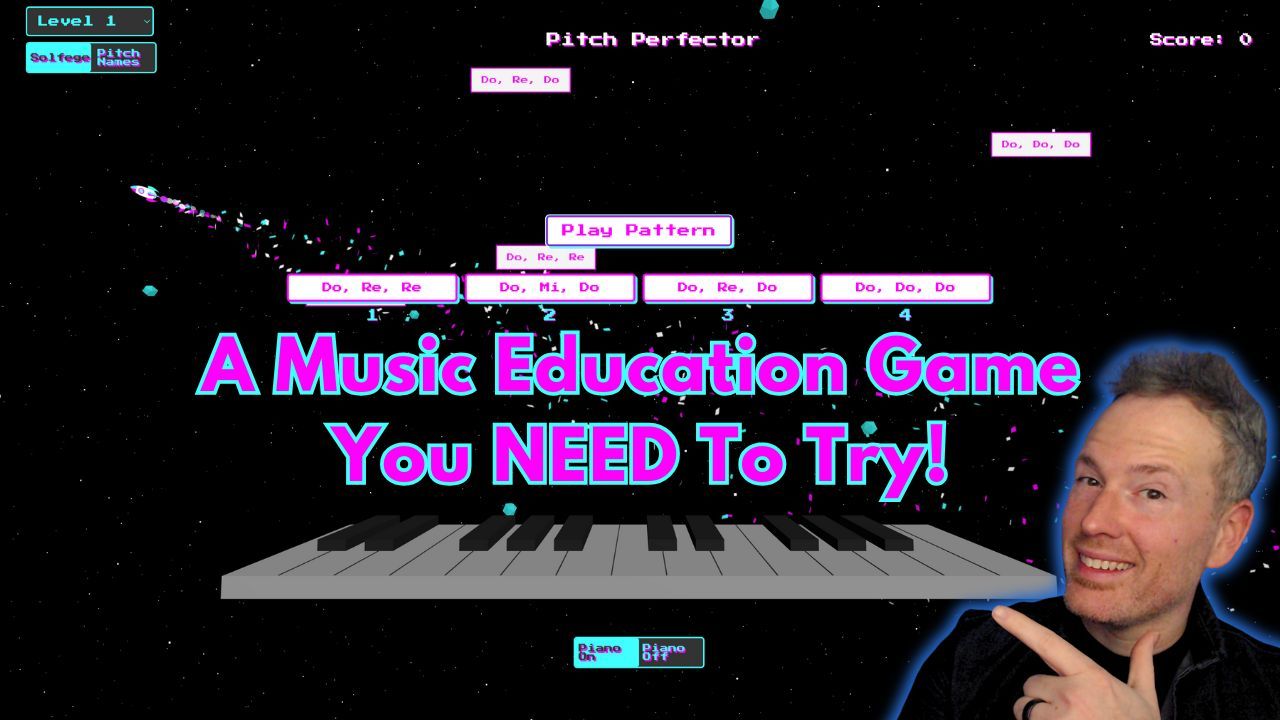
Once that feels easy, have students write the actual notes for their own instrument. This is great practice for the transposing players in band. If you want to check this one student at a time, the Echo Notate mode in SightReadQuest plays a phrase and has the student write it back.
An 8-Week Progression
Weeks 1 and 2: Match and Echo
Pitch matching with humming every day. Rhythm echoes with quarter and eighth notes. Keep everything in one key.
Weeks 3 and 4: Add Drones and Short Patterns
Add a drone two or three times a week. Start call-and-response with two- and three-note step patterns. Begin passing patterns to single sections.
Weeks 5 and 6: Steps, Skips, and Chords
Add interval ID with the finger signals. Try the root, third, and fifth chord activity. Rhythm echoes can now include rests and dotted notes.
Weeks 7 and 8: Dictation Lite and Student Leaders
Start melodic dictation lite with scale numbers. Let students lead the call in call-and-response. Move your patterns into the key of your current concert music.
After week 8, keep rotating and raise the bar a little at a time: longer patterns, new keys, minor keys, and wider leaps.
Ear Training Tips by Level
Beginning Band and Orchestra
Keep patterns to two or three notes, and stay on the notes they already know. String students can do a lot with open strings and the first few fingers. Beginning band students may only know five notes, and that is plenty. Sing on a neutral syllable like "loo."
Middle School
Middle schoolers can handle more, but they may not want to sing in front of their friends. Humming helps a lot. So does singing as a full group, never alone. Let sections compete in a friendly way to see who echoes most cleanly. This is a great age to start interval names and major versus minor.
High School
Push toward real skills: hearing a passage and playing it back, tuning chords with no tuner in sight, and naming intervals and chord qualities. Ask students to listen across the whole ensemble as well as to their stand partner. Have them write short dictation in their own key.
Where Three Minute Theory Fits
Ear training and theory work best together. Here is what you can use from Three Minute Theory alongside the routine above.
- The Ear Training volume. Volume 4 has ten chapters, from Chapter 31, "Half Steps & Pitch Direction," through Chapter 40, "Hearing & Dictating More Complex Rhythms." Each lesson is about three minutes, so it fits right after tuning.
- The Audiation Arcade. Five games: Pitchy Bird, Pitch Perfector, Note Namer, Astro-Rhythm Rampage, and Rhythm Racer. The first two fit the pitch activities above. The rhythm games give students more rhythm reading practice on their own.
- Live and Independent modes. In Live mode you run a lesson for the whole class from your screen. In Independent mode students work at their own pace on their own devices. Both modes track completion and sync scores to your gradebook.
- A video on every wrong answer. When a student misses a question, a 30 to 60 second video explains the idea again before they move on.
- Review games. The curriculum has 300+ games, so students can practice what each chapter taught.

For band directors, the curriculum covers treble and bass clef reading, rhythm and counting, and key signatures. For orchestra directors, it includes alto clef for your violists. You can project lessons with no student login.
Frequently Asked Questions
How long should ear training take in band or orchestra rehearsal?
About three minutes a day works well. Doing it every day matters more than doing it for a long time.
Should instrumental students sing during ear training?
Yes, when you can. Singing or humming makes students hear the pitch before they play it. Keep it whole-group so no one feels put on the spot.
How do I do ear training with transposing instruments in band?
Give pitches in concert pitch and let each student find their own note. For dictation, use scale numbers instead of letter names so every instrument gets the same answer.
What is the best ear training for orchestra intonation?
Tuning drones are a great place to start. Have the low strings hold the tonic while the upper strings play a slow scale against it, then switch. Students learn to hear when a note is smooth and when it wobbles.
Start Small Tomorrow
Pick one activity from this list and try it tomorrow right after warm-up. Set a three-minute timer. Do it again the next day.
If you want the lessons and games above to go with your ear routine, you can try Three Minute Theory free for 7 days at ThreeMinuteTheory.com. And for more classroom ideas from founder and choir director Matthew Gawronski, visit MatthewGawronski.com.