How to Teach Time Signatures in Middle School Band Without Losing Rehearsal Time
How to teach time signatures in middle school band in short warm-ups: what the numbers mean, a two-week routine, and games that connect meter to the stand.
Middle school band can play a whole warm-up in the wrong meter and still look busy. Students tap their feet on every note, rush through a rest, or start the second measure early because the time signature at the start of the line never became something they actually use. How to teach time signatures in middle school band is less about a lecture and more about a short, daily habit that connects the top and bottom numbers to the pulse you are about to play.
You do not need a full theory day. You need a clear rule, three minutes after long tones, and a way to check that students can read the meter on their own part. This post walks through what to teach first, a rehearsal sized routine, the mistakes I see most, and how I use Three Minute Theory lessons and games so the teaching fits inside rehearsal instead of replacing it.
Why Time Signatures Trip Up Band Students
A few things make meter harder than it looks on a worksheet:
- The time signature is easy to ignore. It sits at the start of the piece, so the eye jumps to the first note.
- Students confuse beats with notes. They think "4/4 means four notes," not four beats that can hold many different note values.
- The bottom number is abstract. A 4 for the quarter note and an 8 for the eighth note feel like secret codes until students see them on the page and hear them in the pulse.
- Concert music changes meters. A piece can move from 4/4 to 3/4 or into 6/8, and students who only memorized "common time" freeze at the double bar.
So the goal is not just naming 4/4. The goal is that students look at the time signature, know how many beats fit in a measure, know which note gets the beat, and feel that pulse before they play.
What to Teach First (With a 3-Minute Lesson on the Screen)
Here is the order that works for me. Each step is small enough for one warm-up, and each one pairs with a Three Minute Theory chapter so you are not inventing the explanation from scratch.
1. Where the time signature lives, and what the two numbers mean
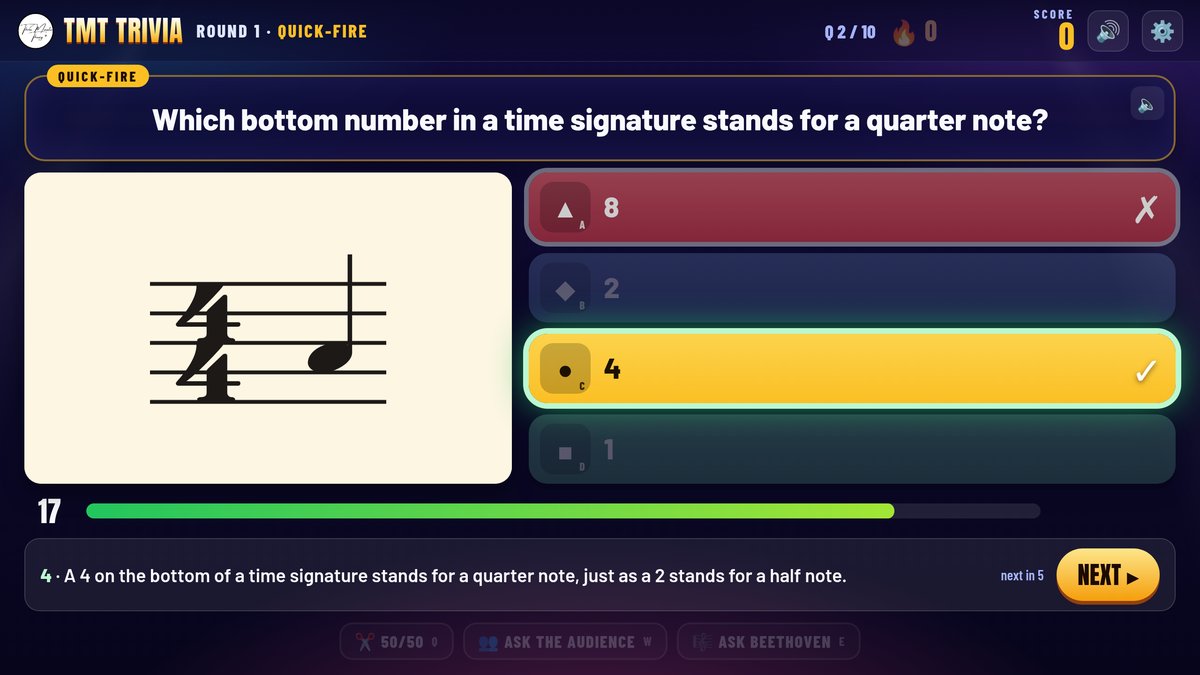
Start with the basics: the time signature is at the beginning of the piece (and again when the meter changes). The top number is how many beats fit in one measure. The bottom number tells which note value gets one beat. A 4 on the bottom means the quarter note gets the beat. A 2 means the half note. An 8 means the eighth note.
Chapter 3 of Volume 1, Time Signatures, teaches exactly that. Press play on the room screen after long tones, and let the short video circle the numbers on a real staff. Students do not need a login for you to project a lesson.
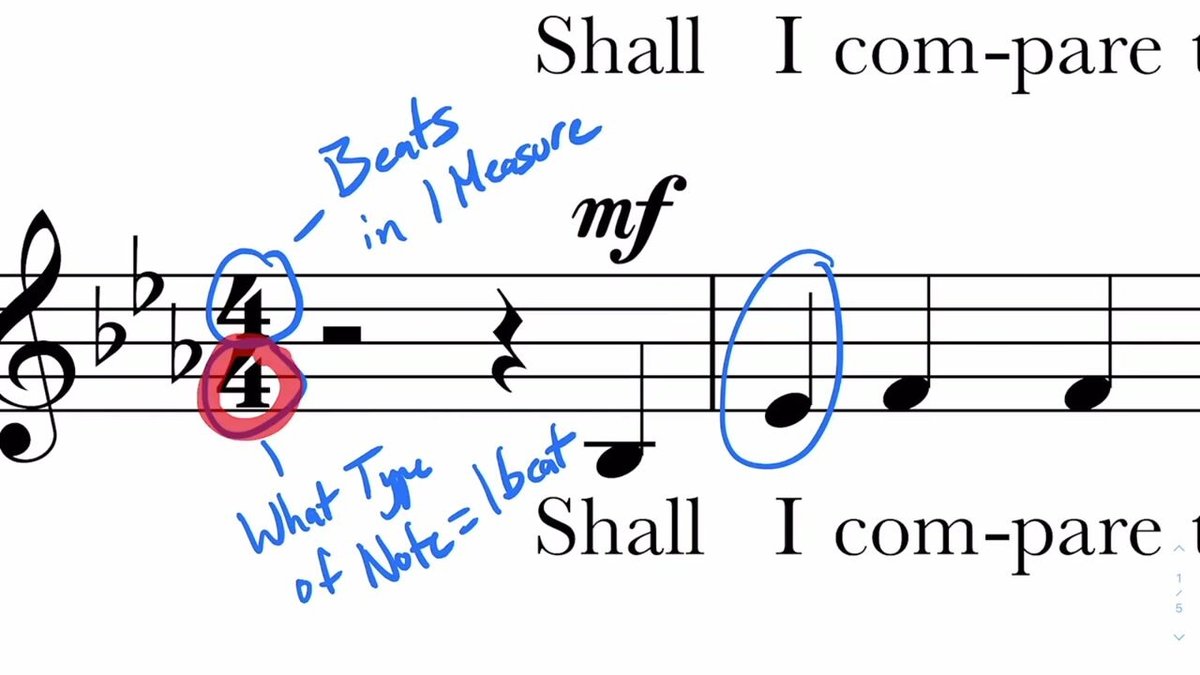
After the video, have everyone open the piece on the stand and answer out loud: How many beats in a measure? Which note gets the beat? Then clap one measure of pulse before you play.
2. Fill the measure the right way
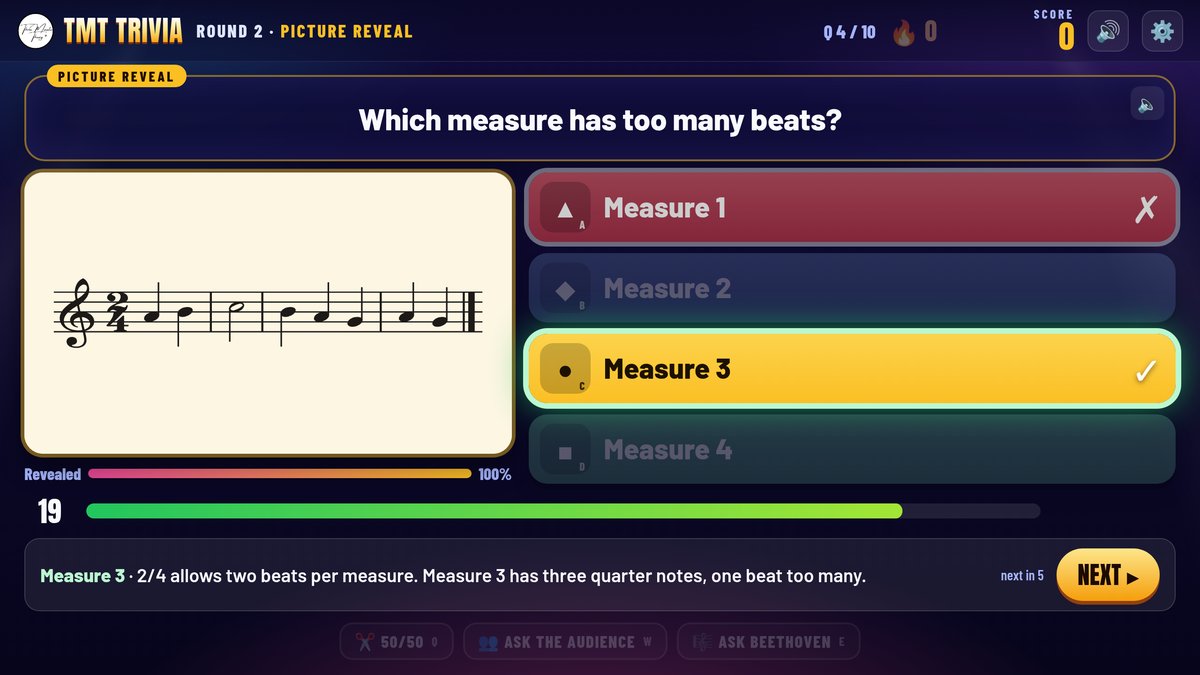
Once the numbers make sense, students need to see that a measure can hold different combinations of notes that still add up. Four quarter notes, two half notes, or a whole note can all fill 4/4. Three quarter notes in 2/4 is too many. That "does this measure fit?" check is the skill that stops early entrances.
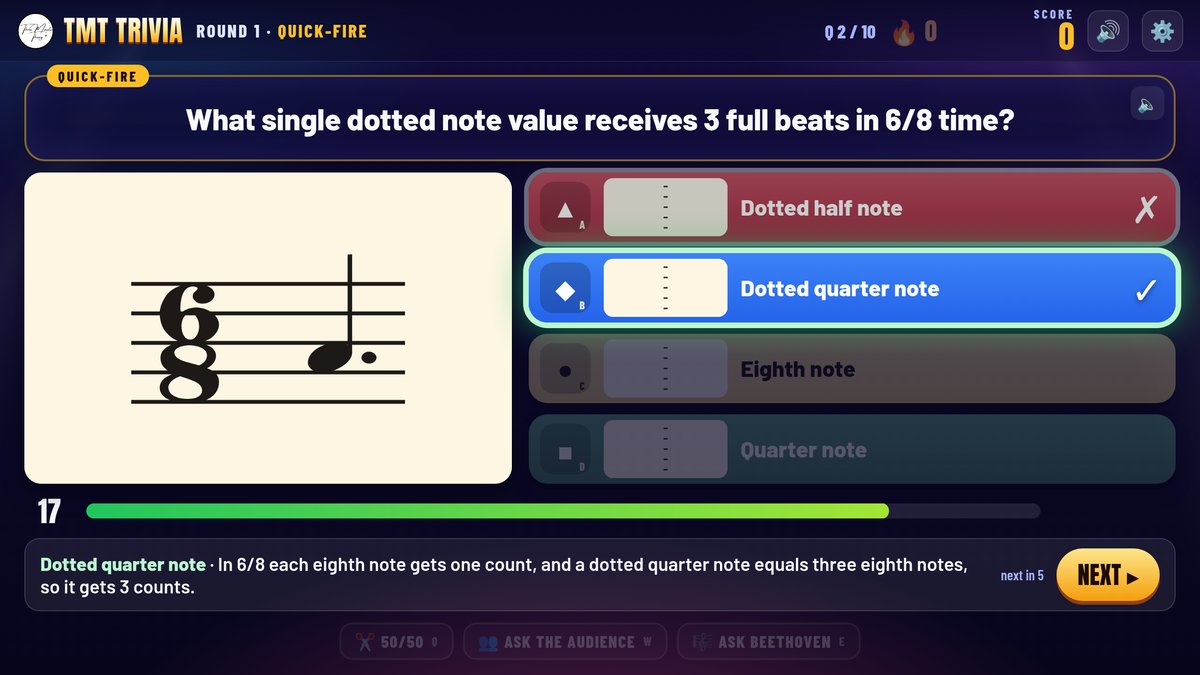
I follow the Chapter 3 lesson with a quick game. TMT Trivia can play any chapter, so I open Chapter 3 on the projector and run a Quick-Fire or Picture Reveal round. The questions show real time signatures and measures, and every wrong answer gets a one-line explanation you can read out loud before the next question.
3. Common time, cut time, and the meters in your folder
Teach 4/4 as common time (sometimes written as a C), 2/4 and 3/4 as simple meters students will see early, and 2/2 as cut time when your literature needs it. You do not need every odd meter on day one. You need the meters in this concert cycle, named and felt.
Chapter 11, Quarter Notes and Time Signature Review, sits at the start of Volume 2, Rhythm. It is a good follow-up week: same top and bottom number ideas, now tied to reading quarter notes against a steady beat.
4. Compound meter when 6/8 shows up
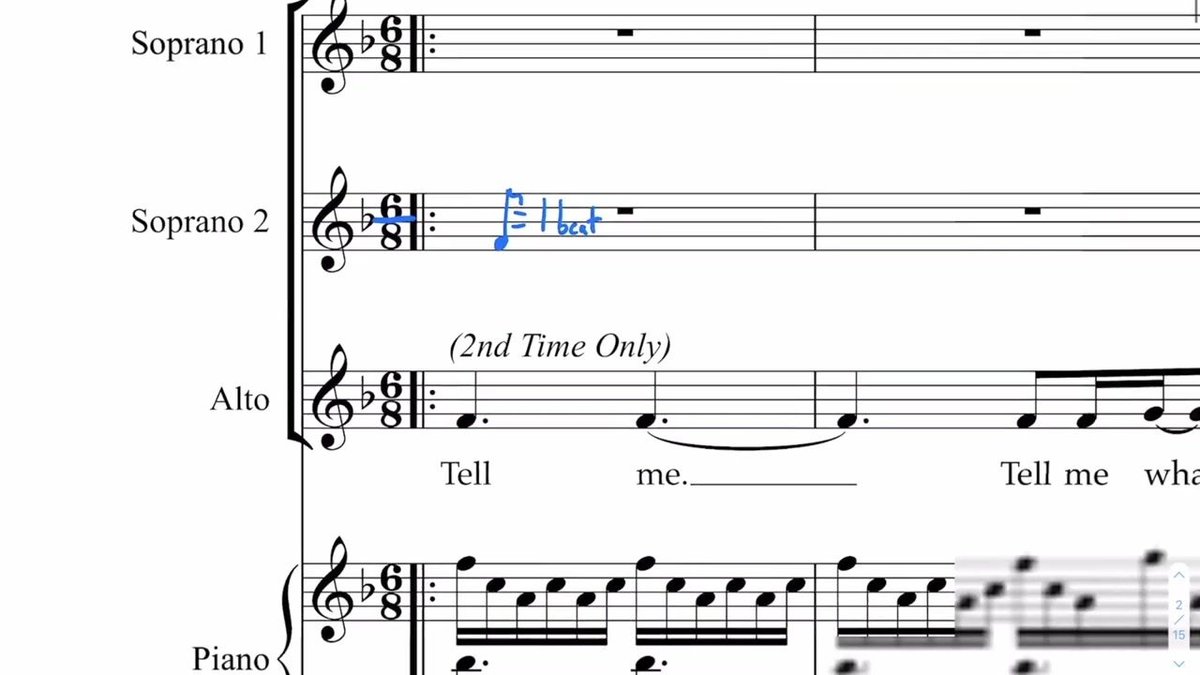
When your folder hits 6/8, teach it as its own warm-up week. Students need to hear two big beats (dotted quarter equals one beat) even though the printed signature counts six eighths. Chapter 18, Rhythm in 6/8 Time, is the lesson I project the day we open that piece. Then I run a Chapter 18 game so the dotted quarter is not just a worksheet answer.
A 3-Minute Meter Warm-Up Routine
Here is a two-week routine that fits right after long tones. Each day takes about three minutes, then you go into the concert scale or the opening of the piece.
- Day 1: Project Chapter 3. Name top and bottom numbers. Clap one measure of the piece on the stand.
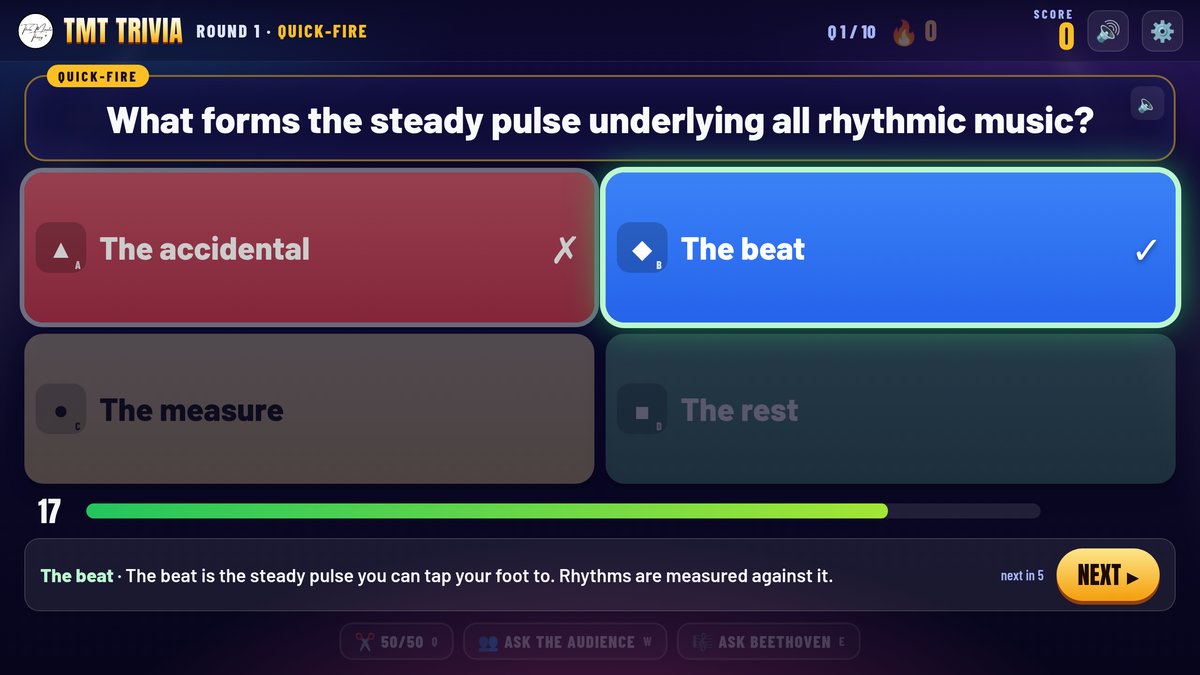
- Day 2: TMT Trivia on Chapter 3 for five questions. After each answer, the band claps that meter once.
- Day 3: Students find the time signature on their own part and say the written meter by section.
- Day 4: Rhythm Rumbler on an early level so the pulse is on the screen while they clap and play. Details below.
- Day 5: Live Review on Chapter 3, or a short Assessments quiz on Chapters 3 and 11.
- Days 6 to 10: One meter question a day tied to the piece you are about to rehearse. If the piece is in 6/8, switch the lesson and games to Chapter 18.
The key is that the theory and the playing happen in the same five minutes. If students name the meter and then immediately play in it, the knowledge has somewhere to go.
Put the Pulse in Their Bodies: Rhythm Rumbler and Clap-Alongs
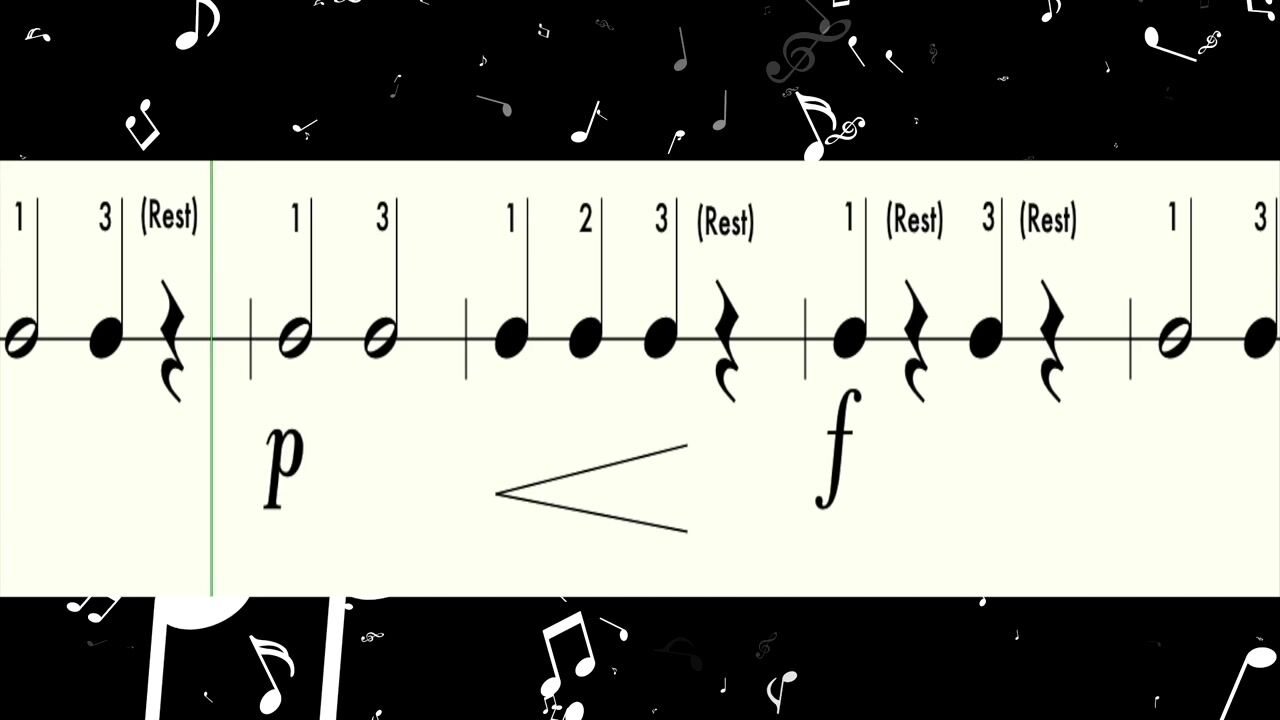
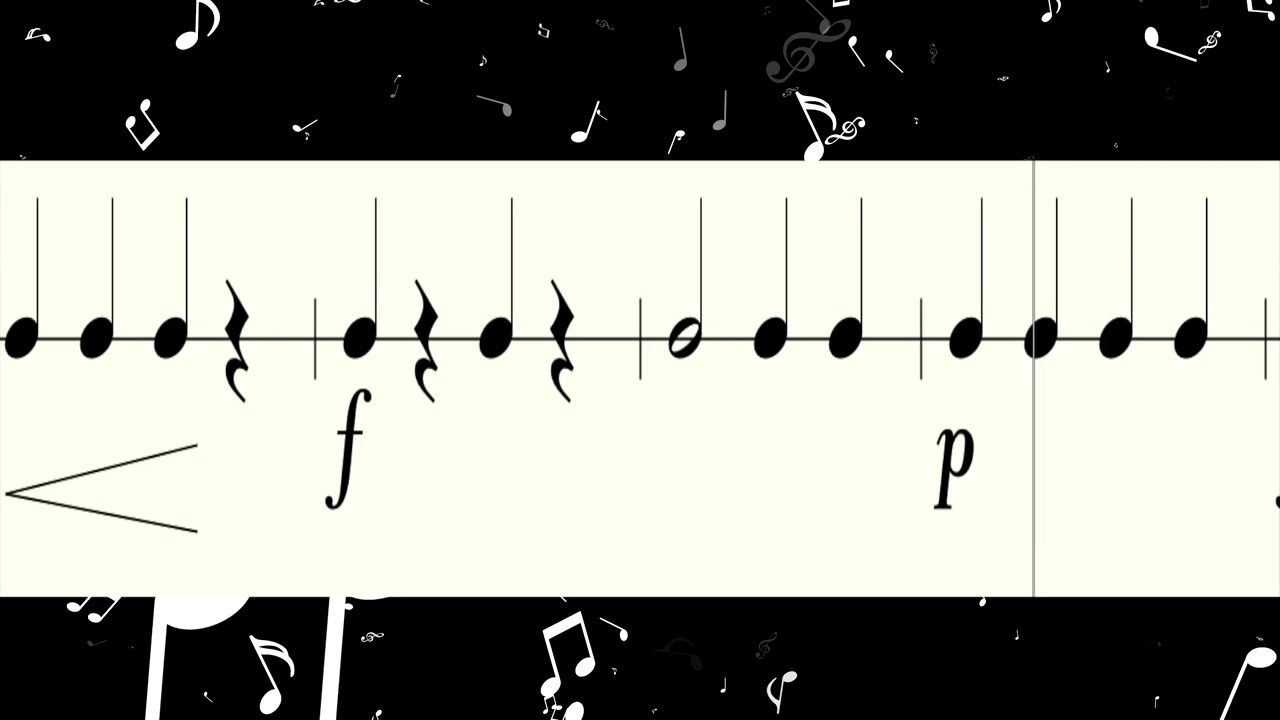
Naming 4/4 is half the job. The other half is feeling four steady beats. Rhythm Rumbler is the projected rhythm warm-up in Music Tools on the teacher dashboard. A level scrolls a rhythm line past a play line, Round 1 shows the counts, and Round 2 takes the counts away so students have to read. Teachers use it at the start of rehearsal or as a quick reset. Our post on band rhythm games walks through all 30 levels in more detail.
The same Music Tools list also holds Rhythm Racer, Astro-Rhythm Rampage, and Drum Dropper for days when you want a different pulse station.
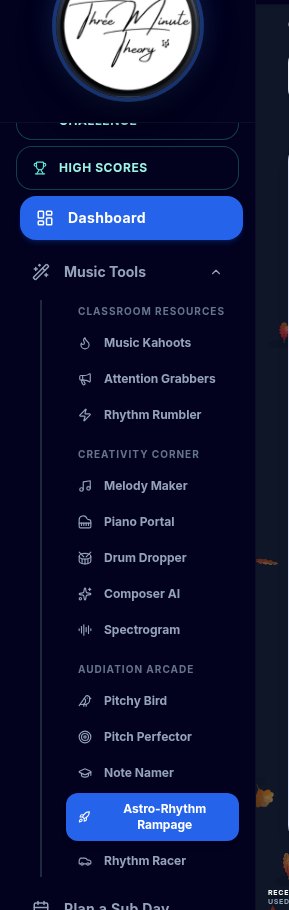
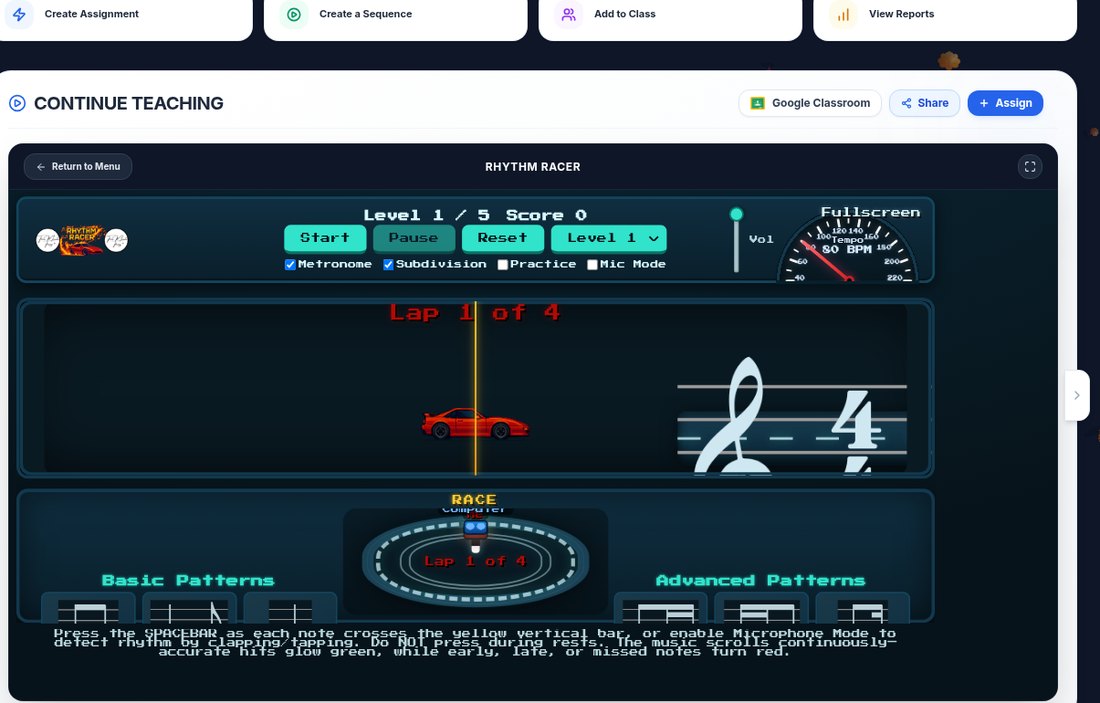
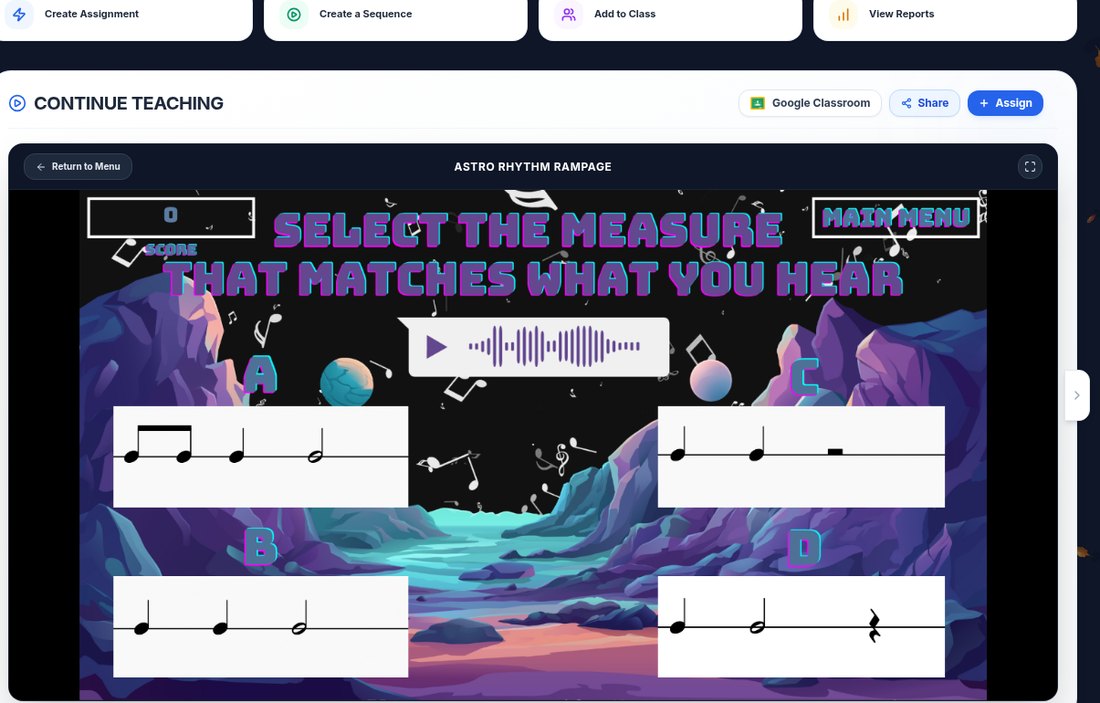
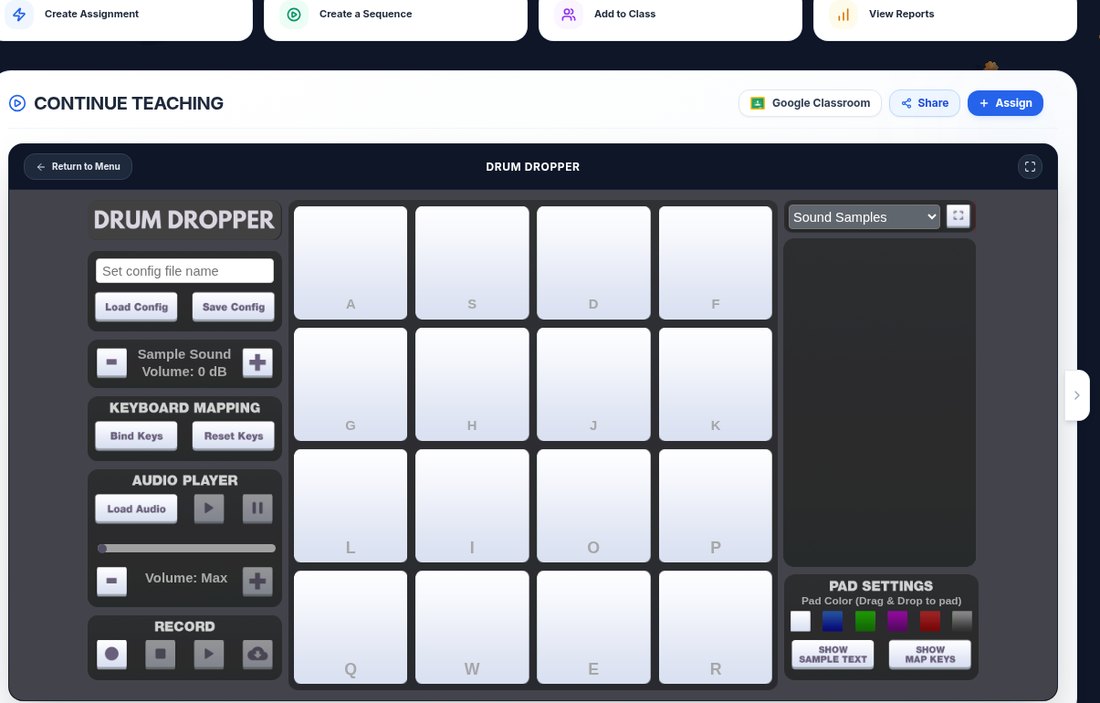
For a holiday week or a fun Friday, a clap-along video works the same idea with a familiar tune. Here is Matthew's Carol of the Bells clap-along, which is an easy way to keep pulse front and center for three minutes.
Watch on YouTube: Carol Of The Bells - Holiday Rhythm Clap Along!
Hear the Meter, Not Just See It
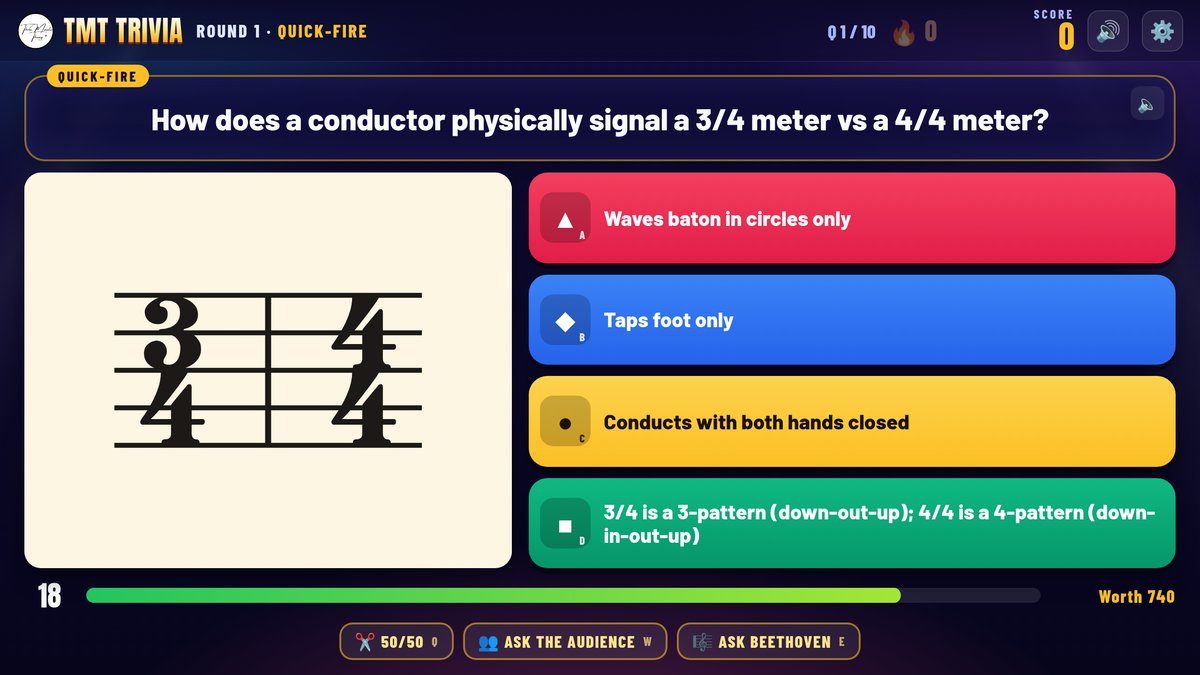
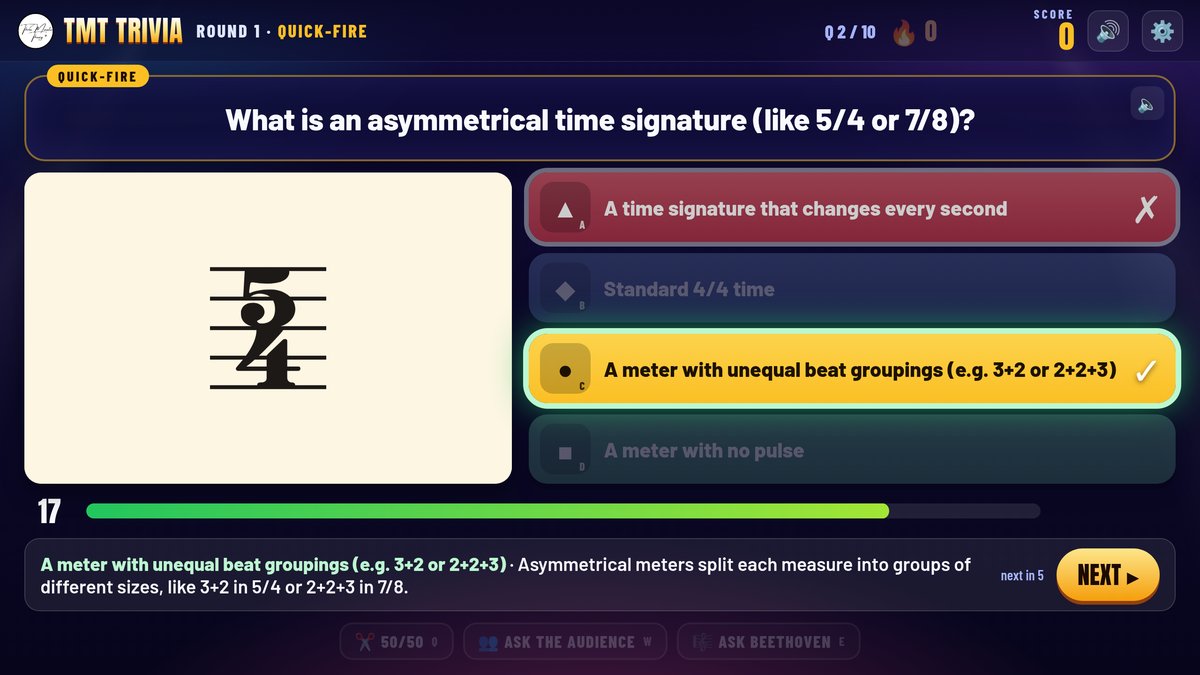
Band students also need to hear the difference between meters. Chapter 38, Hearing and Identifying Time Signatures, in Volume 4 Ear Training, trains that skill. Project the lesson, then run TMT Trivia on Chapter 38. Some questions are about how a conductor's pattern shows 3/4 versus 4/4. Others cover asymmetrical meters like 5/4. After a round, have the band listen to the opening of your piece with eyes closed and hold up fingers for the meter.
If you want more ear training ideas that fit a warm-up, our post on ear training for band and orchestra has a daily plan.
Games and Checks That Fit Rehearsal
Every Three Minute Theory game can play any chapter, so a sports game on Chapter 3 feels different from Trivia but reviews the same questions. TMT Basketball asks students to score from the floor spot that matches the right answer. TMT Bowling puts a question before every ball. For a warm-up, I usually stay with Trivia on the projector. For assigned review that night, Basketball or Bowling on Chapter 3 (or a mix of Chapters 3 and 11) works well.
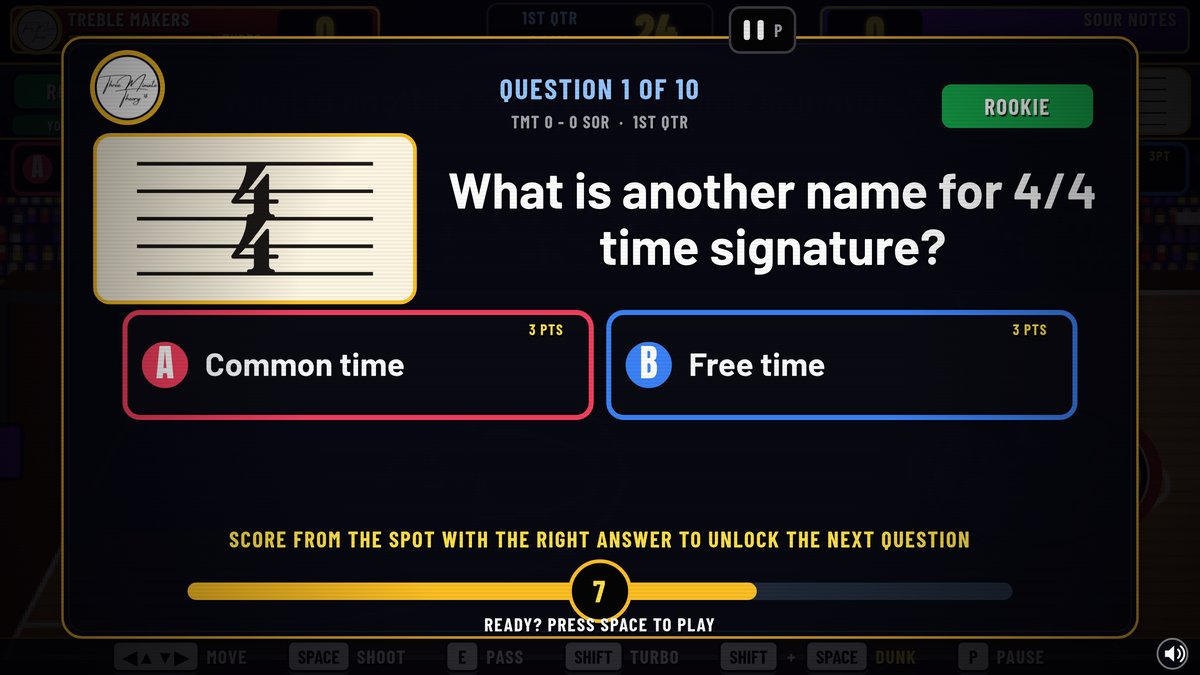
When you assign a game, you pick Easy, Medium, or Hard, an optional due date, and whether students see the class leaderboard. You can mix up to three chapters in one game, so Chapters 3, 11, and 18 can be one review assignment before a concert. After students play, the assignment page shows how each question went from each student's first try, with a Most missed view.
Live Review for a quick whole-band check
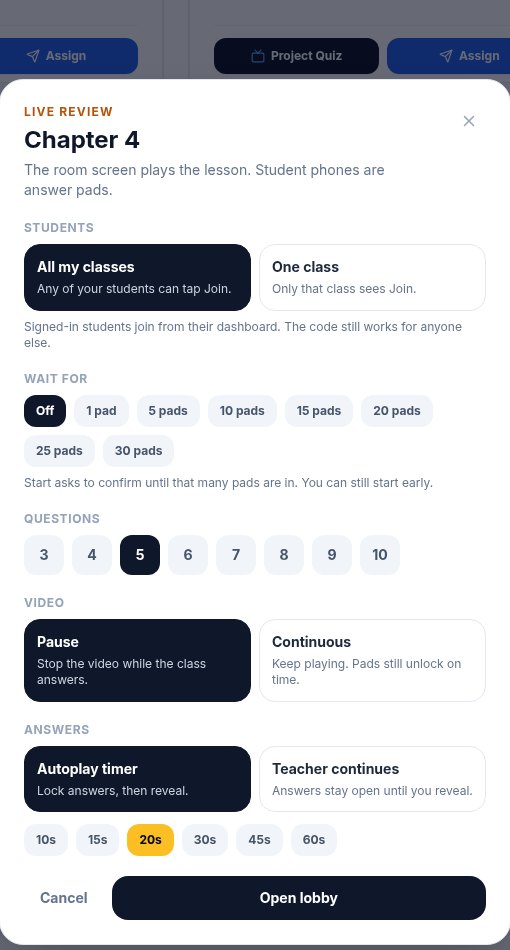
Open Chapter 3 and choose Live Review. The lesson plays on the room screen, and student phones become answer pads. In setup you choose how many pads to wait for, 3 to 10 questions, whether the video pauses, and whether answers lock on a timer. Then open the lobby. Signed-in students tap Join Live Review on their dashboard. At the end you can save scores to the gradebook.
A ready-made meter quiz
The Assessments page has 10 multiple-choice questions for each chapter in Volumes 1 to 9. Select Chapters 3 and 11 for a 20-question check, or add Chapter 18 if you have covered 6/8. Project the quiz or assign it. When you project it, you can set a question timer.
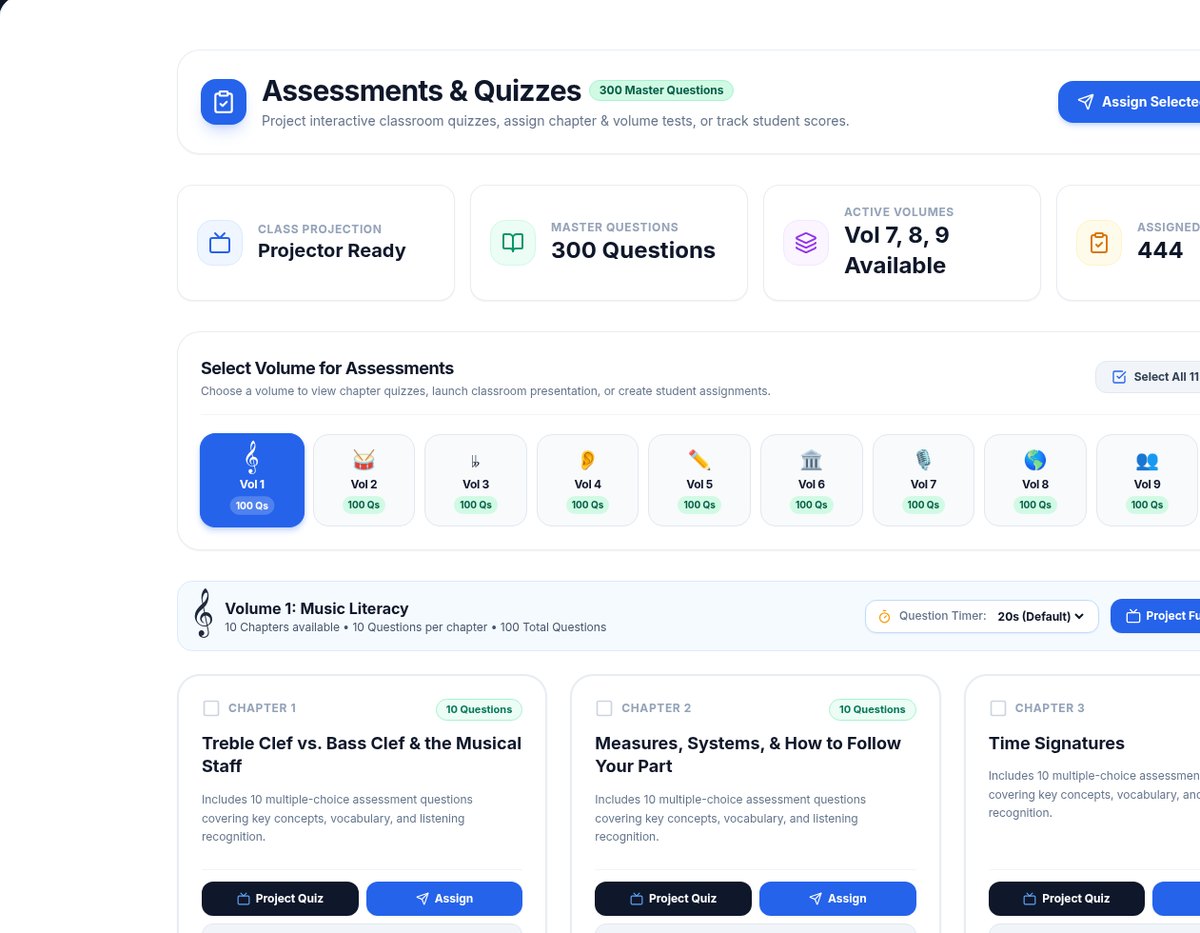
Each chapter also has a printable worksheet (answer key on page 2). Printables stay locked during the free week. If you will be out, Plan a Sub Day can put a Chapter 3 game on student devices with a printable sub sheet.
Mistakes I See Most (and Quick Fixes)
- Counting notes instead of beats. Fix: after naming the meter, clap only the pulse while you point to the time signature.
- Ignoring a meter change. Fix: stop at the double bar, name the new meter, clap one measure, then play.
- Rushing rests. Fix: have the band finger the notes and clap the rests for one phrase.
- Treating 6/8 like 3/4. Fix: project Chapter 18, then conduct two big beats while students say "1-la-li, 2-la-li."
- Only practicing on a worksheet. Fix: every theory minute ends with the instrument in their hands.
Where Meter Fits in a Yearly Plan
In our music theory curriculum map, time signatures sit early in Volume 1, right after the staff and measures, and rhythm work continues through Volume 2. For band I teach Chapter 3 as soon as students are reading full measures, then revisit meter every time the folder changes. Key signatures get their own warm-up track; see how to teach key signatures to middle school band for that routine.
Start Tomorrow
Pick the piece on the stand, project Chapter 3 or run five Trivia questions on that chapter, and have each section say the written meter before you play. That is three minutes, and it is the start of the habit. If you also teach strings, our post on music theory for orchestra covers alto clef and the same short warm-up idea. For a stations day, see music theory centers for middle school.
If you want the lessons and games above ready to go, take a look at Three Minute Theory for band directors, or try Three Minute Theory free for 7 days at ThreeMinuteTheory.com. When your band is ready to sight-read in those meters, try the 5-minute daily sight-reading routine for band from our sister app, SightReadQuest. And for more classroom ideas from founder Matthew Gawronski, visit MatthewGawronski.com.