High School Music Theory Curriculum: A 9 to 12 Sequence for Choir, Band, and Orchestra
A four-year theory map for high school choir, band, and orchestra, built on a few minutes a day, with the Three Minute Theory chapters, checks, and Live Review that fit each grade.
High school ensembles rarely start the year on the same page. A ninth grader from one middle school may read both clefs and name every key signature. The student beside her may have learned every part by ear. By junior year, the gap shows up at festival sight-reading, in the student who can play the notes but cannot tell you the key, and in the section that gets lost at every D.S. al Coda.
A high school music theory curriculum for an ensemble class has to close that gap without turning rehearsal into a theory elective. This plan maps grades 9 to 12 onto a few minutes of theory each rehearsal, with the real Three Minute Theory chapters, assessments, games, and Live Review that fit each year. It is the companion to our middle school music theory curriculum map, which covers the same strands for grades 6 to 8.
What a High School Theory Sequence Has to Do
A four-year map for choir, band, or orchestra should pass five tests:
- It starts with an audit, not an assumption. Find out what ninth graders actually know before you plan the year.
- It fits a short daily slot. Three to five minutes after warm-ups or tuning, then straight to the music.
- It spirals upward. Key signatures come back as scales, then as harmony, then as sight-reading.
- It grows independence. By grade 12, students should read beyond their own part, hear music before they play it, and explain choices in the score.
- It checks often and lightly. Short checks tell you who needs the foundation again and who is ready to move on.
The daily routine stays the same all four years. Play one short lesson, ask two or three questions, then find the concept in the music on the stands. Each Three Minute Theory lesson is a video of about three minutes. You can run it in Live mode, where you control it for the whole room, or in Independent mode, where students work at their own pace on their own devices.
Grade 9: Audit and Rebuild the Foundations
Ninth grade is where you find out what each feeder program taught. Do not reteach everything. Test first, then teach the gaps.
Open the Assessments page and choose Volume 1, Music Literacy. Each chapter has 10 multiple-choice questions, and each chapter card has a Project Quiz button and an Assign button. For a first-week audit, assign a few chapters or project the full volume. The chapters students miss become your September lessons.
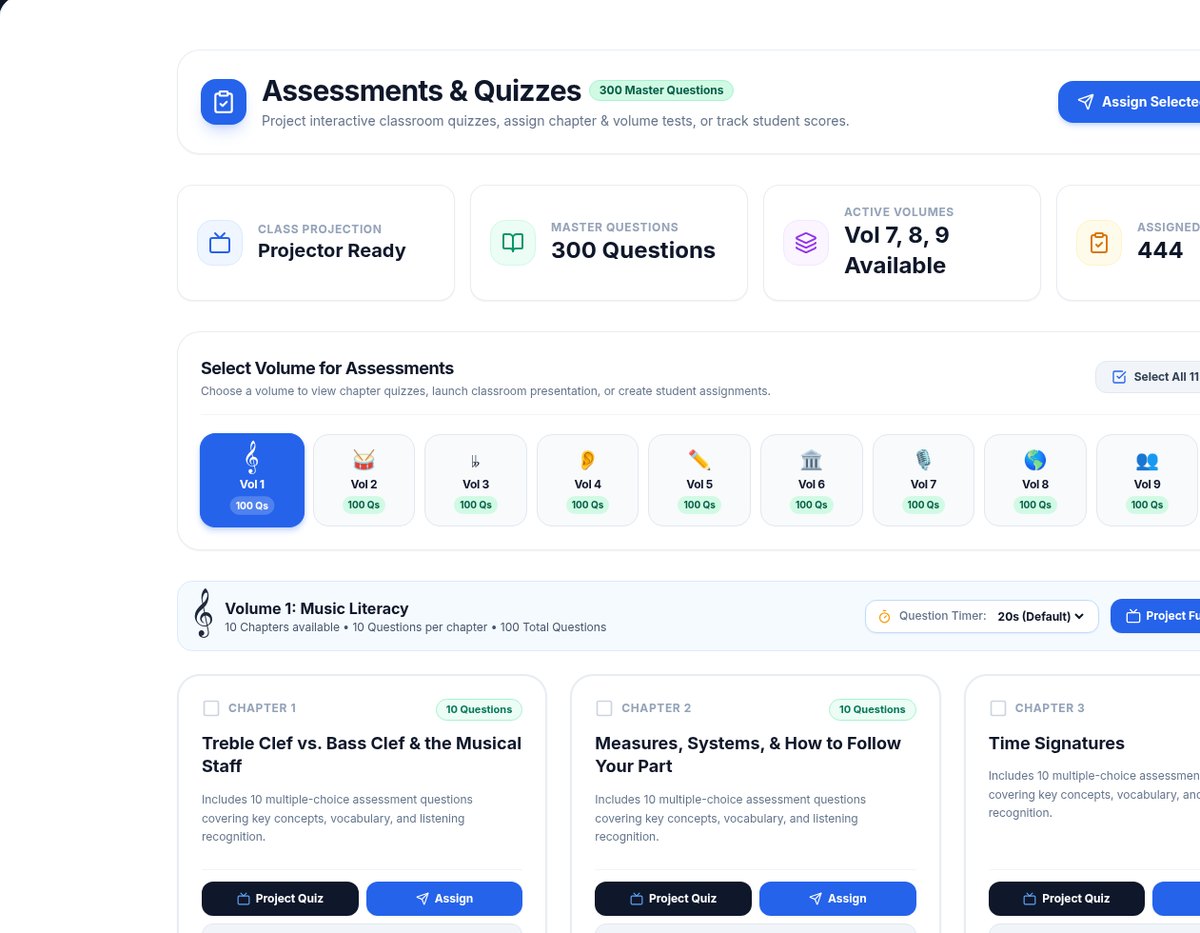
Start the year on the Assessments page. Assign Volume 1 chapter quizzes as a first-week audit, then teach only the chapters your ninth graders miss.
The Volume 1 chapters are the core of the audit: Chapter 1 (Treble Clef vs. Bass Clef and the Musical Staff), Chapter 2 (Measures, Systems, and How to Follow Your Part), Chapter 3 (Time Signatures), Chapters 4 and 5 (Reading Treble Clef Notes and Reading Bass Clef Notes), Chapter 6 (Accidentals), Chapters 7 and 8 (Solfege Syllables and Intro to Key Signatures, and Identifying Key Signatures), Chapter 9 (Ledger Lines and Solfege Review), and Chapter 10 (Whole Steps vs. 1/2 Steps).
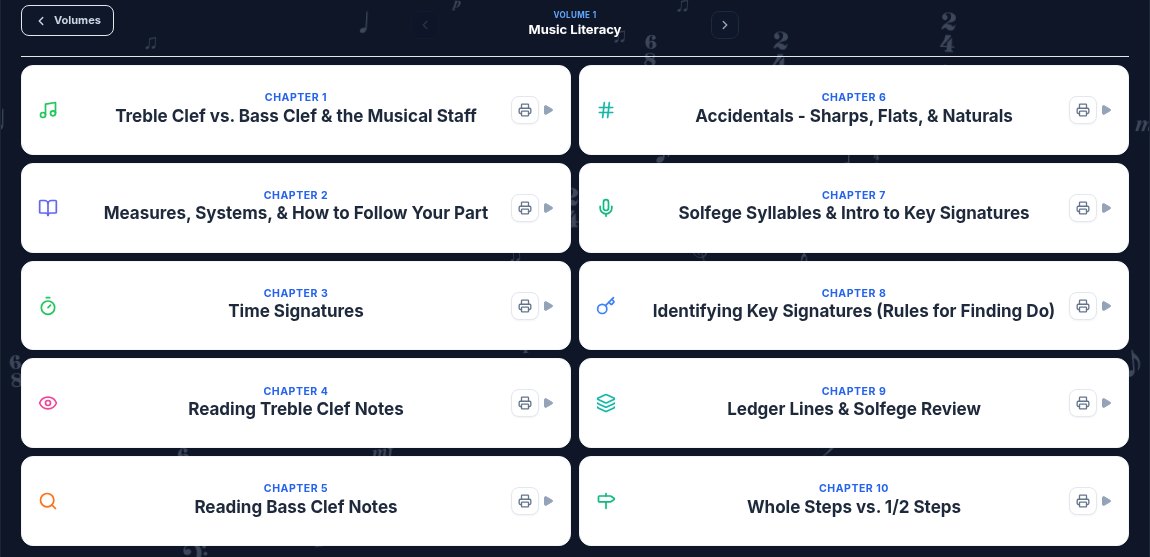
Volume 1, Music Literacy, on the teacher dashboard. For ninth graders who already know the staff, skip ahead to the chapters your audit flags, such as Chapter 8 or Chapter 10.
After the music literacy audit, do the same with Volume 2, Rhythm. Chapters 11 to 15 cover quarter notes, half and whole notes, eighth notes, dotted rhythms, and rests. Many ninth graders count well in their own part but cannot explain a dotted quarter note. A quick check finds that before the winter concert does.
When a chapter needs review, project TMT Trivia on that chapter. After each answer, Trivia shows a one-line explanation. Read it aloud, then ask students to find the same note or rhythm in their folder music.
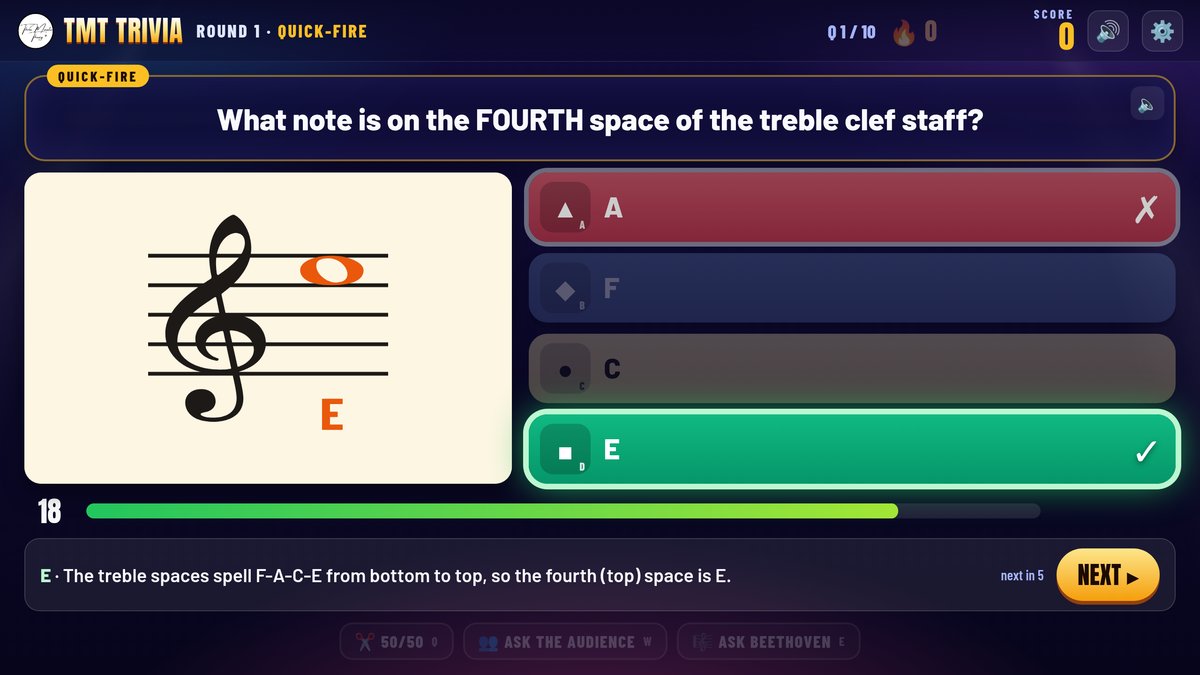
TMT Trivia shows why an answer is right, not just that it is right. With high school students, ask a volunteer to explain the rule in their own words before you move on.
When you assign a game for homework, set the level to Hard (high school). The level menu lists Easy (elementary), Medium (middle school), and Hard (high school), so older students review the same chapter at a level that fits them.
Grade 10: Symbols, Advanced Rhythm, and the Ear
Once the foundation is solid, tenth grade adds the details students meet in harder repertoire, plus serious ear training.
For notation, finish Volume 3, Musical Symbols, with Chapter 29 (Less Common Dynamics) and Chapter 30 (Other Articulations). Then return to Volume 2 for Chapters 16 to 20: Sixteenth Notes, Ties vs. Slurs, Rhythm in 6/8 Time, Syncopation, and Multi-Measure Rests and Rhythm Review. Teach each one the week it appears in your concert music.
For the ear, Volume 4, Ear Training, is the core of grade 10. The chapters build from Chapter 31 (Half Steps and Pitch Direction) and Chapter 32 (Steps vs. Jumps) through Chapter 33 and Chapter 35 (Using Solfege to Understand Popular Jumps, and Less Common Jumps), Chapter 34 (Tuning: Sharp vs. Flat), Chapter 36 (Feeling the Pulse and Subdivision), Chapter 38 (Hearing and Identifying Time Signatures), Chapter 39 (Identifying Instrumentation by Ear), and Chapter 40 (Hearing and Dictating More Complex Rhythms).

Volume 4 on the Assessments page. Each ear-training chapter has 10 questions that cover key concepts, vocabulary, and listening recognition, so you can check Chapter 33 the week you teach it.
Ear-training chapters work best when the check involves the ensemble. After Chapter 34, play a unison pitch slightly sharp or flat and have students show which. After Chapter 38, conduct a phrase from your repertoire and ask students to name the meter.
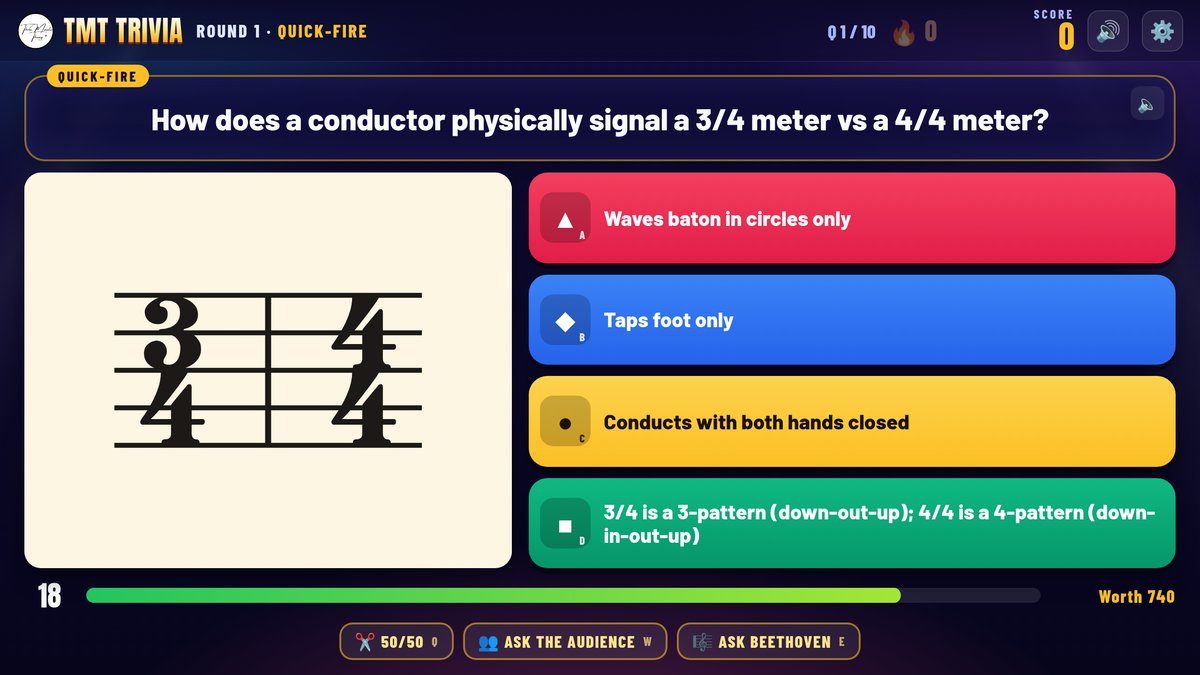
A TMT Trivia question on meter and conducting. After students answer, have them conduct the pattern while the ensemble plays four bars in that meter.
Grade 11: Sight Reading and Inner Hearing
Junior year is when festival sight-reading, all-state auditions, and harder literature all arrive. The Sight Reading Volume, Volume 10, is built for that.
Start with Chapter 91 (What Is Sight Reading and Why Does It Matter?) and Chapter 92 (Before You Sight Read), then Chapter 93 (How to Read Ahead), Chapter 94 (How to Find Musical Patterns), and Chapter 95 (Recovering from Mistakes). These give students a plan for the first 30 seconds with a new piece.
The second half of the volume is where high school students grow. Chapter 96 (Developing Your Inner Hearing) teaches students to hear the music before they make a sound.
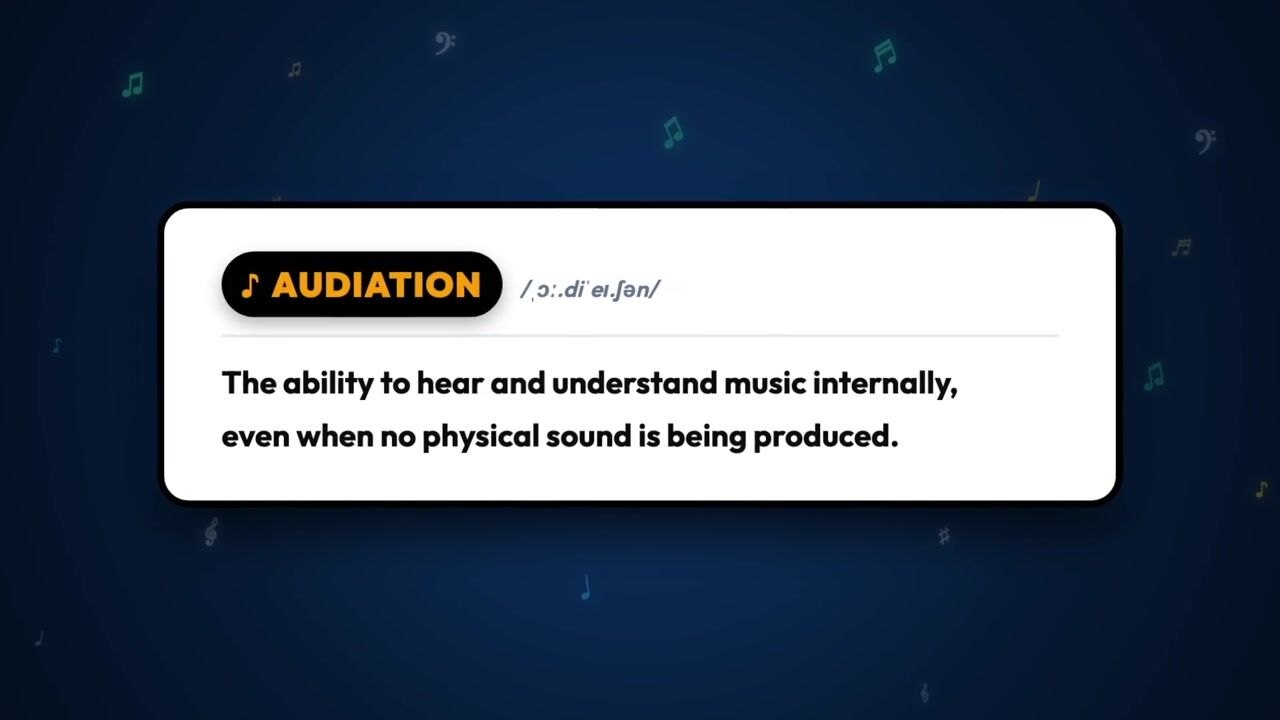
From Chapter 96, Developing Your Inner Hearing. After the lesson, give students eight measures, ask them to hear it silently for 30 seconds, then sing or play it once.
Chapter 97 (Vertical Sight Reading) teaches students to keep their place in their own part while noticing what the other parts are doing. Chapter 98 covers Ensemble Sight Reading, Chapter 99 covers Advanced Sight Reading Approaches, and Chapter 100 covers The Science Behind Sight Reading.
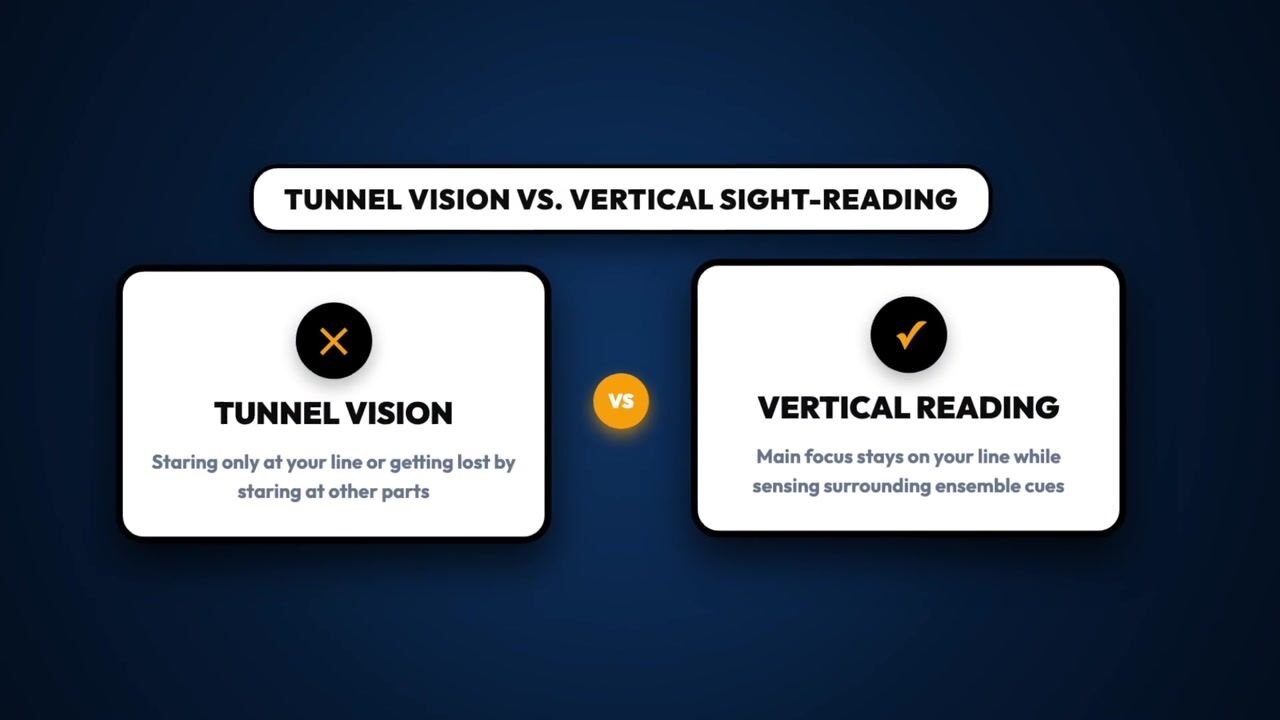
From Chapter 97, Vertical Sight Reading. Use it before your next sight-reading run, then ask each section to name one cue they heard from another part.
The Assessments page covers Volumes 1 through 9, and Volume 10 assessments are still in development. To check the Sight Reading Volume today, use Live Review. The lesson plays on the room screen, and student phones become answer pads. You choose 3 to 10 questions and whether the video pauses while students answer.
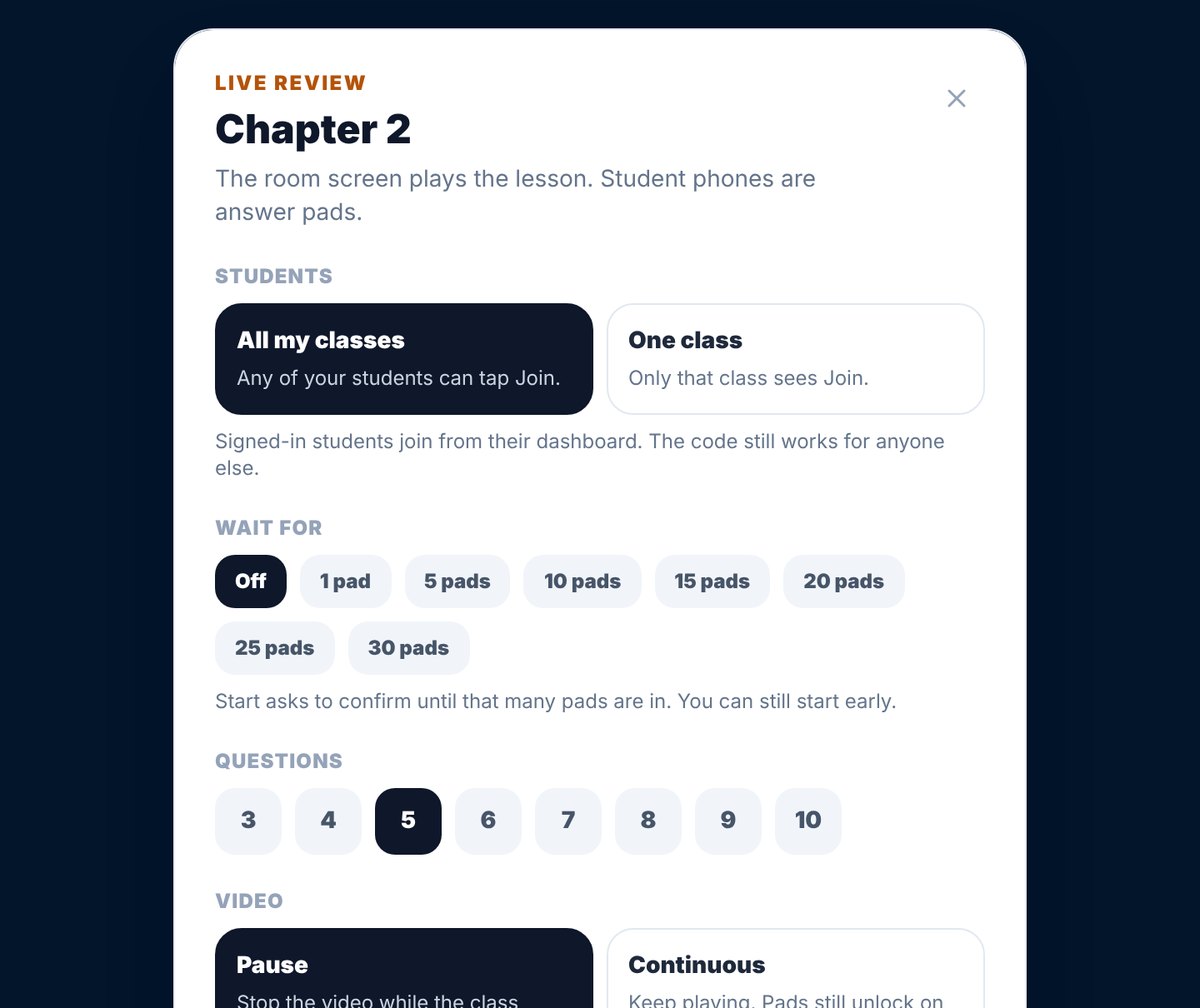
The Live Review setup. For a junior-year sight-reading lesson, choose 5 questions and Pause, so students answer between sections of the lesson.
For daily sight-reading practice with feedback, our sister app SightReadQuest lets students sing or play into a mic and see right and wrong notes on the staff as they go.
Grade 12: Create, Connect, and Lead
Seniors are ready to use theory, not just name it. Grade 12 adds composing, harmony, and the history and styles behind the music they perform.
Volume 5, Music Creation, starts with Chapter 41 (How to Draw Popular Music Symbols) and Chapter 42 (Melody Creation). Chapter 43 (What Is Harmony?) and Chapter 44 (How Bass Lines Affect the Melody) connect directly to the chords in your repertoire. Later chapters cover Advanced Melody Creation, Understanding Song Structure, Adding Lyrics to Your Music, The Power of Tempo and Percussion, The Importance of Instrumentation, and How to Record Your Song.
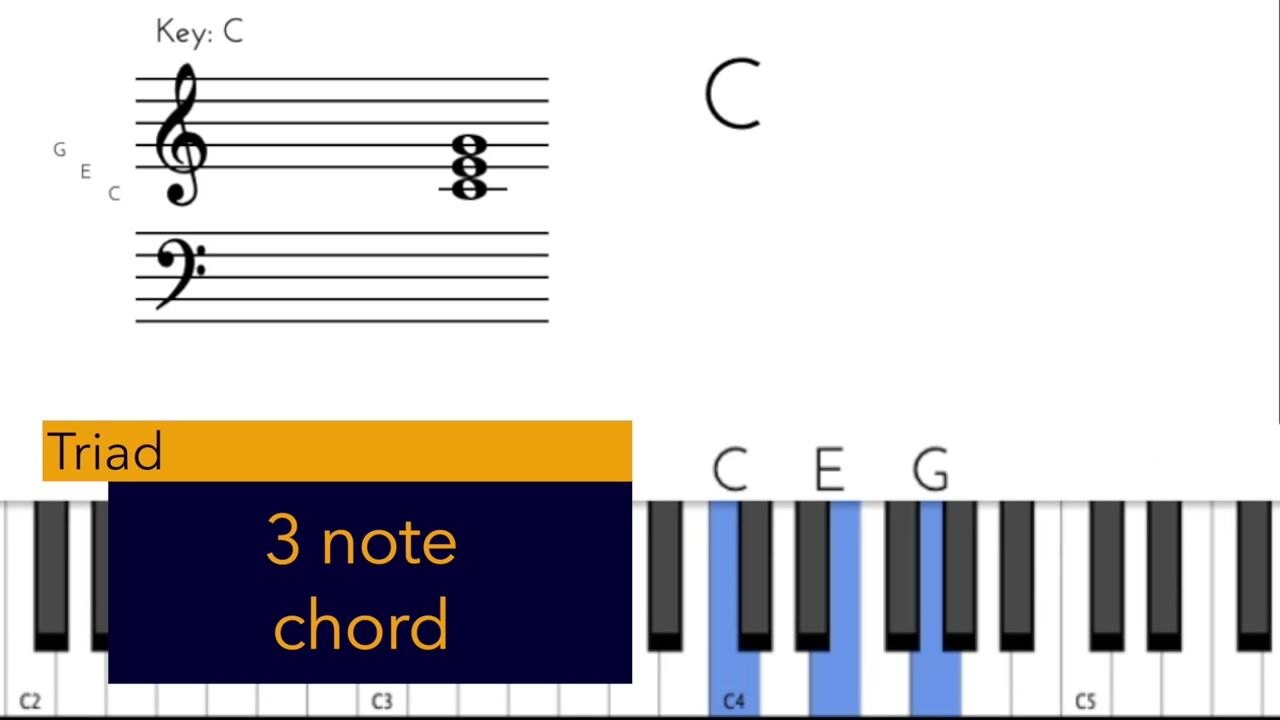
From Chapter 43, What Is Harmony? After the lesson, have each section hold one note of a C major triad, then find a triad in your concert music.
A senior capstone fits here. Students write a short melody using the Melody Maker tool in Three Minute Theory and hear it played back, then add a bass line using what they learned in Chapter 44.
For context, rotate one chapter a week from Volume 6 (Music History), Volume 7 (Music Genres), or Volume 8 (World Music). Chapter 58, 59, or 60 (The History of the Choir, the Orchestra, or the Band) is a strong match for each ensemble.
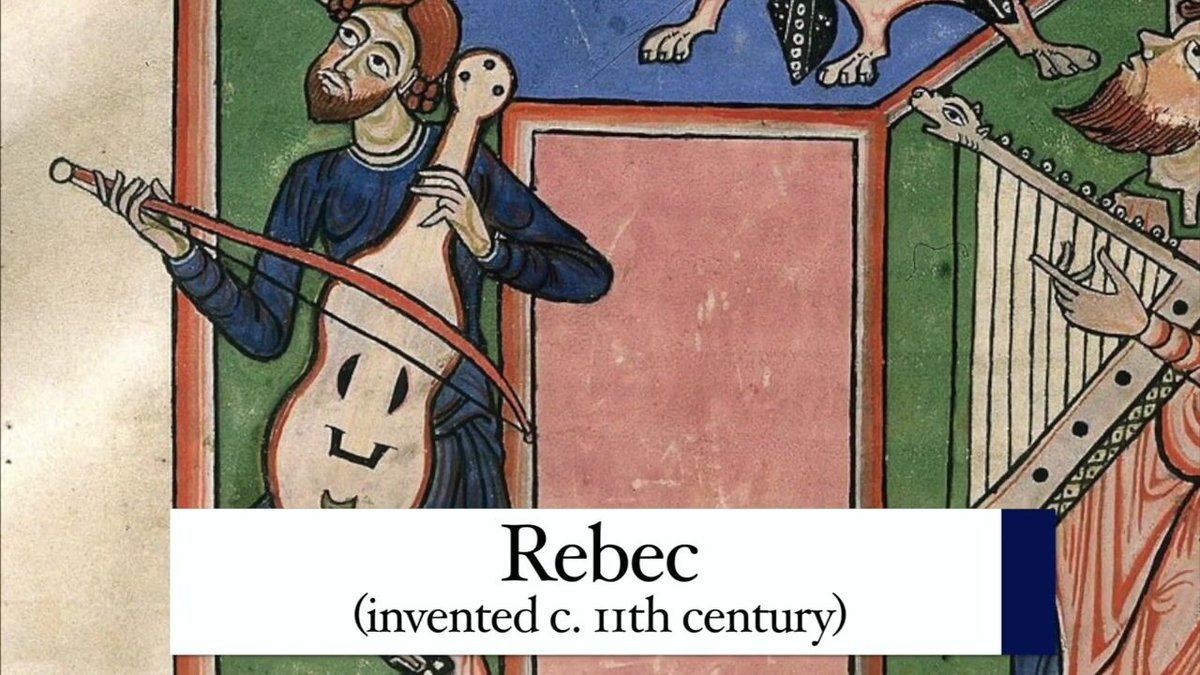
From Chapter 59, The History of the Orchestra. Show it before a string rehearsal, then ask students which modern instrument the rebec reminds them of.
Seniors can also lead. Let a senior choose the chapter for a Friday game, or run the "find it in the music" step for their section.
Adjust the Map for Choir, Band, and Orchestra
The four years above are the shared core. Each ensemble needs a few additions.
Choir
Add one lesson a month from The Choir Volume, Chapters 81 to 90. Chapter 85 (How to Read a Choral Score) fits grade 9, Chapter 86 (How to Find Do) pairs with key signatures, and Chapter 90 (Vocal Intonation) fits the grade 10 ear-training year. For more choir ideas, see our post on music theory for choir.
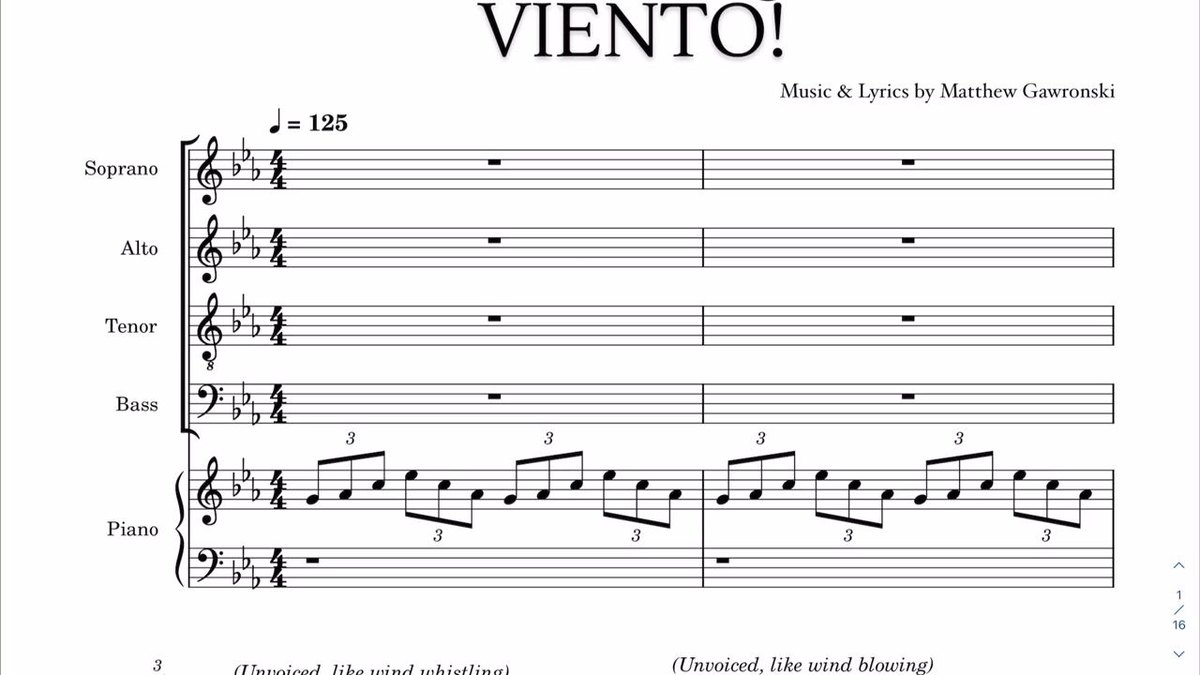
From Chapter 85, How to Read a Choral Score. The lesson uses a real SATB octavo, Viento! by Matthew Gawronski. Play it the day you hand out a new piece.
Band
Teach both clefs in grade 9, since low brass and bassoons read bass clef. Keep concert pitch as the shared language, and have each section name its own written key. Our post on how to teach key signatures to band has a warm-up routine that works with high school players, too.
Orchestra
Add Chapter 101, The Alto Clef, to grade 9 for violists, and keep cellos and basses in bass clef. Our guide to music theory for orchestra has more string-specific ideas.
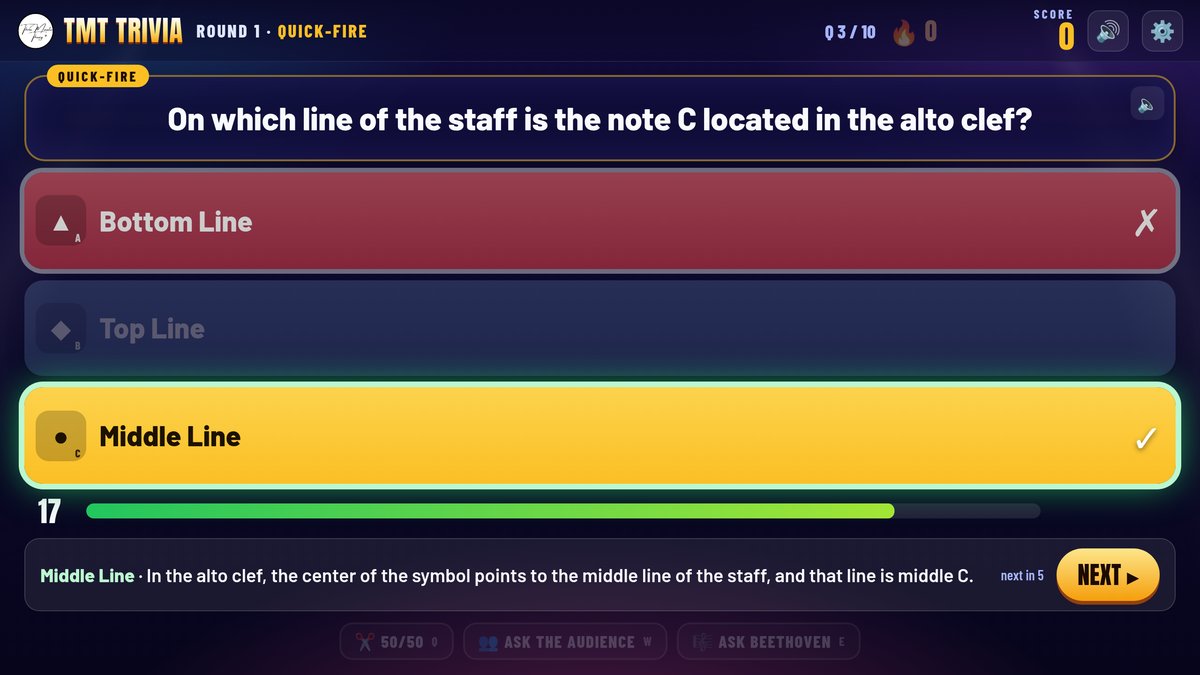
A TMT Trivia question from Chapter 101, The Alto Clef. Mix Chapter 101 with Chapter 4 or Chapter 5 in one game, so violas, violins, and low strings each review their own clef.
Check Progress Without Losing Rehearsal
High school students do not need a weekly theory test. Use short, regular checks instead.
Assigned games at the right level. When you assign a game, you choose the level, add an optional due date, and turn the class leaderboard on or off. Students can replay as often as they like, and their grade is their best accuracy. You can mix up to three chapters in one game for a unit review.
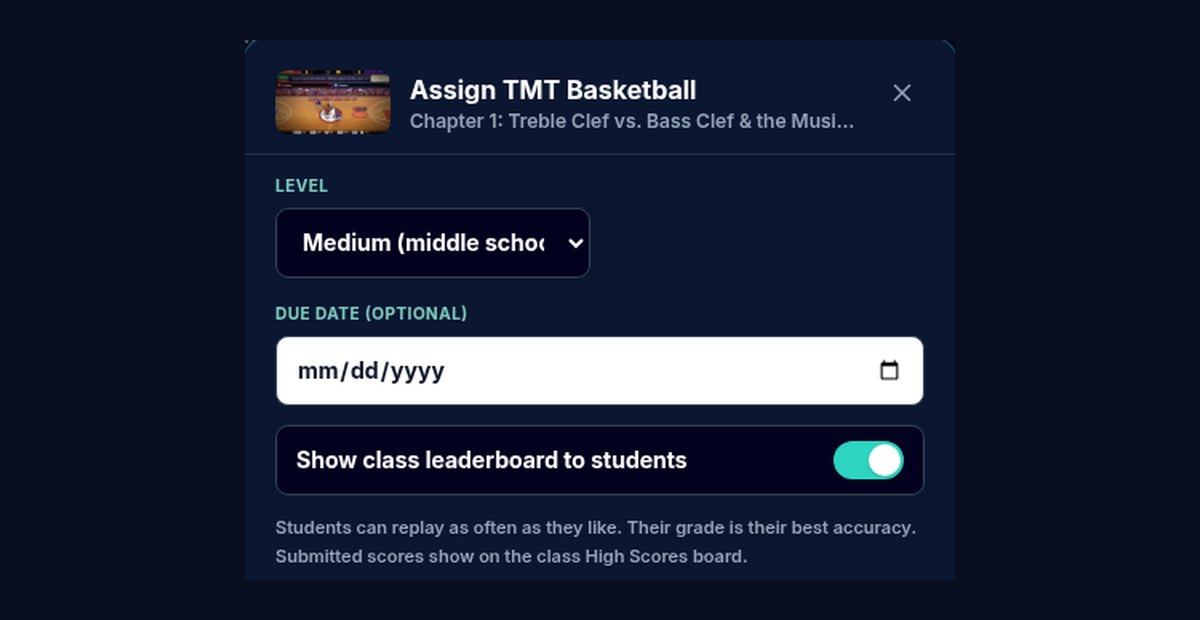
The Assign dialog for TMT Basketball. For high school classes, change the level to Hard (high school) before you assign it.
Unit playlists. On the assignment screen, each chapter has + Lesson Only, + Full, and + Questions Only buttons, so you can build one assignment with a lesson, its review questions, and a game. Save it to your Sequence Library and reuse it next year.

The Create New Assignment screen. Use + Questions Only to add a chapter's review questions without the lesson, for example as the last step of a unit.
A Live Game Challenge. For a Friday review, pick the class, up to 5 topics, and the games. Students join from their dashboard and compete on a High Scores board.

The Live Game Challenge setup. Choose up to 5 topics from the unit you just finished, then choose the games students will play.
A Sample Week in a Grade 9 to 12 Ensemble
Many high school ensembles mix all four grades. One routine still works:
- Monday: A three-minute lesson from this month's chapter, then find it in the concert music.
- Tuesday: Two TMT Trivia questions on the same chapter, then rehearse the measures where it shows up.
- Wednesday: An ear-training or sight-reading lesson from Volume 4 or Volume 10.
- Thursday: An assigned game at Hard (high school) level for homework.
- Friday: Live Review with 3 to 5 questions, or a Live Game Challenge on the week's topics.
Mixed grades are not a problem. Use the grade 9 audit for everyone the first year. Upperclassmen will move fast, and you will know which ninth graders need more time with Volume 1.
Frequently Asked Questions
What should a high school music theory curriculum include?
Reading in every clef the ensemble uses, rhythm through syncopation and 6/8, key signatures and scales, ear training, sight reading, and basic harmony. If time allows, add composing and music history. Three Minute Theory covers each of these strands across its 10 volumes.
Is this the same as an AP Music Theory course?
No. This map is for the theory students need inside a choir, band, or orchestra rehearsal. A separate theory course has its own syllabus and exam. Students who follow this map will start that kind of course with a stronger foundation.
How much rehearsal time should high school ensembles spend on theory?
Three to five minutes a day is enough when it happens every day and connects to the music on the stands. Consistency matters more than length.
What if my ninth graders never had music theory in middle school?
Start everyone with the Volume 1 audit, then teach Volume 1 in order. The middle school music theory curriculum map shows how to pace those chapters, and the high school sequence picks up once students are ready.
Can one map work for a mixed-grade ensemble?
Yes. Keep one daily lesson for the whole room, and use game levels and assignments to give older students harder practice on the same chapter.
Getting Started
Before the next semester, mark your concert and festival dates, place the grade 10 and grade 11 chapters around them, and protect your daily theory slot. Then give your ninth graders the Volume 1 audit in the first week.
If you want the shorter explanation of how the class routine works day to day, read why teachers use Three Minute Theory.
If you want the lessons, assessments, games, and Live Review in one place, see Three Minute Theory for choir, band, and orchestra, or try Three Minute Theory free for 7 days at ThreeMinuteTheory.com.