How to Teach Note Reading in Middle School Band (Treble and Bass Clef)
A band-first note-reading routine using real Three Minute Theory clef lessons, review games, and chapter checks, with an alto-clef path for orchestra.
A beginning band can play the right pitch for the wrong reason. A student remembers the fingering from yesterday, copies the player beside them, or writes every letter above the staff. Change the starting note and the line falls apart. If you are working out how to teach note reading, build a short loop: locate the note, name it, hear it, then play it in the part.
You do not need to stop rehearsing to work on that loop. Use one clear example from a Three Minute Theory lesson or game, then transfer it to the music on the stands. This plan focuses on treble and bass clef in middle school band, with an alto-clef option for orchestra. The goal is independent reading, not winning a race to recite a mnemonic.
1. Check the Clef Before Teaching More Note Names
Start with Three Minute Theory Chapter 1, Treble Clef vs. Bass Clef & the Musical Staff. Before asking students for letters, ask them to point to the clef, one line, and one space. Then have them count staff lines from the bottom. That quick check separates a staff-reading problem from a note-name problem.
Project TMT Trivia on the chapter. Have every student answer privately before anyone calls out. Fingers held close to the chest, a small whiteboard, or a scrap of paper all work. A correct answer from the loudest trumpet player does not tell you what the low brass know.
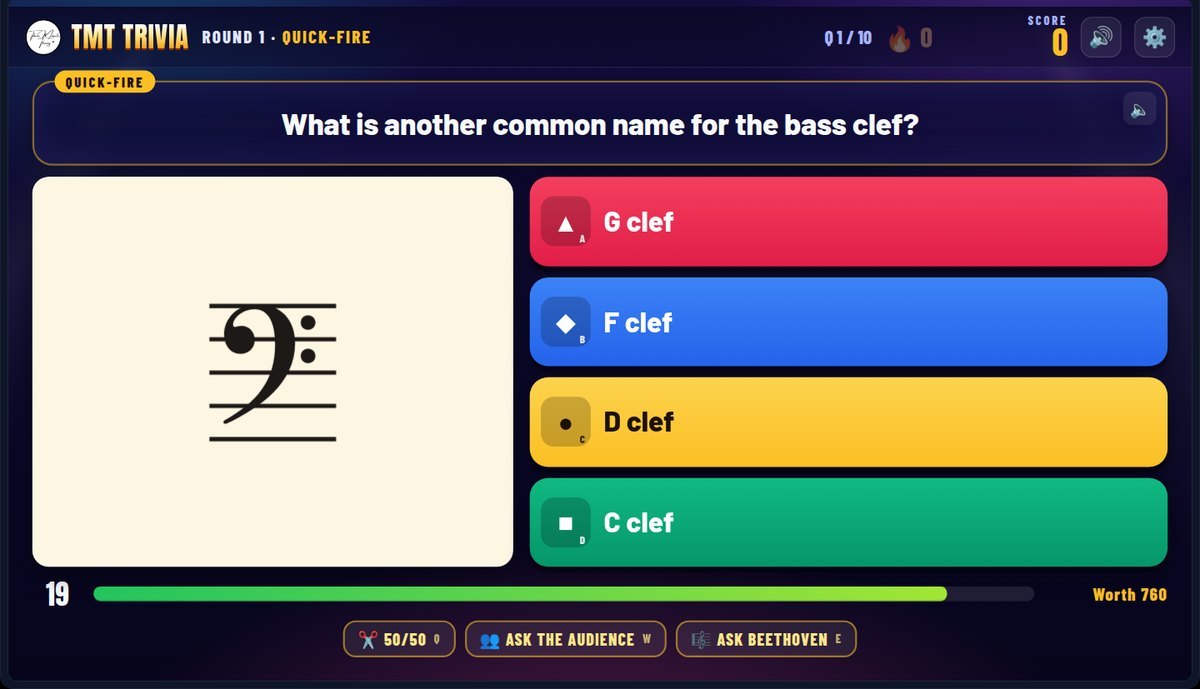
The dots surround the fourth line, F, in bass clef. The treble clef curls around the second line, G. These landmarks give students a place to restart when a mnemonic disappears under pressure.
2. Teach Treble and Bass Clef as Separate Reading Tasks
Open Chapter 4, Reading Treble Clef Notes, for flute, clarinet, saxophone, trumpet, and other treble-clef parts. Use Chapter 5, Reading Bass Clef Notes, for the bass-clef parts in your room. Follow the notation students actually have, including your school's choice of euphonium part.
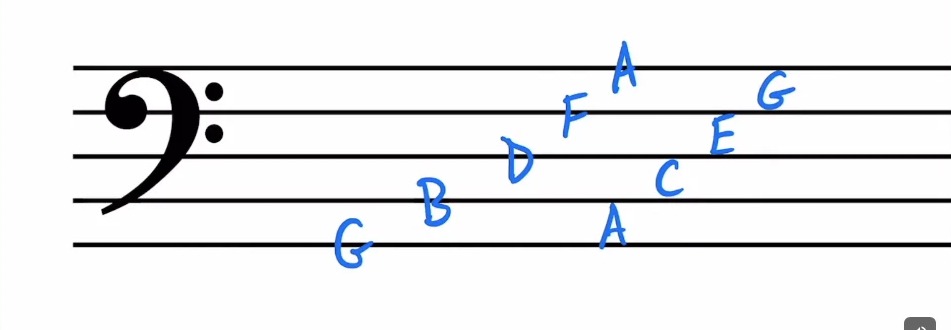
Teach a small set of notes, not the whole staff plus every ledger line at once. In treble clef, a student can locate second-line G and move one staff position at a time, alternating line and space. In bass clef, use fourth-line F the same way. Say letters in both directions so students are not dependent on always starting at the bottom.
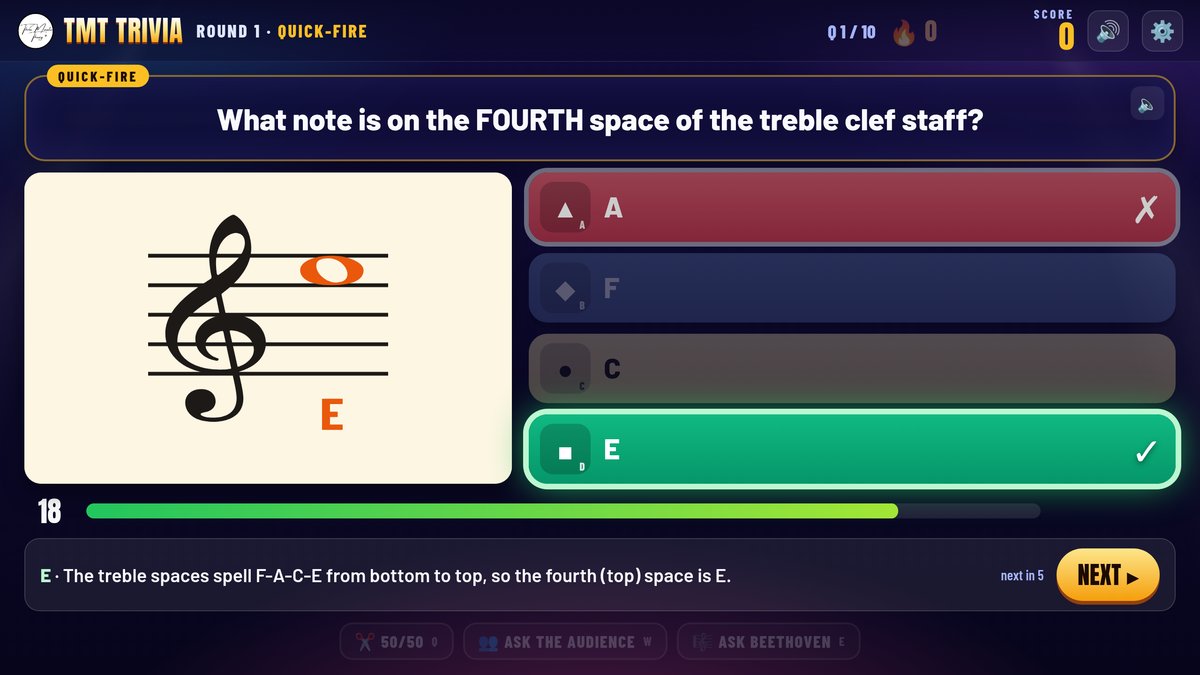
Mnemonics can help, but ask a second question: "How did you find it?" A student who can explain a landmark and a step has a way to solve the next note. Keep the two clefs visibly labeled when comparing them. The same staff position does not mean the same letter in both clefs.
3. Move From One Note to a Short Pattern
After a Chapter 4 or Chapter 5 review question, point to three neighboring notes in the concert part. Students name the first note, then describe the movement: up a step, down a step, or repeat. Have them say the letters, silently form the fingerings or slide positions, then play.
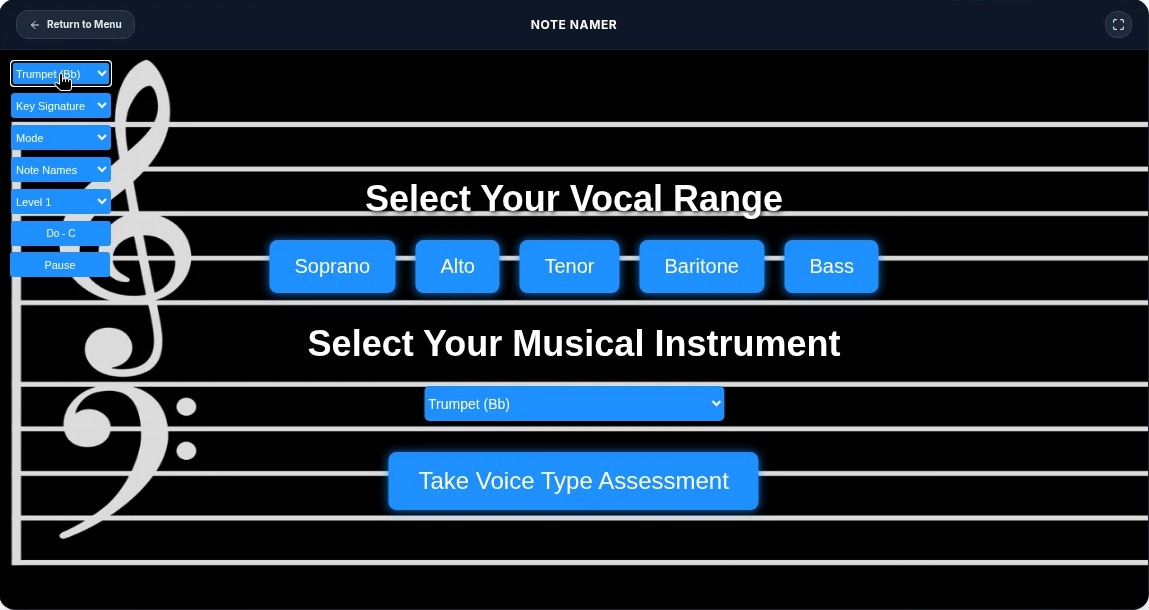
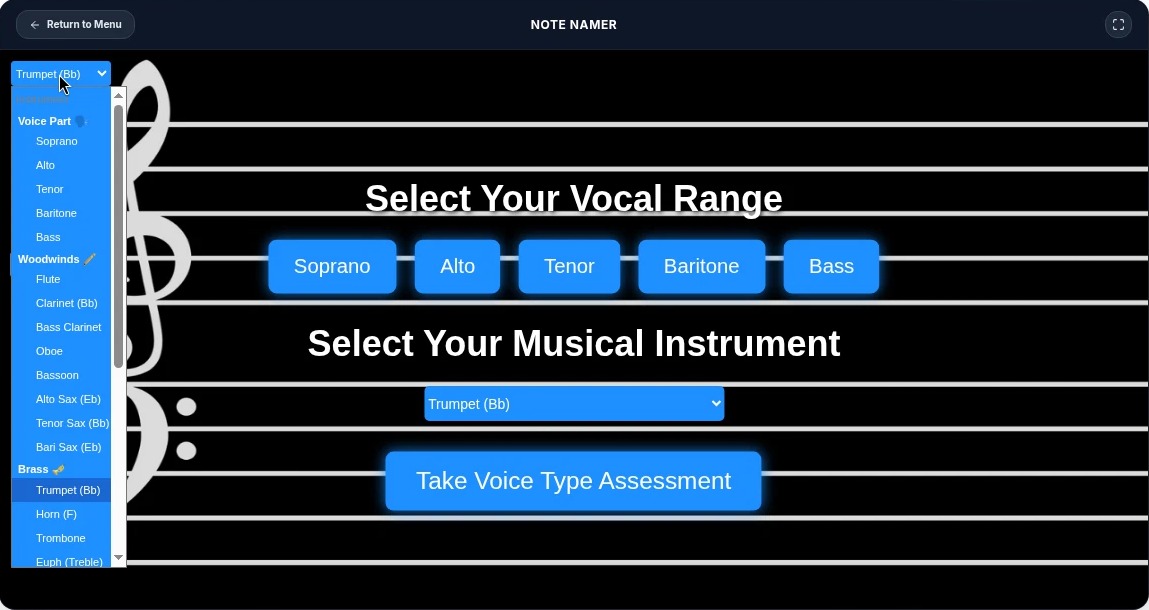
Three Minute Theory's Note Namer adds microphone-based practice. Students select a vocal range or instrument, allow microphone access, and sing or play while the tool listens to their pitch. The controls include Instrument, Key Signature, Mode, Note Names, and Level. Choose a suitable instrument and level before a short turn, then return to the printed part. This is not a multiple-choice note-name quiz with answer buttons.
For a whole-class review, return to TMT Trivia on the same clef chapter. Ask students to explain one answer before advancing. Accuracy and an explanation are more useful here than a fast guess.
Do not ask every instrument to play the same written letter and expect a unison. Clarinet written C and flute written C do not sound the same pitch. For the playing step, use a concert-pitch target and each instrument's correct written note, or let sections read their own line in turn.
4. Add Ledger Lines, Accidentals, and the Key Signature When Needed
Once the staff notes are steadier, use Chapter 9, Ledger Lines & Solfege Review, for the notes just beyond the staff in the current piece. Find the nearest known note and count one staff position at a time. A ledger line is a continuation of the staff, not a new alphabet.
Then pair Chapter 6, Accidentals - Sharps, Flats, & Naturals, with Chapter 8, Identifying Key Signatures (Rules for Finding Do). Ask for the letter first, then the sharp, flat, or natural that applies. This helps you hear whether a mistake came from locating the note or forgetting the key.
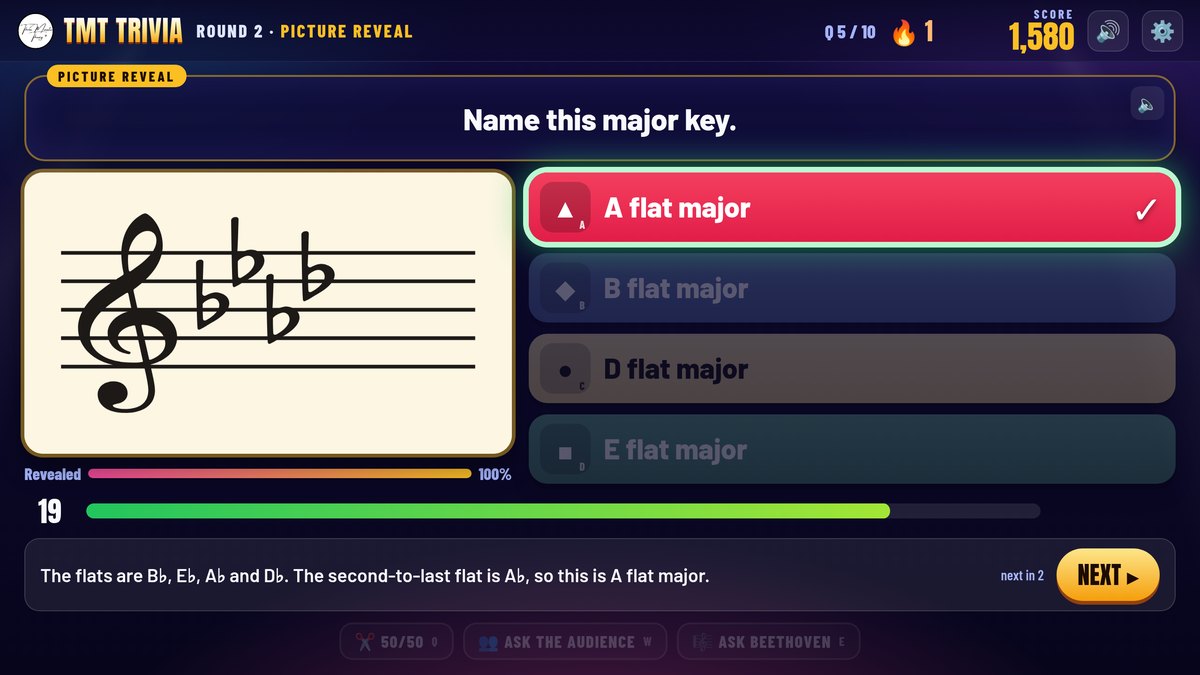
For a fuller teaching sequence, see how to teach key signatures in band. Keep the first reading task small. A new ledger-line note, a new accidental, and a new rhythm all at once can hide which skill needs help.
5. Give Orchestra Students Their Own Clef Path
The same routine works after tuning in orchestra, but violists need an alto-clef path. Three Minute Theory's bonus Chapter 101, The Alto Clef!, belongs beside Chapters 4 and 5, not at the end as an extra task for the viola section.
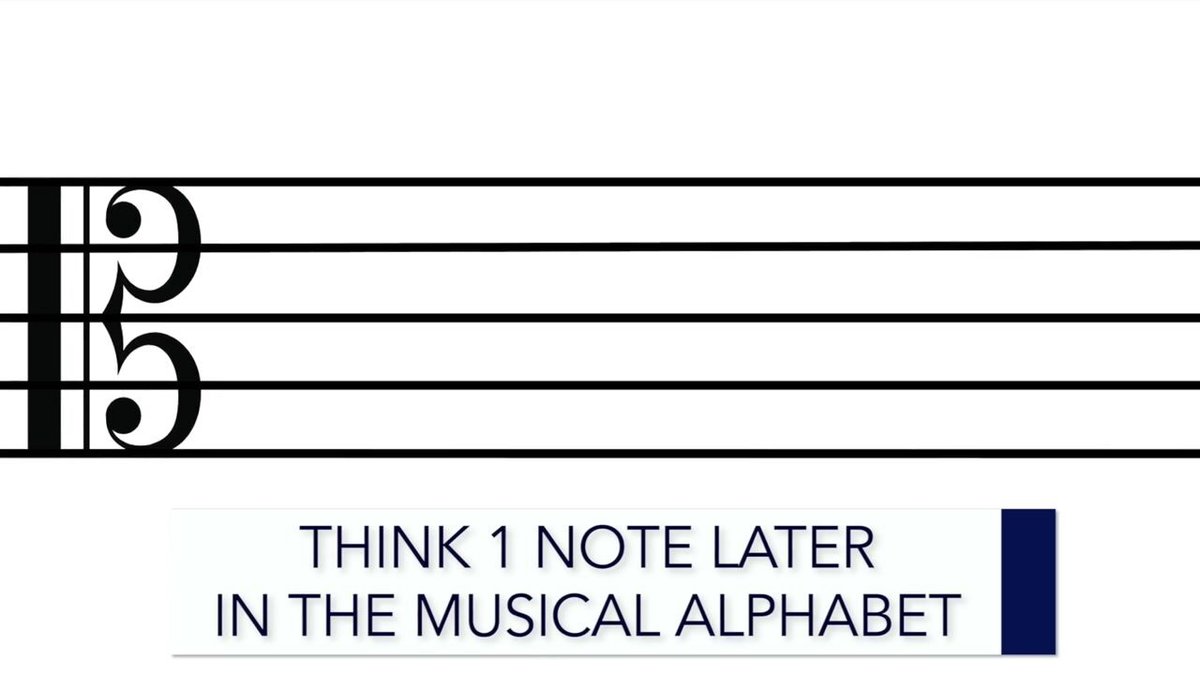
Teach middle-line C as an alto-clef landmark, then have students read a short pattern in their own part. Violin, viola, cello, and bass sections can work on the same reading habit without pretending they all use the same staff. More ensemble-specific ideas are in music theory for orchestra.
6. End With a Check That Changes Tomorrow's Warm-Up
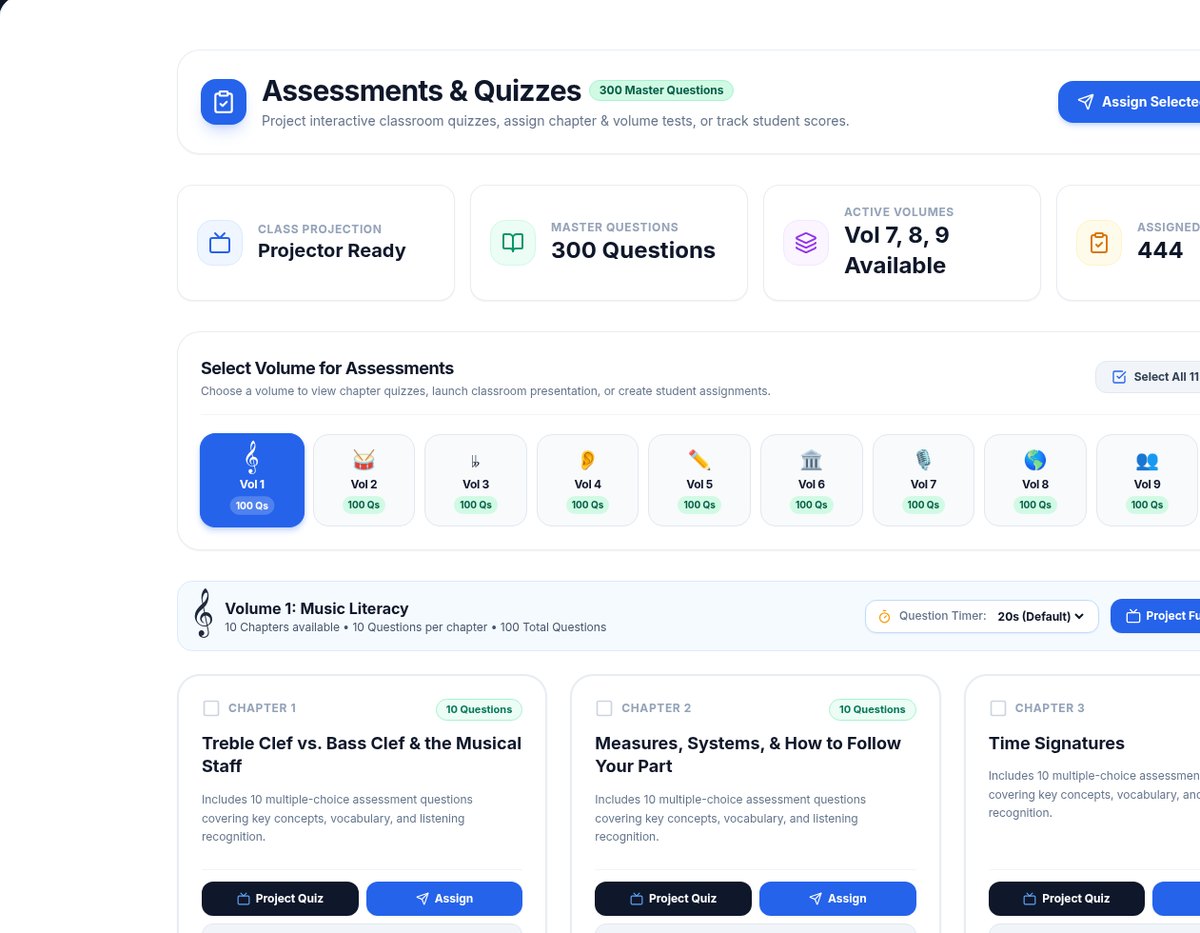
Use Assessments & Quizzes to find the Chapter 4 or Chapter 5 assessment. Project a chapter quiz when you want to discuss the reasoning together, or assign it when you need individual answers. A combined Chapter 4 and Chapter 5 quiz is a different task: use it only if students have actually learned both clefs.
Sort mistakes into three groups: wrong staff position, wrong letter, or missed accidental. Tomorrow, reopen the matching TMT chapter rather than repeating the whole unit. Finish today's check by playing one short phrase. Naming notes and reading music should reconnect before the instruments go away.
Frequently Asked Questions
How do you teach note reading to beginners without writing in every letter?
Use one landmark, a small set of notes, and a short passage. Pair Chapter 4 or 5 with TMT Trivia, then ask students to name and play a new example. If a student needs a penciled landmark, keep it limited and return to an unmarked example to check independence.
Should band students learn both treble and bass clef immediately?
Start with the clef on each student's part. Chapter 1 introduces the difference; Chapters 4 and 5 give you separate teaching paths. Add the other clef when there is a musical reason, not as an extra hurdle before students can read their own music.
What if students name notes correctly but still cannot play the phrase?
Separate the tasks. Use a Chapter 4 or 5 question to check naming, then finger silently, then play slowly. Check rhythm separately with Chapter 3, Time Signatures, or Chapter 11, Quarter Notes/Time Signature Review. A correct letter does not prove the fingering or rhythm is secure.
Is there a separate resource for choir note-name practice?
Yes. For a choir-focused route, see Matthew Gawronski's Note Namer. Keep this band routine focused on instrumental parts and the clefs students read in rehearsal.
Start With Tomorrow's First Phrase
Choose the clef chapter, project one TMT Trivia question, and carry the same reading habit into the first phrase you rehearse. For a daily structure, see music theory bell ringers. For the next step from naming into hearing and performing, explore SightReadQuest.
ThreeMinuteTheory.com brings the lessons, review games, and chapter assessments into one place. See the monthly and yearly plans, or visit the band and orchestra pages to see how the routine fits your ensemble.