How to Teach Intervals in Middle School Choir and Band
Connect written intervals, inner hearing, and performance with Three Minute Theory ear-training lessons, solfege practice, and short checks.
A student can count the letters from C to G and still miss the leap when singing or playing. Another student can echo the leap but cannot find it on the staff. Teaching intervals means connecting those skills: seeing the distance, hearing it inwardly, and performing it on purpose.
If you are deciding how to teach intervals in middle school choir or band, start smaller than a page of interval names. Three Minute Theory's Ear Training volume gives you a sequence: Chapter 31, Half Steps & Pitch Direction; Chapter 32, Steps vs. Jumps; Chapter 33, Using Solfege to Understand Popular Jumps; and later Chapter 35, Using Solfege to Understand Less Common Jumps.
Use one short lesson or game example, then find the same relationship in the music on the stands. The routine below is a teaching plan you can adapt, not a promise that every group will learn intervals on the same schedule.
1. Establish the Starting Pitch and the Tonal Home
Before naming a jump, give students a dependable first pitch. Sing or play it, let them match it, then establish the key. For choir, Three Minute Theory Chapter 86, How to Find Do, connects the key signature to the home pitch. For band, Chapter 8, Identifying Key Signatures (Rules for Finding Do), gives the same key-signature groundwork.
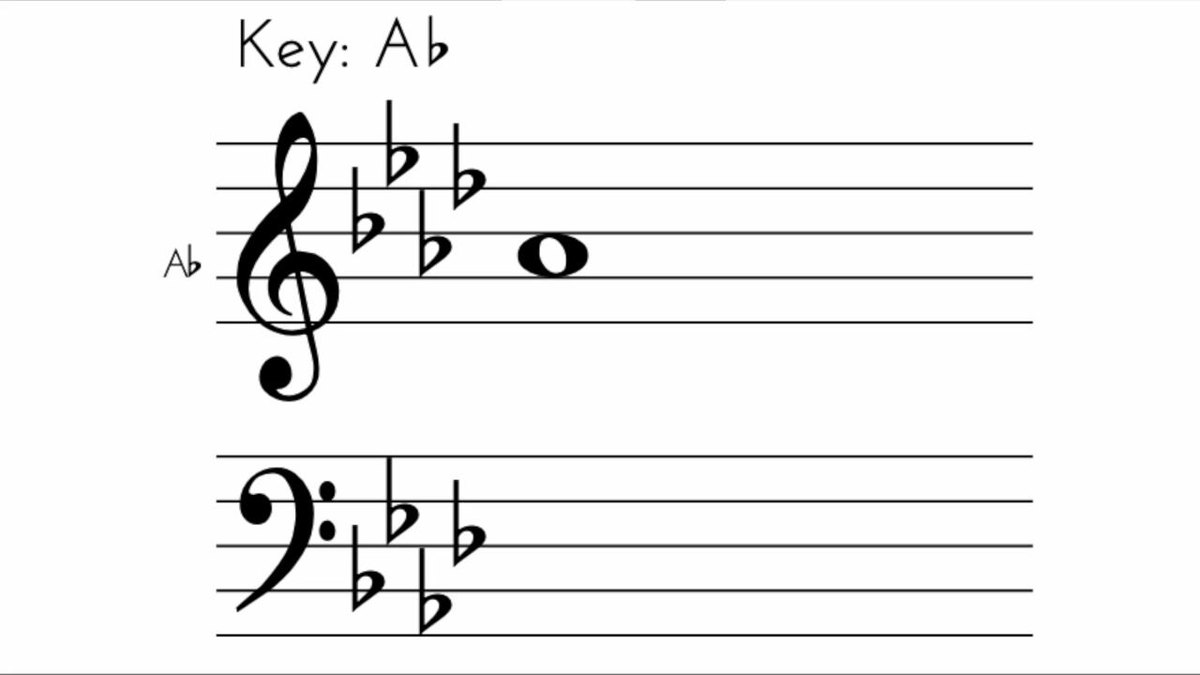
In a major key, Do to Mi is a major third and Do to Sol is a perfect fifth. That gives students a stable starting point for hearing. It does not mean every pair of notes a third apart has the same quality. Re to Fa in a major scale is a minor third. Keep the starting syllable and key clear.
Band teachers should distinguish concert pitch from written pitch. If the class sings together, use a shared concert pitch. When students return to instruments, use the correct written notes for each part. Our key-signature teaching guide covers that written-versus-concert distinction in more detail.
2. Hear Direction Before Naming the Distance
Use Chapter 31, Half Steps & Pitch Direction, before expecting a list of interval names. Play or sing two pitches and ask only: up, down, or same? Students can show a direction with a hand before they need the technical word.
Next, use Chapter 32, Steps vs. Jumps. A step moves to the adjacent scale note. A jump skips over one or more scale notes. In the chapter's review material, steps are seconds and jumps are larger than a second. Let students echo two short patterns, one stepwise and one with a leap, before asking them to label the difference.
Try TMT Trivia on Chapter 32 for a short review, then immediately point to a step and a jump in the rehearsal piece. The game supplies a clear concept check; the score supplies the musical reason to learn it.
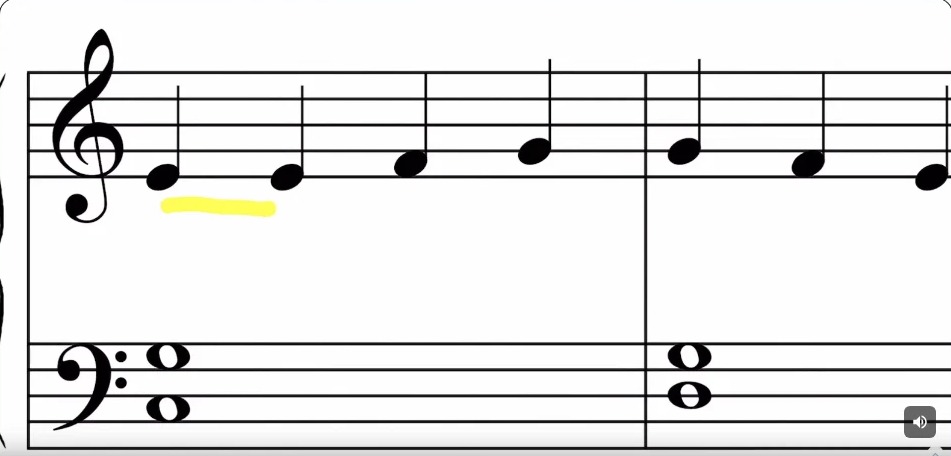
If students cannot reliably tell which way the second note moved, return to Chapter 31. Guessing "fourth" or "fifth" on top of uncertain direction adds vocabulary without fixing the hearing problem.
3. Count the Written Interval Without Losing the Sound
For a written interval number, count letter names inclusively. C to E is C, D, E: a third. C to G is a fifth. Count both the starting and ending letters. Then check accidentals and the key signature to determine quality.
Three Minute Theory Chapter 10, Whole Steps vs. 1/2 Steps, helps connect that second step to actual pitch distance. C to E and C to E-flat are both thirds by letter name, but they do not have the same number of half steps. One is major; the other is minor.
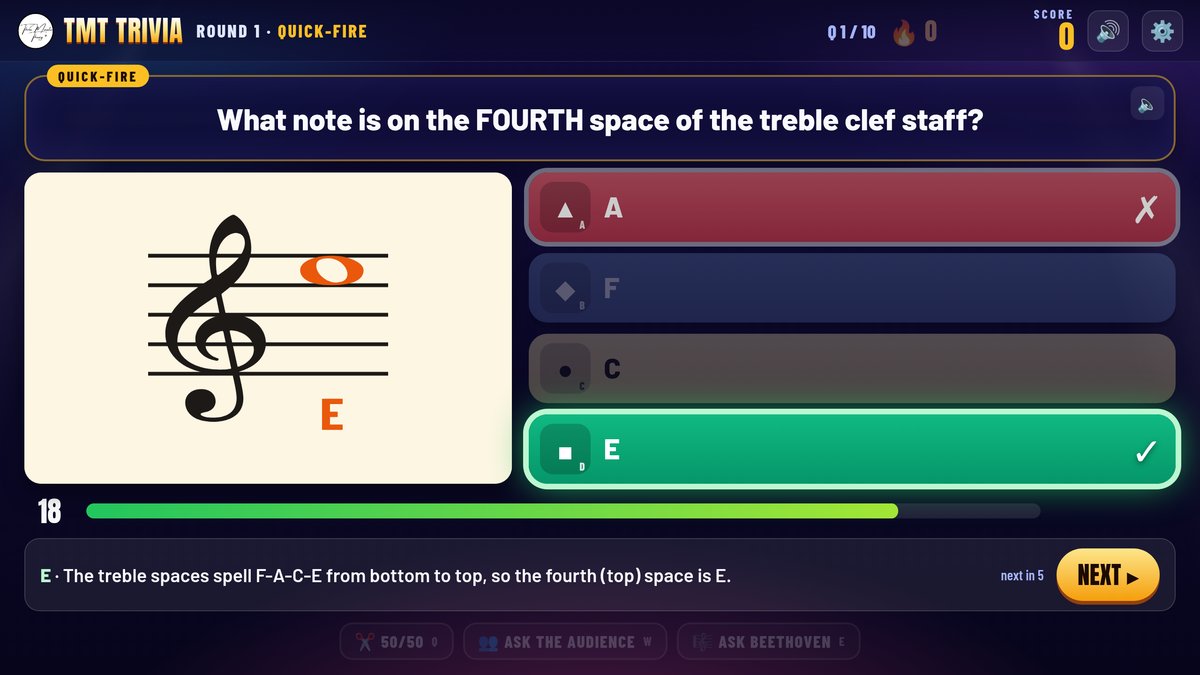
Use Chapter 4, Reading Treble Clef Notes, or Chapter 5, Reading Bass Clef Notes, if students cannot identify the two written notes yet. Do not interpret a clef-reading error as an interval-hearing error.
Sing or play the interval after counting it. Otherwise the written exercise can become a counting routine detached from the sound. Begin with a small set such as seconds, thirds, and fifths, then add more once students can connect the notation and hearing.
4. Use Solfege to Give Common Jumps a Sound
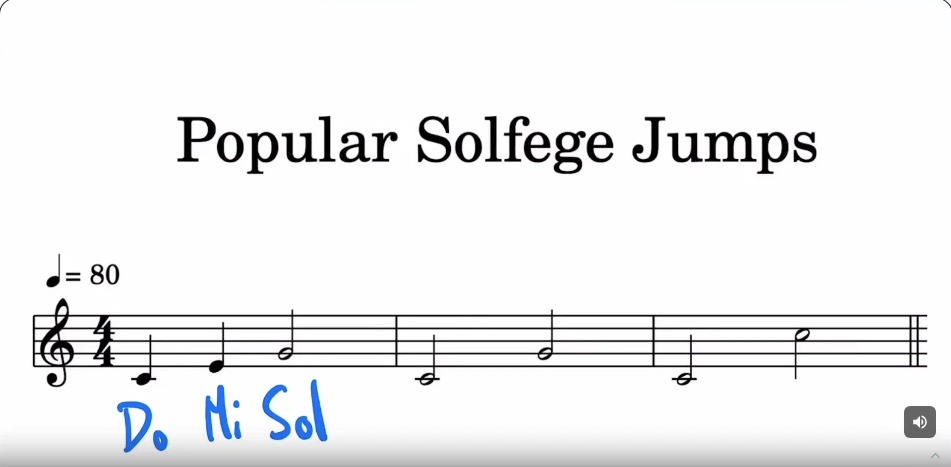
Open Chapter 33, Using Solfege to Understand Popular Jumps. Its assessment material includes Do to Mi, Do to Fa, Do to Sol, and Do to high Do. Teach one pair at a time: establish Do, sing the pair, hear it silently, then sing it again without a model.
Use Pitchy Bird for an application task after the lesson. Its solfege lanes give students a visible pitch target while they sing or play. Keep the job narrow: match the target, notice whether the next pitch is higher or lower, and connect the distance with the solfege pair you just practiced.

Give singers a comfortable range and band students a playable register. If one student controls the game, the rest can silently hear the pair, then echo together after the turn. Keep the volume low enough that a microphone is not simply following the loudest nearby instrument.
For a longer routine that includes matching pitch and listening, see ear training for band and orchestra. Keep interval work one part of that broader listening practice.
5. Transfer the Jump Into the Concert Music
Pick one leap that is causing trouble in the current piece. After a Chapter 33 example, have students mark only the starting note and landing note mentally or with a small pencil cue. Sing the pair, add the notes immediately before and after it, then restore the phrase's rhythm and words or articulation.
For choir, Chapter 85, How to Read a Choral Score, helps students keep their place while following the leap in their own staff. Do not let a correct interval on a worksheet hide a score-following problem at the next system.
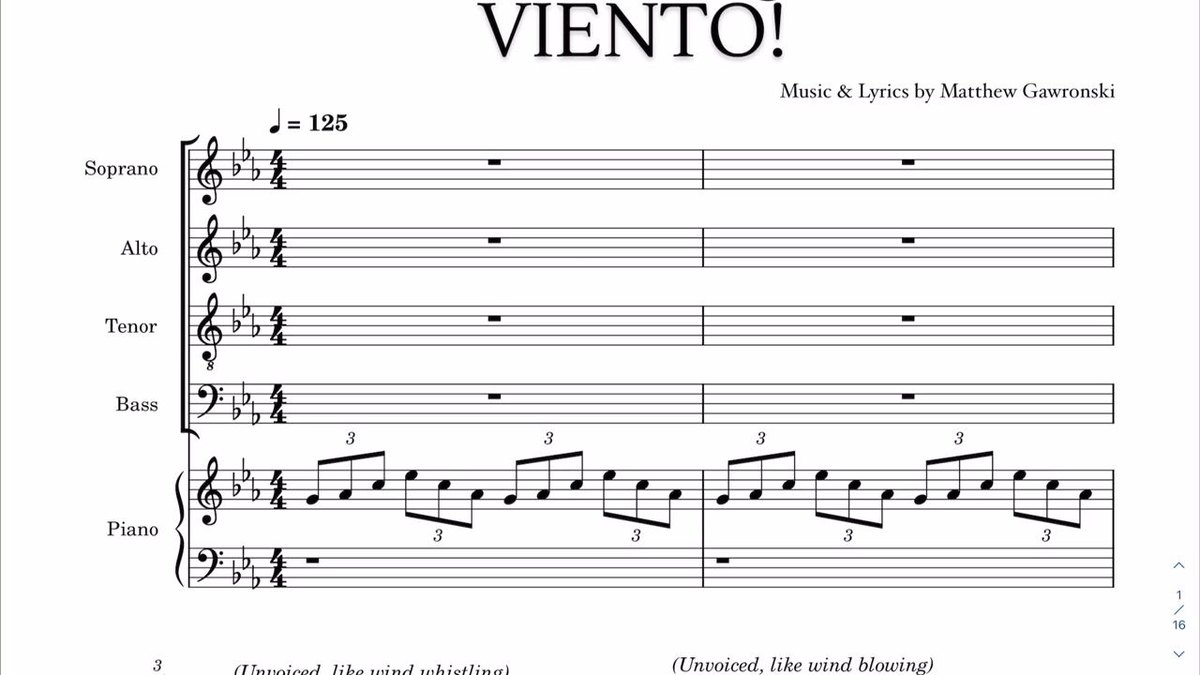
For band, sing the leap on a neutral syllable before playing the correct written notes. Keep the rhythm simple while checking pitch, then put the original rhythm back. In orchestra, use each section's own clef and a comfortable position. The task is the relationship between pitches, not forcing every section onto the same printed notes.
Once common jumps are steady, Chapter 35, Using Solfege to Understand Less Common Jumps, can extend the work. Do not add a new interval merely because the next chapter exists. Add it when students can hear the earlier examples and the music gives them a reason to use it.
6. Check Seeing, Hearing, and Performing Separately
Use Assessments & Quizzes, Volume 4, to find the Chapter 32 or Chapter 33 assessment. Keep the first check focused on the chapter taught rather than selecting the whole volume. Follow the quiz with one teacher-led listening example and one short singing or playing task.


A simple exit check has three parts:
- See: identify two written notes and count the interval number.
- Hear: listen without notation and describe direction and the practiced distance.
- Perform: sing or play the pair from a supplied starting pitch.
These are teacher-led follow-up tasks, not a claim that one TMT quiz automatically measures all three. If the written answer is right but the sung leap is wrong, go back to hearing and matching. If the echo is right but the written answer is wrong, return to the clef and Chapter 10. Let the error tell you what to teach next.
Frequently Asked Questions
What is the best order for teaching intervals to beginners?
Start with a secure first pitch, then up/down/same, then steps versus jumps. Three Minute Theory Chapters 31 and 32 support that foundation. Add common solfege pairs with Chapter 33, and connect the written interval number to the sound before expanding the list.
Should students use familiar songs to remember intervals?
They can be a prompt, but check that students know the song and that you are using the correct starting notes. Do not make a song title the final test. Use Chapter 33's solfege relationships, then sing or play the same interval from a different starting pitch.
Do band students need to sing intervals?
A brief sung model can help separate hearing from finger technique. Keep it comfortable and low-pressure, then transfer to instruments. Use a shared concert pitch for the sung example and the right written notes for each instrument when playing.
How can I tell whether the problem is note reading or listening?
Ask for the written answer and a listening response separately. Chapters 4 and 5 support the clef-reading side; Chapters 31 to 33 support direction and jumps. One correct response should not stand in for the other.
Teach One Useful Jump Tomorrow
Choose an interval from your concert music, pair it with Chapter 32 or 33, and finish by singing or playing it inside the phrase. For the surrounding choir routine, see music theory for choir students. For more teacher resources, visit MatthewGawronski.com; for separate sight-reading practice, explore SightReadQuest.
The lesson, review, and chapter-check routine is available at ThreeMinuteTheory.com. See monthly and yearly plans, or explore the choir and band pages.