REASON 01. Make meter a teachable task
Use a short time-signature lesson to explain what the top and bottom numbers mean. Connect the explanation to the rhythm in your rehearsal, rather than assume every player learned it the same way.
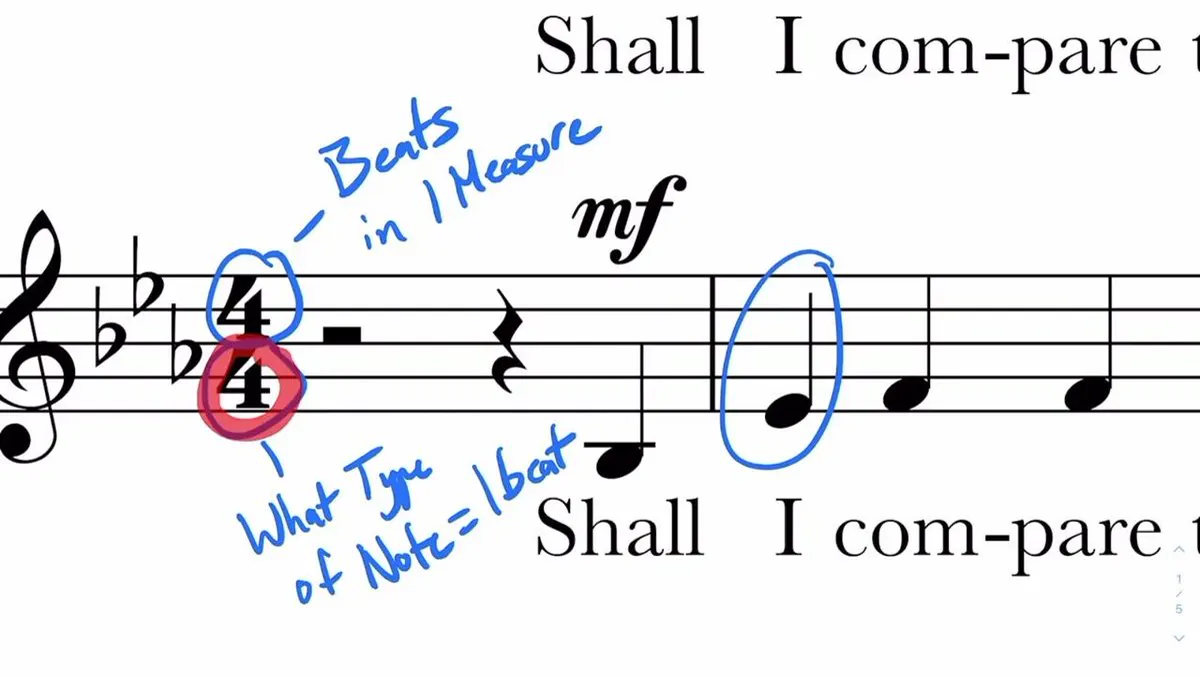
Make the theory behind the playing easier to revisit. Use short lessons on note names, rhythm and meter, then give players chapter-based practice and a focused check.
An ensemble can rehearse a passage before every player understands the notation inside it. Use a small lesson on the specific concept, then return to the passage with a shared explanation.
“The students enjoy it and it never fails to put a smile on their face or even make learning a competition.”
Raven Blaylock · K-5 Band Director & General Music Teacher
Monthly or yearly Teacher License · For every class you personally teach
Short video lessons · Chapter-based games and review · Project or assign
Use a short time-signature lesson to explain what the top and bottom numbers mean. Connect the explanation to the rhythm in your rehearsal, rather than assume every player learned it the same way.
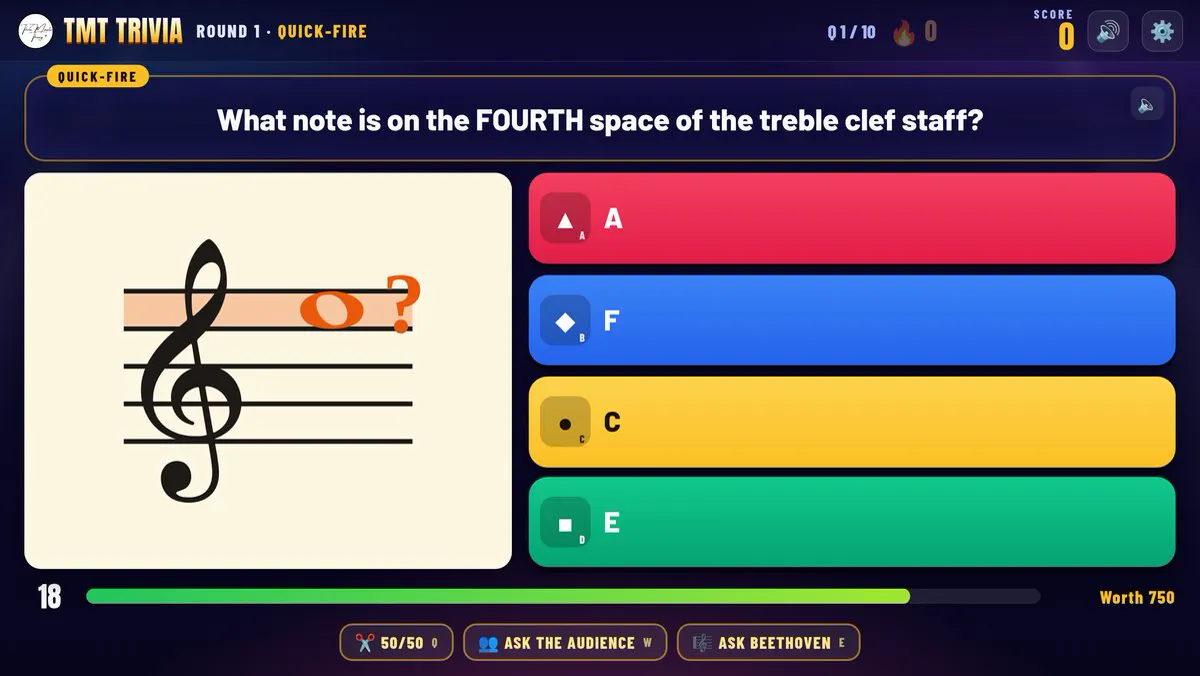
A chapter-based treble-clef question can isolate the reading step. Use the material that fits your players and their clefs. The example shown is treble clef; it is not a claim to show every instrument part.
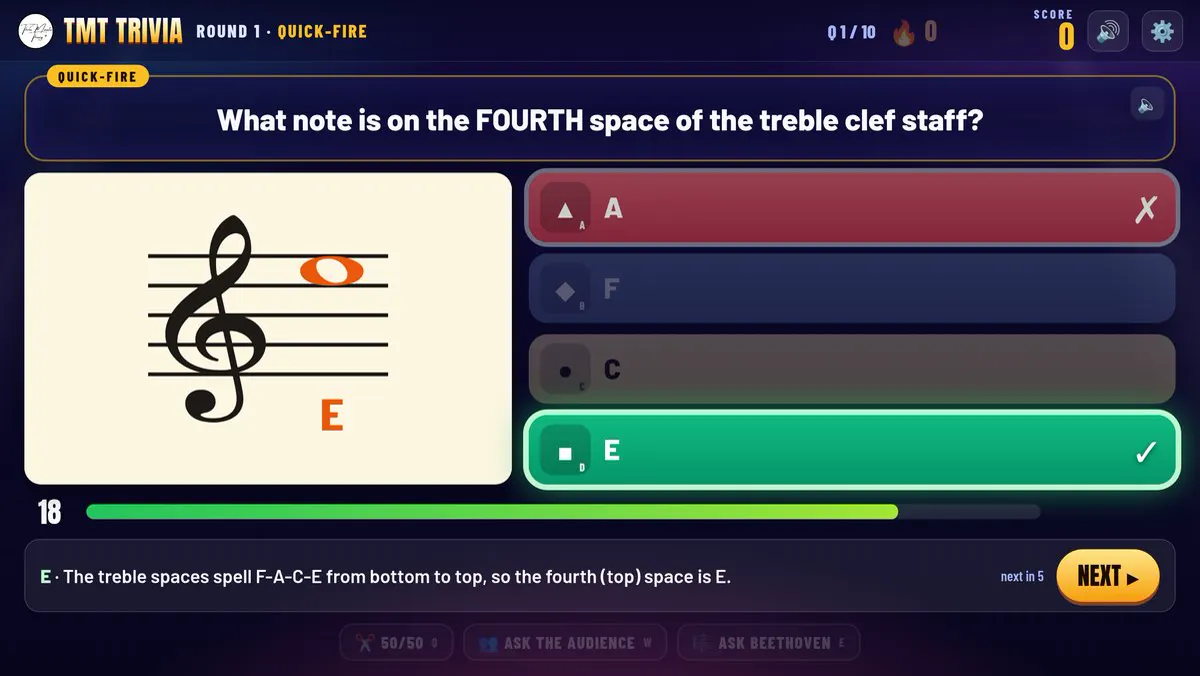
Use an answer explanation to revisit a note name or notation idea. The screen below is a real treble-clef review explanation. Ask players to describe the reason before they move back to the instrument.
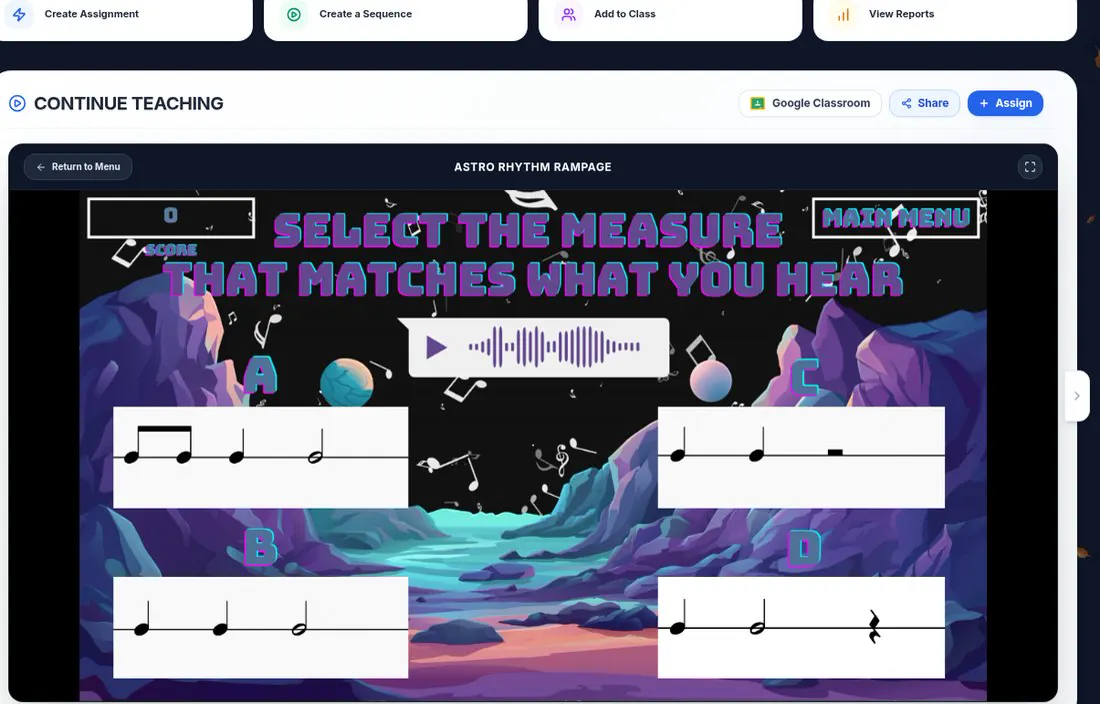
Choose a rhythm game as a change of response after the explanation. The teacher license includes chapter-based games as well as Rhythm Rumbler. A game is practice material, not proof that reading has improved.
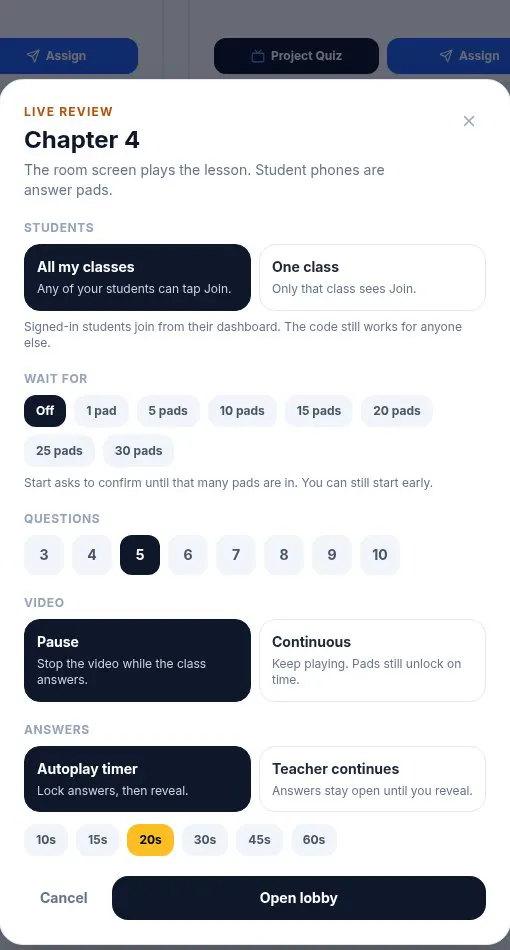
Live Review gives you a group-response option. You can teach from the classroom display instead of requiring every lesson to begin with independent work. Confirm the access path for your school before using it with a full group.
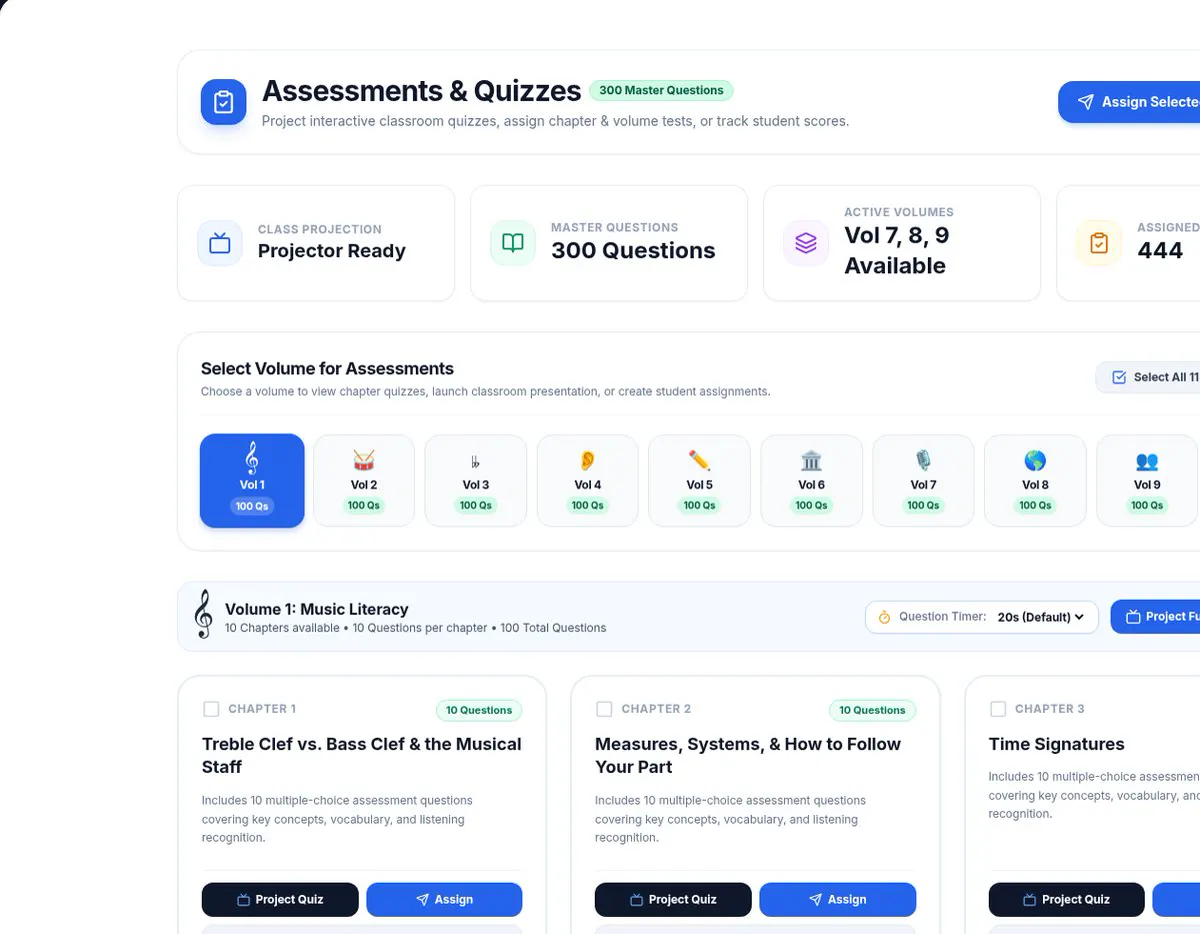
Assessments & Quizzes lets you select chapter or volume material for projection or assignment. Use the check to decide what to revisit before the next playing task. Keep shared access and named individual progress tracking distinct.
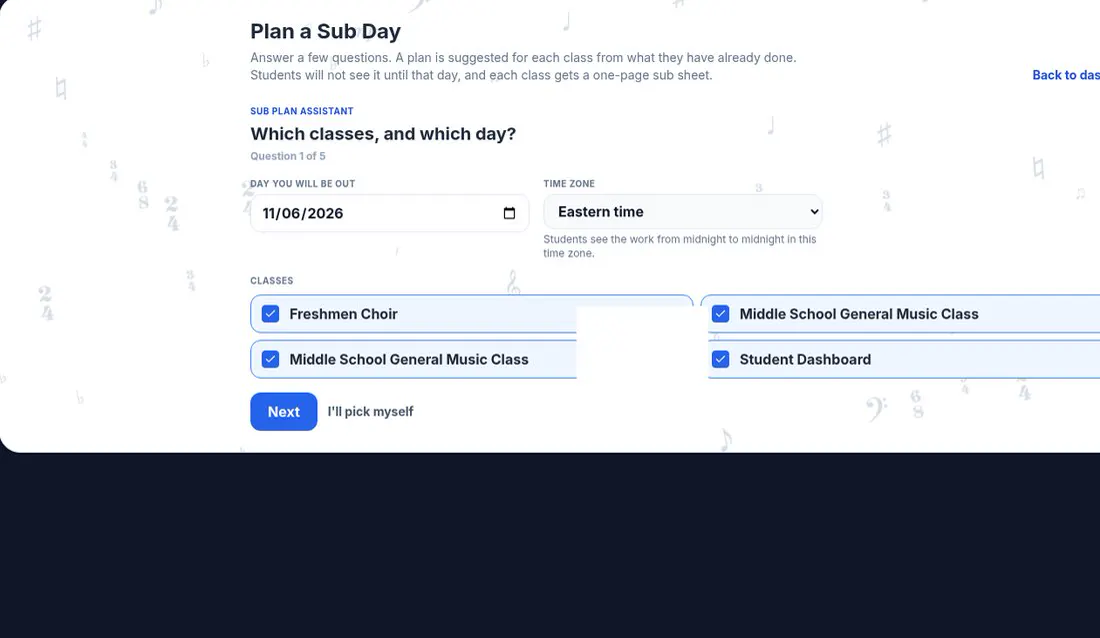
Use Plan a Sub Day to begin organizing the work. Test the links and school-device setup before the absence. Keep the plan focused on material students can reach and complete in your setting.
“The students enjoy it and it never fails to put a smile on their face or even make learning a competition.”
“I have more student engagement after using Three Minute Theory.”
One Teacher License covers every class you personally teach. It includes unlimited students on your shared classroom dashboard and 25 individual student logins.
$39/month
Teacher access, shared classroom dashboard and 25 individual student logins.
$349/year
Teacher access, shared classroom dashboard and 25 individual student logins.
Teacher access includes 10 volumes, 100 chapters, over 300 content-specific games, Three Minute Theory AI and Rhythm Rumbler.
Check the renewal amount before paying. Cancel from Account Settings and keep access through the paid period.
Standard prices checked November 7, 2026 (ET). No promotional code or discount is assumed.
No. The curriculum supports choir, band, orchestra and general music. Start with the reading concepts your students need, or use a chapter alongside your rehearsal work.
No. A Teacher License includes unlimited students on the shared classroom dashboard and 25 individual student logins. Shared mode is different from named, individual progress tracking.
Yes. Use the classroom screen for group teaching, or assign work for students. Match your assignment and progress-tracking workflow to shared access or individual logins.
Yes. Cancel in Account Settings. You keep access until the end of the period you paid for. Confirm the renewal amount and billing interval before purchasing.
Review the monthly and yearly Teacher Licenses on the store page.